How Saudi Arabia-Turkey-Pakistan defence pact acts as ‘insurance’ over US disengagement
A defence pact among Saudi Arabia, Turkey and Pakistan appears to be aimed at deterring Iran and Israel from tearing up the Middle East with their conflict amid Washington’s inability to guarantee regional security, observers say. Under the terms of the deal signed on Friday in Mecca by Saudi Crown Prince Mohammed bin Salman, Turkish President Recep Tayyip Erdogan and Pakistani Prime Minister…
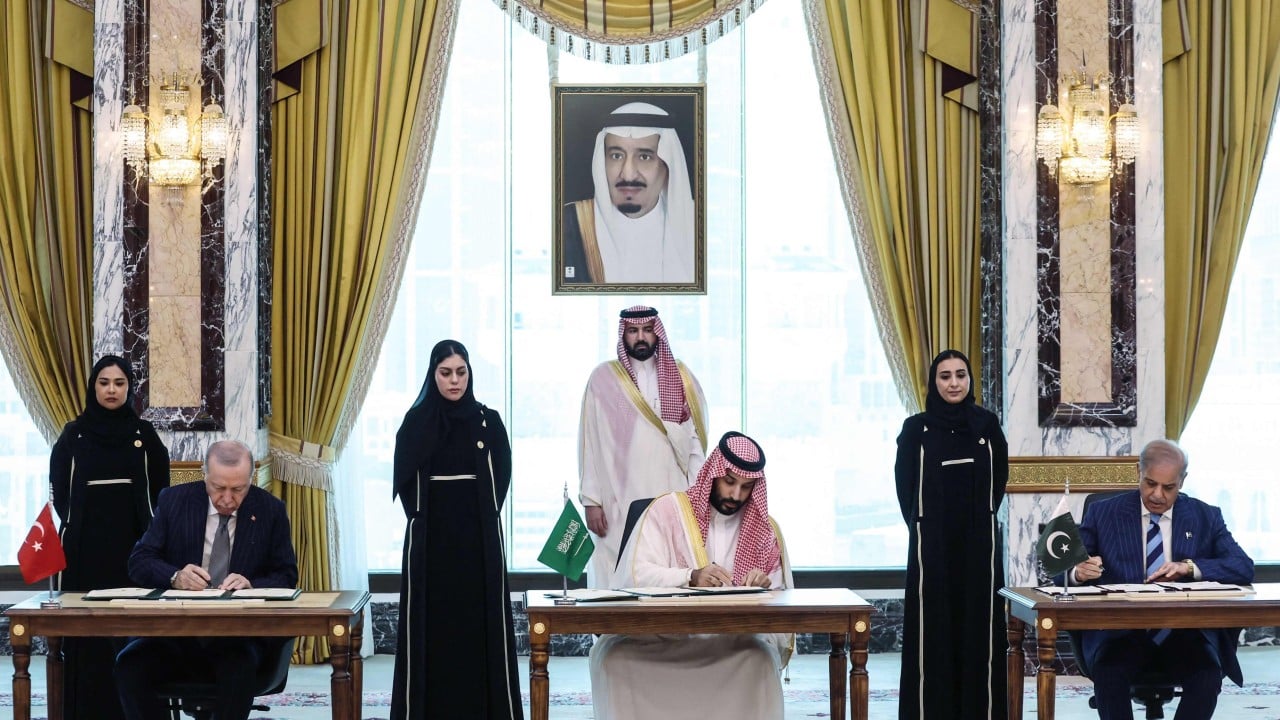
A defence pact among Saudi Arabia, Turkey, and Pakistan aims to deter Iran and Israel from escalating their conflict in the Middle East due to Washington's failure to guarantee regional security, according to observers. The agreement, signed in Mecca on Friday by Saudi Crown Prince Mohammed bin Salman, Turkish President Recep Tayyip Erdogan, and Pakistani Prime Minister Shehbaz Sharif, states that an armed attack against any one of the three states shall be considered an attack on all.
While no further details have been disclosed, signatories emphasized that the pact does not constitute a military coalition and serves as a deterrent. Saudi Deputy Minister for Public Diplomacy Rayed Krimly clarified that the pact does not threaten any country's security and should not be viewed as an escalation of regional tensions.
Erdogan assured that the agreement targets no country and is open to participation from all brotherly nations seeking peace, prosperity, and stability in the region. Iran's regional allies, such as Yemen's Houthi movement and Iraqi militias, have reportedly planned to launch joint missile and drone strikes against Saudi Arabia. Analysts suggest that the Mecca pact could evolve into a coalition of countries engaged in various security-related activities, such as joint military exercises, maritime security, intelligence sharing, and defence procurement.
However, Krieg, a professor of defence studies, believes that the pact will not develop into an Islamic version of NATO with all countries accepting identical defence obligations.
The pact may face its first significant challenge from Iran and its "axis of resistance" allies. Yemen's Houthis and Iraqi militias, together with Iran's Revolutionary Guards, were reportedly preparing to mount coordinated missile and drone attacks against Saudi Arabia. The response from Pakistan and Turkey will provide insight into whether collective deterrence is feasible.
Krieg anticipates that the Mecca pact will enhance Saudi Arabia's deterrence, making attacks against the kingdom more costly for Iran. Farzan Sabet, an Iran expert, views the agreement as reinforcing deterrence signaling against direct Iranian attacks on Saudi Arabia.
Written by urgent.news from South China Morning Post's reporting — not their text. Machine-written — may contain errors; check the original before relying on it.