'Hellscape' strategy: How Taiwan plans to use drones to stop China in its tracks
Taiwan is rapidly building drone fleets to deter a Chinese invasion. This strategy draws lessons from Ukraine's successful drone warfare against Russia. The island aims to produce 100,000 drones monthly by 2030 for defense. Taiwanese companies are also expanding drone exports and manufacturing capabilities. This effort includes developing maritime drones and essential drone components.
Taiwan is rapidly expanding its fleet of drones and unmanned surface vessels as part of a comprehensive strategy aimed at thwarting potential Chinese invasions, according to a recent report by The New York Times. Drawing inspiration from Ukraine's successful use of drones during its war with Russia, the island nation is adopting a multi-faceted approach that involves employing large numbers of drones, missiles, and artillery to detect and neutralize invading forces across various domains.
Taiwan's defense ministry, led by Lt Gen Huang Wen-chi, acknowledges that the country's drone and counter-drone initiatives have progressed more gradually than desired. However, over the past two years, the nation has witnessed a significant shift in its approach. Military exercises, new command structures, and plans to boost domestic drone production are being implemented to bolster Taiwan's defense capabilities.
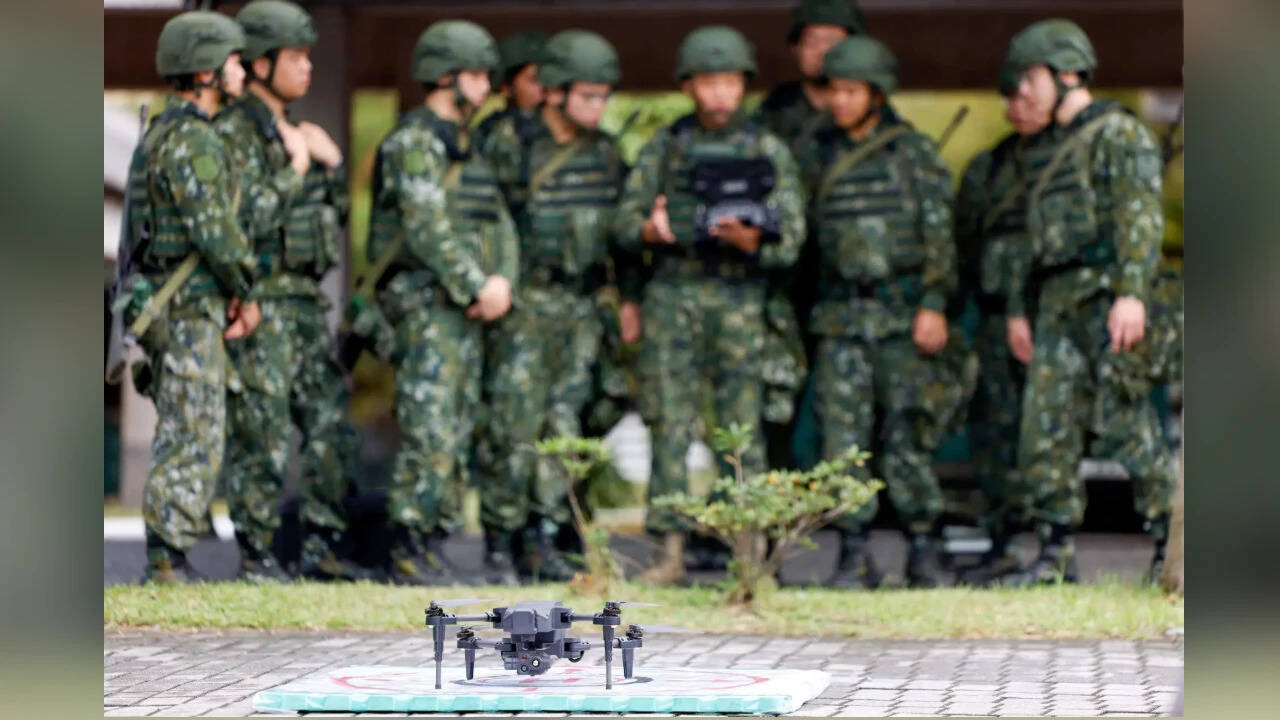
A recent observation of troops training for drone reconnaissance during the 10-day Han Kuang military exercises highlighted the emphasis placed on unmanned systems. Maj Gen Lu Wen-yuan, who helped plan the exercises, mentioned that troops would also receive training on countering enemy drones. The focus on unmanned systems reflects Taiwan's concern over China's growing military capabilities, which include an increasing fleet of warships, aircraft, missiles, and drones, as well as heightened coast guard patrols and landing exercises.
Taiwanese officials have drawn lessons from Ukraine's battlefield experience, particularly its utilization of relatively affordable drones against a larger military force. Max Lo, chairman of the Taiwan National Drone Industry Association, emphasized that drones are entering a new phase, and Taiwan needs them urgently for its national defense.
Building drones is just one aspect of Taiwan's proposed strategy. Military experts assert that the island's forces must also adapt their operational methods, including improving training, mobility, intelligence-sharing, and the ability to deploy numerous drones while safeguarding them from enemy jamming and countermeasures. Shu Hsiao-Huang, an associate research fellow at Taiwan's Institute for National Defense and Security Research, stated that "the army's frontline military operations must undergo a total change from the past."
Taiwan has already integrated drone tactics into its military exercises. The army released images last month showing a drill where a unit utilized drones to search for enemy forces threatening islands off Taiwan's east coast. President Lai Ching-te also witnessed an exercise in southern Taiwan on Saturday, during which troops tested two prototype drones designed to strike invading forces.
In addition to expanding its drone capabilities, Taiwan aims to establish a Littoral Combat Command that integrates drones, mobile missiles, and artillery into a coastal defense structure. However, experts caution that simply acquiring more unmanned systems does not guarantee the necessary capabilities to implement a "hellscape" strategy. Taiwan must also develop the organizational structures, doctrine, and training needed to effectively utilize the technology.
To support its drone strategy, Taiwan is working on expanding its domestic drone industry. The government aims to produce 100,000 drones per month by 2030, with half of these drones intended for export. The aim is to also increase the number of aerial and maritime drones acquired by the military to over 210,000. The government has allocated $6.5 billion over five years for drone development, but opposition parties controlling the legislature have proposed a higher budget of $7.4 billion over six years, insisting on increased domestic production.
The debate surrounding drone spending is occurring amidst broader disagreements over Taiwan's defense budget. A recent approval of an opposition-backed special defense budget capped at NT$780 billion ($24.82 billion) fell short of the Cabinet's proposed NT$1.25 trillion package. The Cabinet proposal encompassed funding for unmanned systems and countermeasures, AI-assisted surveillance, defense supply chains, domestic defense manufacturing, and joint US-Taiwan research and procurement programs.
Written by urgent.news from Times of India's reporting — not their text. Machine-written — may contain errors; check the original before relying on it.