Census 2027: Ladakh to lead independent India’s first caste enumeration
Census form likely to have 40 questions, defence structures to be recorded on paper
Ladakh, one of India's newest Union Territories, is poised to spearhead the historic caste enumeration for the first time in independent India during the Census 2027. The Population Enumeration (PE) phase, slated to commence on August 17 in Ladakh and other challenging terrains, aims to collect data on 40 parameters, including a comprehensive caste enumeration.
This unique approach follows a successful rehearsal, or "pre-test," conducted from July 1 to 20 in 16 States and Union Territories, where respondents were given an open-ended column to record their caste, or the enumerator noted the caste as declared by the resident.
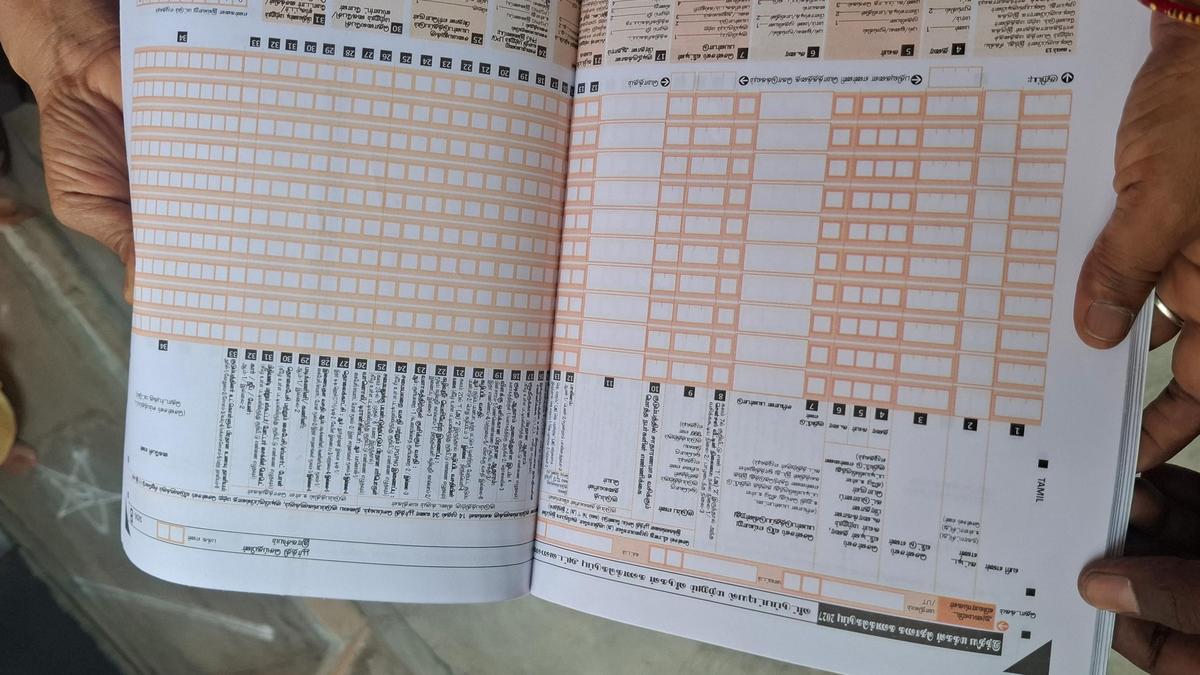
The Census, India's first digital endeavor, has made an exception for Ladakh by printing paper schedules due to the presence of significant defense establishments along the borders with China and Pakistan. These locations, often difficult to geo-tag due to security concerns, necessitate the use of physical schedules. In contrast, respondents who self-enumerate on the Census portal are also required to geo-locate their structures using a mobile application.
While the exact questionnaire and schedule have not been officially notified by the Registrar General and Census Commissioner of India (RG&CCI), preparations are underway in Ladakh and the snow-bound areas of Jammu and Kashmir, Himachal Pradesh, and Uttarakhand. The Directorate of Census Operations has completed a three-day Master Trainers' Training Programme for Census 2027, focusing on census concepts, caste and demographic data collection, digital tools, self-enumeration techniques, interviewing skills, and the use of the mobile application.
Ladakh's situation is unique, as it did not participate in the pre-test held for the PE phase in July. This omission led to the inclusion of around 40 questions, which are likely to be officially notified this week. Respondents will be asked to provide descriptive information in the caste column, which will be open-ended, as enumerators record the name of the caste provided by the respondent.
The Census aims to count all structures and buildings, leading enumerators to exercise caution and record defense structures along the Line of Actual Control as "special charges" on paper schedules.
The open-column methodology, which was pivotal in the 2011 Socio-Economic Caste Census (SECC) yielding over 46 lakh distinct caste names, reflects the complexity of caste identification in Indian society. The government has consistently maintained that the 2011 SECC's caste data was unreliable due to "errors" in data collection. The 1931 Census recorded 4,147 castes, but the SECC, being a survey outside the purview of the Census Act, 1948, and lacking statutory backing, did not release its findings.
Written by urgent.news from The Hindu's reporting — not their text. Machine-written — may contain errors; check the original before relying on it.
This story
This is one outlet's version. Read the fullest account.