Canadian government steps in as ‘out of control’ wildfires force thousands to flee
British Columbia battling 102 fires day and night across province, as breakneck speed hampers firefighters’ efforts Canada’s federal government has announced it will provide urgent assistance to British Columbia after an onslaught of unprecedented fast-moving wildfires forced about 22,000 people to flee their homes in frantic evacuations. A total of 102 wildfires were raging across the province…
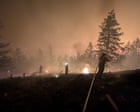
British Columbia is grappling with an alarming 102 wildfires, forcing around 22,000 people to evacuate their homes amid fast-moving blazes that have become too intense for firefighters. The Canadian federal government has announced it will provide urgent aid to British Columbia in response to the unprecedented disaster. Over 78 of the wildfires ignited in the past week, with nearly half of them deemed "out of control."
The entire community of Summerland, home to about 12,000 people, was evacuated overnight and a further 8,000 residents around nearby Peachland were also told to prepare for possible evacuations. Minister of Emergency Management and Community Resilience Eleanor Olszewski approved federal assistance to supply shelter and accommodations for those displaced by the fires.
The Bald Range wildfire, which ignited late Friday, rapidly grew to over 40 square miles as it approached Okanagan Lake, nearly twice the size of Manhattan. BC Wildfire Service’s director of provincial operations Cliff Chapman attributed the rapid spread to the province’s prolonged hot and dry weather, describing fire conditions as "explosive."
Lightning caused by forecasted thunderstorms could exacerbate the situation, he warned. Jennifer Pascoa, a resident of Summerland, recounted her family’s frantic evacuation from the nearby mountains, saying the blaze emerged so quickly they saw flames licking the mountains just an hour after leaving for the beach. The Royal Canadian Mounted Police are investigating a possible fatality near Summerland.
Wildland fire expert Mike Flannigan of Thompson Rivers University explained that the speed of fire spread is indicative of extreme weather patterns resulting from climate change, with Canada and the US experiencing historically dry conditions that leave the region "bone dry." Fire management agencies are now fighting fires at night using night-vision helicopters, as traditional daytime practices no longer suffice.
Flannigan cautioned that homes in at-risk regions should be prepared with emergency kits, as fires can spread rapidly, even during the night.
Written by urgent.news from The Guardian's reporting — not their text. Machine-written — may contain errors; check the original before relying on it.