Arbeitszeitreform: Arbeitgeberpräsident fordert wöchentliche Höchstarbeitszeit
Rainer Dulger erhofft sich davon geringere Krankenstände und zieht Vergleiche zu anderen EU-Ländern. Er spricht sich auch für Schritte gegen Missbrauch bei Arbeitsunfähigkeit aus.
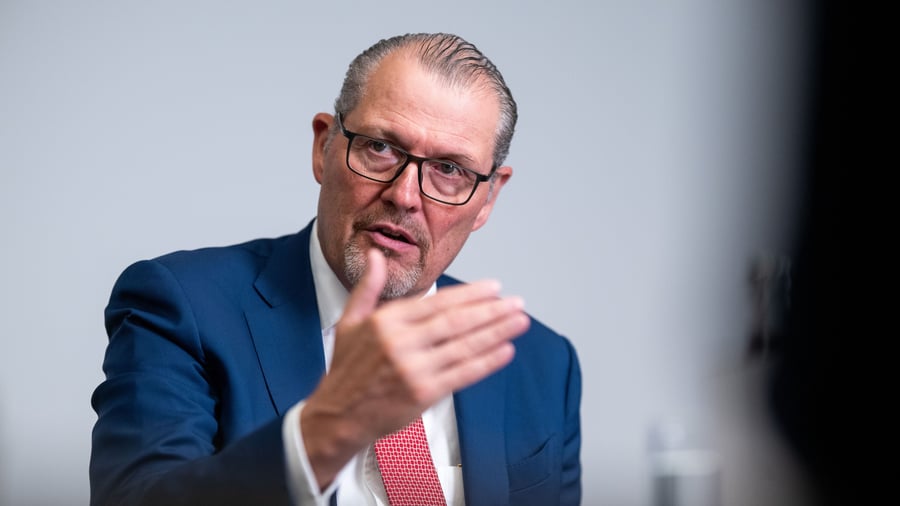
Arbeitgeberpräsident Rainer Dulger has called for a weekly maximum working time in Germany. "The opportunities within the European Working Time Directive are almost exhausted everywhere, just not here," he stated to the German Press Agency in Berlin. "If a weekly maximum working time was dangerous, employees in Belgium and Italy would be bedridden in droves. In fact, their sickness rates are lower than ours."
The German Labor Law currently limits daily working hours to eight hours, while the European Working Time Directive sets a weekly maximum of 48 hours. In Germany, this can be extended to a maximum of ten hours per week with compensatory measures within half a year. Dulger noted that even a majority of trade union members would prefer a weekly maximum working time.
"The Labor Law dates back to the era of Telex and ballot boxes. It knows neither laptops nor kindergarten opening times." A draft law for the autumn was expected by Federal Chancellor Friedrich Merz (CDU) during a summer press conference in mid-July, where he announced that he expected a draft law on labor time reform from Labor Minister Bärbel Bas (SPD) in the autumn.
Both the Union and SPD had agreed in their coalition contract to create the possibility of a weekly maximum working time. However, trade unions had warned against the end of the eight-hour day. Dulger also demanded steps against abuse in the matter of incapacity for work. "Anyone who is incapable of work should not suffer a financial disadvantage as a result.
Our system works like that, and no one wants to change it. However, we haven't created it for those who want to exploit the system," he said.
Dulger emphasized that the proposed changes by the Union and SPD would protect those who are genuinely ill. "This system will be protected against abuse," he stated. He expressed mistrust in the matter, saying, "I trust my people – that's why I employ them." "A law is not for the normal case, but for the exception," he added. Generally, Dulger reaffirmed his call for comprehensive reforms.
However, the government currently lacks "a successful narrative," he noted. "It comes across as something to many as if it were about trust without telling them what for."
Written by urgent.news from Handelsblatt's reporting — not their text. Machine-written — may contain errors; check the original before relying on it.