Yes, North America gets a solar eclipse on Aug. 12. Here's where and when to see it
The Aug. 12 eclipse won't rival 2024's Great American Eclipse, but millions across the U.S. and Canada will still see the moon take a bite out of the sun.
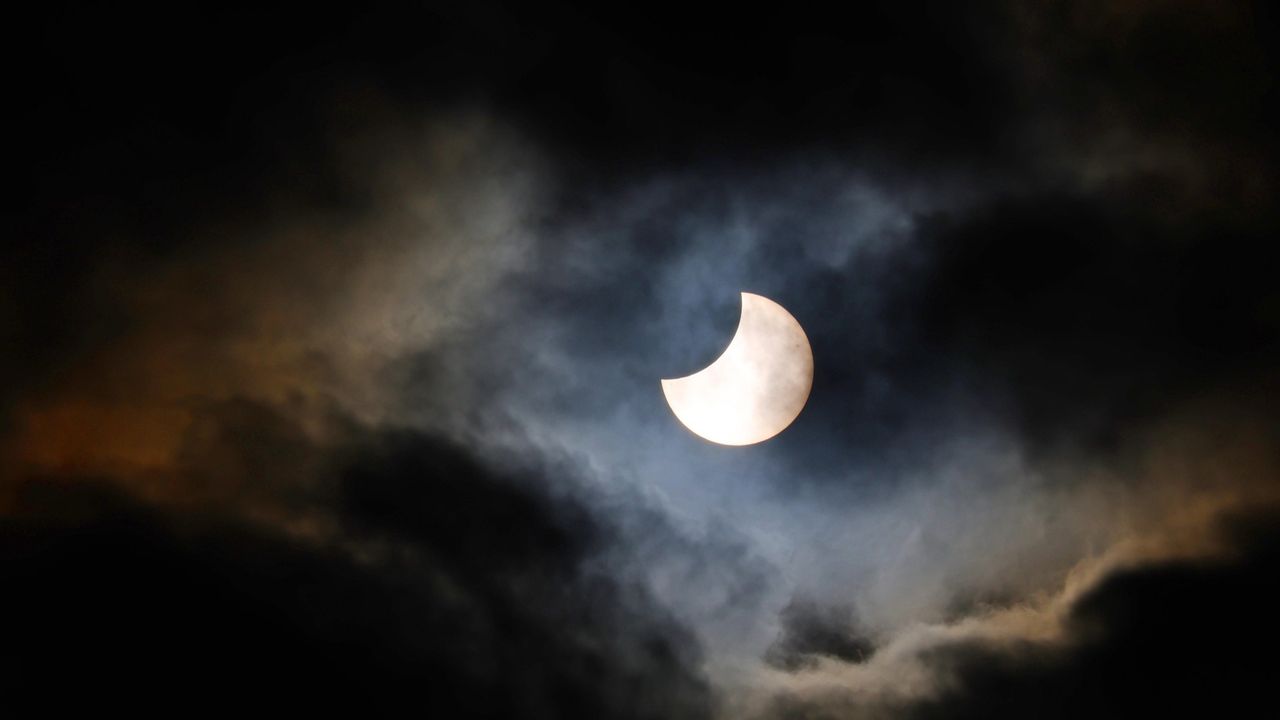
On August 12, 2026, a partial solar eclipse will be visible in parts of North America, though it will not be as impressive as the total solar eclipse that occurred earlier this year. Although the eclipse will not be as significant as the April 8, 2024 event, which was visible in Mexico, 15 U.S. states and six Canadian provinces, millions across North America can still witness the moon partially obscuring the sun.
The farther northeast one travels in the U.S., the deeper the eclipse will be. Fairbanks, Alaska, will see 37% of the sun obscured at 8:27 a.m. AKDT, while Providence, Rhode Island, will experience 15% obscuration at 1:55 p.m. EDT. The full extent of the eclipse will be visible between 7:34 a.m. AKDT and 2:52 p.m. EDT across 20 U.S. states.
In Canada, every province will witness some degree of the partial solar eclipse on August 12, with Iqaluit, Nunavut, seeing the most at 61% maximum eclipse at 1:24 p.m. EDT. The best visibility will be in eastern Canada, where the eclipse begins at 8:38 a.m. MST and ends at 4:38 p.m. NDT.
To observe the partial solar eclipse safely, it is essential to use solar eclipse glasses designed for solar viewing, as looking directly at the sun without protection is never safe. The eclipse will resemble a thick crescent or smile, similar to the shape during Venus's dichotomy, which occurs on the same day. Following the eclipse, the Perseid meteor shower will peak on the early hours of August 13.
Written by urgent.news from Space.com's reporting — not their text. Machine-written — may contain errors; check the original before relying on it.
This story
This is one outlet's version. Read the fullest account.
- Why you don't need a perfectly clear sky to enjoy the total solar eclipse on Aug. 12 space.com
- Where and when to see the Aug. 12 solar eclipse — exact times for North America and Europe livescience.com
- Where and when to see the Aug. 12 solar eclipse — exact times for North America and Europe r.smartbrief.com