Why is it called the shift key?
Technology keeps shifting. In this case, shift kept shifting quite literally. Confused? Here’s how your favourite shift key got it’s name
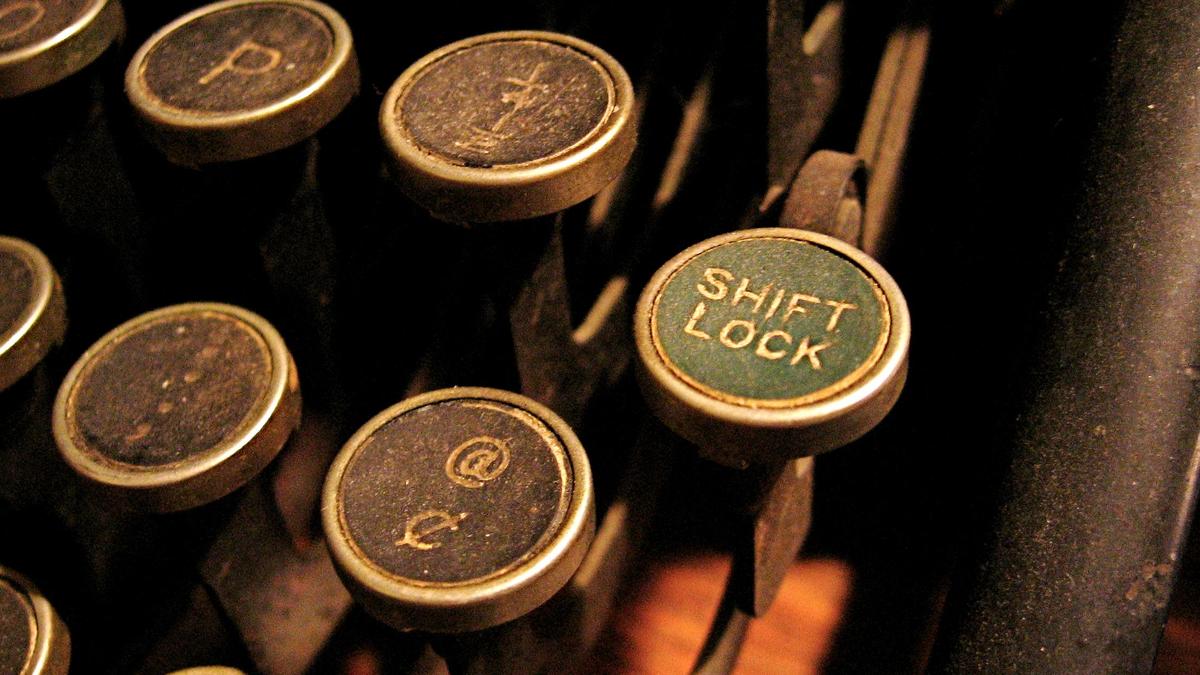
The shift key, a now ubiquitous feature on keyboards, traces its origin back to the late 1800s, long before computers graced our desks. It all began with the typewriter, a revolutionary invention that would transform the way we write and communicate. Before the shift key's introduction, typewriters either had a limited set of capital letters or required users to switch between two separate keyboards—one for lowercase and another for uppercase characters.
This cumbersome process often led to inefficiency and frustration, as typists had to constantly switch between keyboards to type properly.
In 1878, the Remington No. 2 typewriter, crafted by the E. Remington and Sons company, made history by introducing the first-ever shift key. This innovation replaced the need for a second keyboard with a single keyboard and a mechanical shift mechanism. By pressing the shift key, typists could easily access uppercase letters and a wider array of symbols without needing to switch keyboards.
The shift key's design consisted of two parts—one for lowercase alphabets and another for uppercase or special characters—that were positioned away from each other. Pressing the shift key mechanically shifted the type mechanism, causing the typewriter to hit the paper with the desired character instead of the lowercase one. Releasing the shift key would return the mechanism to its lowercase position.
This ingenious mechanical technique not only improved typing efficiency but also laid the foundation for the shift key's enduring presence on keyboards today. Over time, typewriters often incorporated two shift keys, one on each side, to accommodate typing from either hand. Some models even featured a Shift Lock mechanism, an early precursor to the modern Caps Lock key, which allowed users to fully switch to uppercase characters without continually holding down the shift key.
While the underlying concept of the shift key has remained largely unchanged, the technology surrounding it has evolved significantly. In modern times, the keyboard's controller detects the shift key's status and communicates this information to the computer's operating system and applications. These components then interpret the shift key's presence as a different character or command, enabling seamless communication between hardware and software.
In conclusion, the shift key's journey from the mechanical marvels of the late 1800s typewriter to the software-driven function we know today is a testament to human ingenuity and the constant pursuit of efficiency. This humble key, with its simple yet transformative design, has played a crucial role in shaping the way we communicate and work in the digital age.
Written by urgent.news from The Hindu - Sci-Tech's reporting — not their text. Machine-written — may contain errors; check the original before relying on it.