The long game: Why politics, not evidence alone, drives welfare reform in Indone...
Democratic governments can pursue long-term improvements without abandoning politically salient commitments to social welfare.
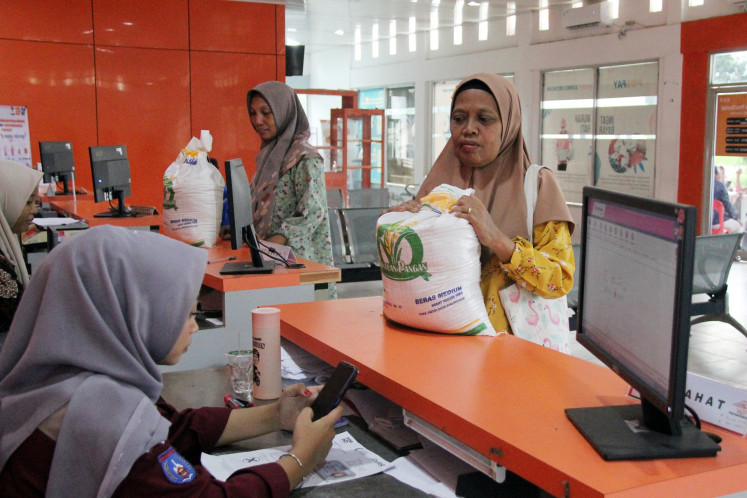
Political considerations often outweigh evidence in shaping welfare reform in Indonesia. Governments across Southeast Asia grapple with a common challenge: voters favor immediate, visible benefits over long-term development requiring reforms with delayed gains. Indonesia's journey of transforming its food assistance system over 24 years demonstrates a more complex narrative.
In 1998, Indonesia launched an emergency rice distribution program amid economic collapse and political transition. Initially improvised and unpopular, it eventually evolved into Raskin, a subsidized rice transfer program benefiting the poorest 40% of households for 15 years. Despite technical flaws and distribution issues, Raskin persisted because millions of families relied on it and no government wanted to be perceived as cutting off support to the poor.
Raskin's longevity stemmed from its symbolic value as state support for low-income households and its political sensitivity. Reforming Raskin's structure was risky as it could be seen as reducing aid to the poor, making evidence-based alternatives difficult to implement. It wasn't until the 2014 presidential election that a political opportunity arose, allowing years of policy experimentation, evidence generation, and coalition-building to culminate in reform.
The National Team for Acceleration of Poverty Reduction (TNP2K) had been developing, piloting, and evaluating digital cash transfer alternatives like Non-Cash Food Assistance (BPNT) for years. However, the shift from Raskin to BPNT was not solely due to overwhelming evidence. The 2014 election provided a political opening, enabling the reform team to leverage years of preparation and build a viable alternative when the moment was right.
Despite the change, the program retained its symbolic commitment to food support, preventing it from being viewed as abandoning the poor. The reform shows how democratic governments can pursue long-term improvements while maintaining politically sensitive social welfare commitments. Indonesia's experience is not unique; similar dynamics persist across Southeast Asia in debates over fuel subsidies, agricultural support, and other welfare programs, where governments face political barriers to changing entrenched programs.
Successful reform requires building evidence and institutional capacity for alternatives during stable periods while being prepared to act during political transitions. Timing matters as much as content in welfare reform. Indonesia's recent free nutritious meal program rollout, launched in 2025, is an example of such a politically popular initiative without the necessary accountability mechanisms.
The government's experience with BPNT warns of the risks of rapid, politically driven programs without robust evaluation and learning. Indonesia needs to apply the lessons from its reform history to this new program to ensure its success.
Written by urgent.news from The Jakarta Post's reporting — not their text. Machine-written — may contain errors; check the original before relying on it.