Supreme leader with no supreme power: Mojtaba Khamenei's absence exposes cracks in Iran's ruling order
In a matter of days, Iran 's President Masoud Pezeshkian went from declaring his "greater access" to Ayatollah Mojtaba Khamenei to reporting "very difficult" communication with the injured supreme leader. The shift reignited questions about who is calling the shots in Tehran, turning the issue into a remarkable dilemma given crucial negotiations with the US , which could lead to permanent peace…
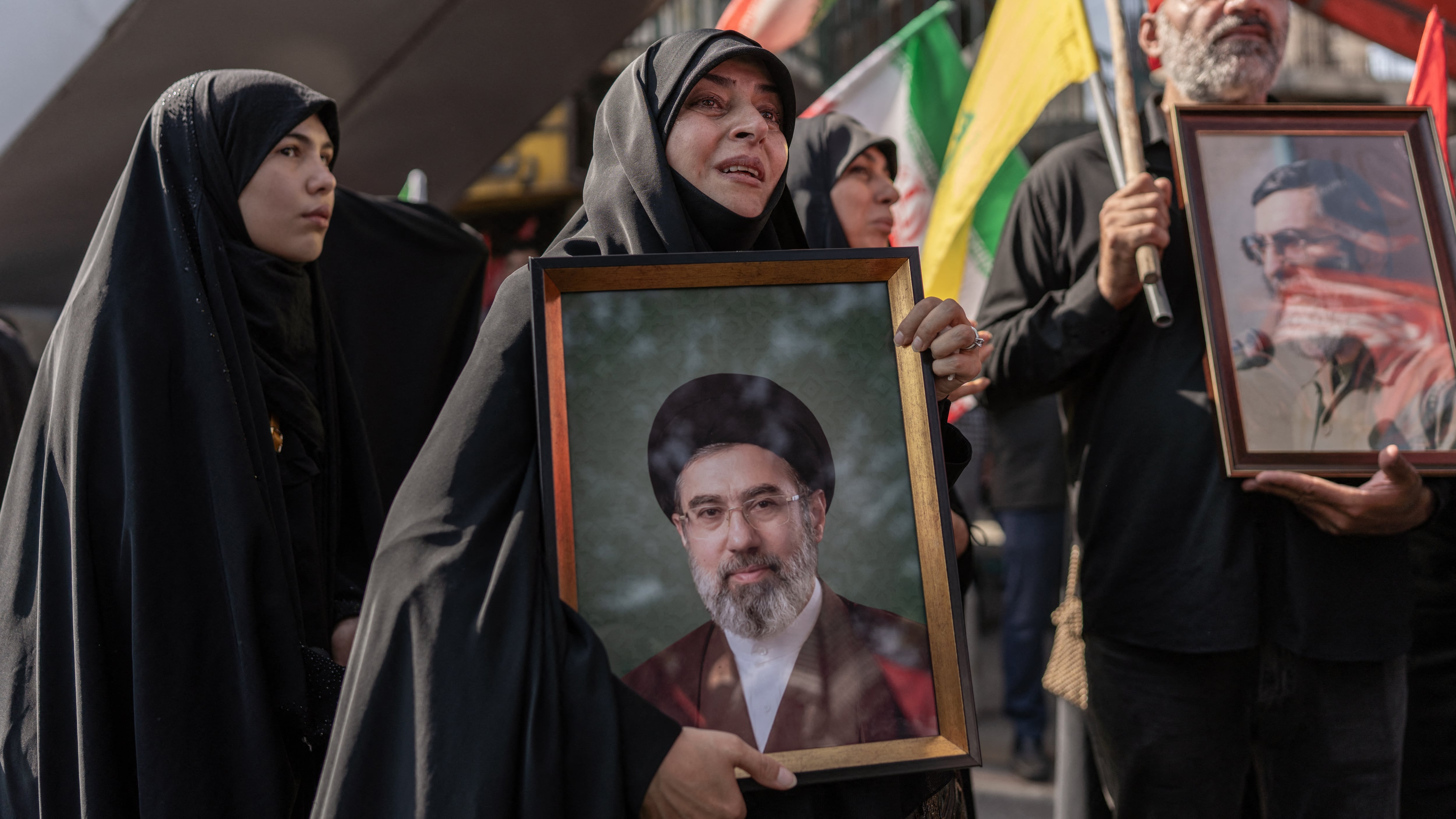
Iran's President Masoud Pezeshkian has transitioned from boasting of greater access to Ayatollah Mojtaba Khamenei to reporting very difficult communication with the ailing supreme leader. This sudden shift has sparked questions about who truly holds the reins of power in Tehran, especially as crucial negotiations with the US unfold, potentially leading to either a lasting peace or a full-blown war.
Amidst these changing dynamics, the regime's image of strength and stability at home and abroad appears to be faltering, revealing a leadership that is far from united.
During recent talks with mediators, Iranian negotiators struggled to reach a consensus among themselves, suggesting a lack of agreement on crucial issues. The younger Mr. Khamenei, who had previously stayed out of public view during his father's state funeral, has only added to the speculation surrounding his health and whereabouts. His absence and the cryptic remarks from Iranian leaders about his decision-making have left mediators and the US, the other party in negotiations, perplexed.
Mr. Pezeshkian's attempts to reassure during a previous visit to industrialists about increased communication and greater access to the supreme leader have been contradicted by recent statements indicating that communication with Khamenei is very difficult. Allegedly, the President was taken to a secretive location in Tehran and only allowed a brief conversation with a man claimed to be the supreme leader. The authenticity of this encounter remains unverified by other sources.
Iran's political and military structures are intricate, with power historically centralized in the supreme leader. The recent death of Ayatollah Ali Khamenei has ushered in a period of collective leadership, with power now distributed among security institutions, particularly the Islamic Revolutionary Guard Corps (IRGC). The IRGC, formed to defend the 1979 revolution, has steadily grown its influence, overtaking the supreme leader's direct control over various aspects of governance.
Key figures like Mohammad Bagher Ghalibaf, Mohammad Baqer Zolqadr, and Ahmad Vahidi have effectively run the day-to-day affairs of Iran, positioning the IRGC as the de facto center of power.
The IRGC's consolidation of power, coupled with the decentralization of leadership, has resulted in a slower and more convoluted decision-making process. Amidst the uncertainty surrounding Khamenei's condition, security challenges have emerged, with mediators forced to rely on paper notes and physically travel to Tehran, as technology use is heavily restricted by the regime. Recent reports even suggest the possible Israeli involvement in a strike that killed Ali Larijani, further complicating the situation.
While the exact nature of Khamenei's condition remains unknown, the power vacuum created by his absence is evident. As Iran navigates this precarious period, the question remains: will the nation endure, or will the centrifugal forces of power struggle and security concerns ultimately tear it apart?
Written by urgent.news from The National Business's reporting — not their text. Machine-written — may contain errors; check the original before relying on it.
Also reported by 1 other outlet
- Pezeshkian has rare meeting with Mojtaba Khamenei brecorder.com