Six months of action gaming alters brain networks and improves visual attention
Long-term action video game training might do more than just improve your gaming skills. A new study reveals how six months of digital combat reshapes resting brain waves and whole-brain connectivity to boost visual attention.
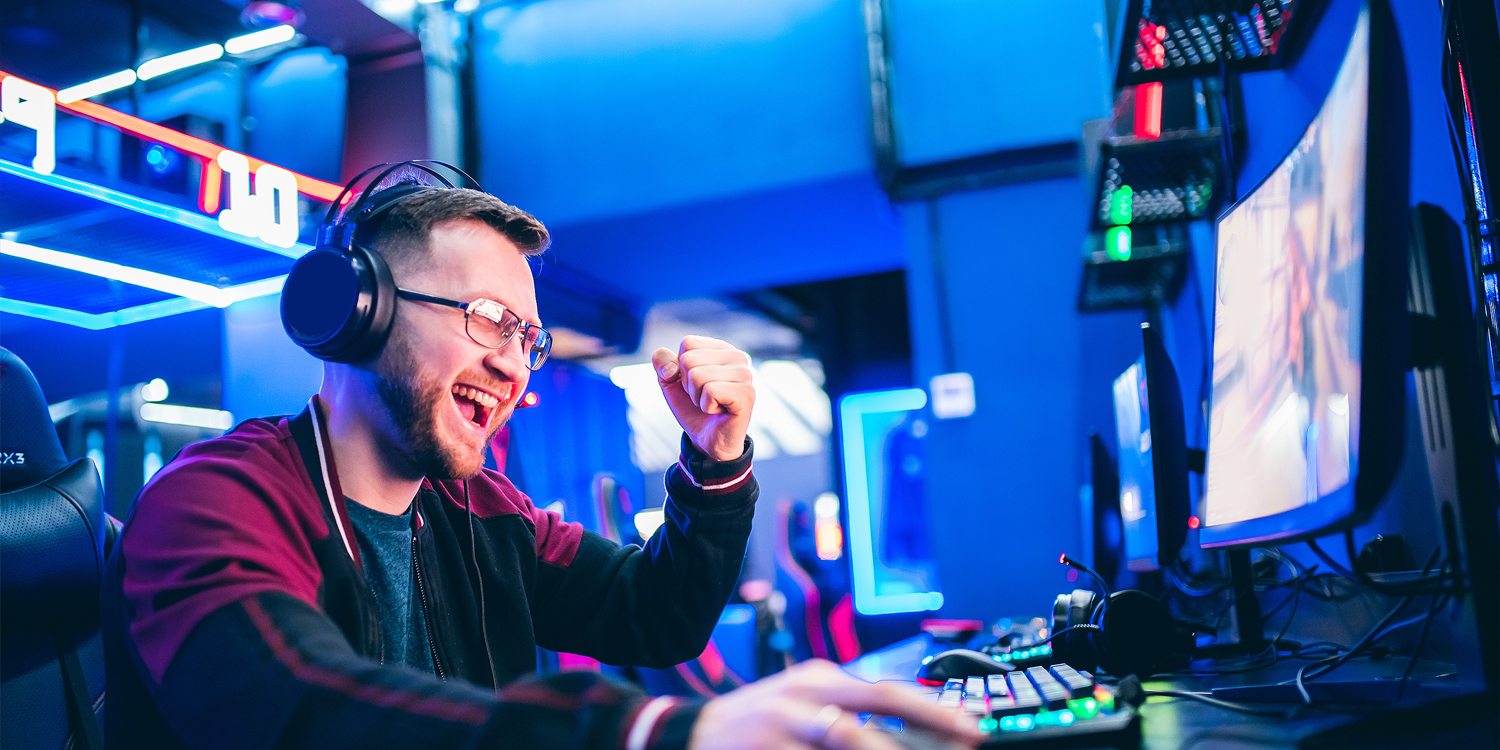
A new study published in the International Journal of Psychophysiology reveals that extended play of action video games can lead to measurable improvements in attention and alterations in brain activity. Researchers from the University of Electronic Science and Technology of China investigated how six months of daily gaming affected neural patterns.
Participants, all university students new to gaming, played Counter-Strike: Global Offensive for an hour each day, five days a week, for a total of roughly 120 hours. The researchers tracked changes in brain wave patterns and entire-brain connectivity over the half-year period. Initial evaluations were taken at the start, three months, and six months into the study.
Participants completed two behavioral tasks: one measuring selective attention and another assessing distributed attention. Selective attention tasks involved quickly scanning lines of letters and pressing a key only when encountering a specific target letter, while distributed attention tasks required identifying a target shape among six others in the peripheral visual field.
Both types of attention improved over time, with reaction times on selective attention tasks becoming faster and distributed attention tasks showing continued improvement by the study's conclusion. Brain recordings using electroencephalography (EEG) were taken while participants rested with closed eyes. These resting-state recordings provided a measure of the brain's inherent organization.
Researchers analyzed local brain activity, focusing on alpha waves, which are associated with resting states and the suppression of irrelevant visual information. They observed a steady decrease in alpha wave power, particularly in the parietal and occipital regions at the back of the brain. Greater reductions in alpha power correlated with faster reaction times on the selective attention task.
The researchers also mapped functional networks across the entire brain, measuring how closely different brain regions synchronized their electrical waves. They found a progressive increase in synchronization between spatially separated brain regions, becoming more intense by the six-month mark. This synchronization was particularly notable in the frontal, parietal, and occipital lobes.
The study's findings suggest that long-term action gaming can reshape brain networks, enhancing both localized brain wave power and large-scale communication between brain regions.
Written by urgent.news from PsyPost's reporting — not their text. Machine-written — may contain errors; check the original before relying on it.