New water-birth guidelines aim to standardise care
Women choosing to use water for labour or birth will receive a more consistent level of care under Ireland's first national clinical practice guidelines on the use of birthing pools.
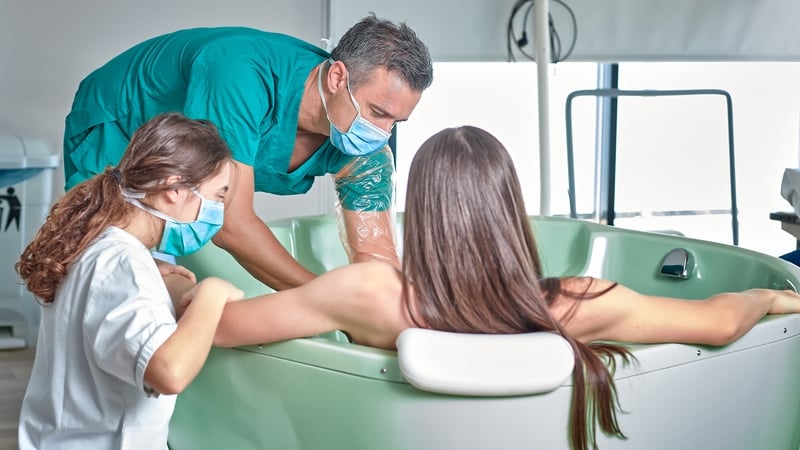
Ireland has introduced its first set of national clinical practice guidelines for women opting to use water during labour or birth. These guidelines, developed by the HSE's National Women and Infants Health Programme and approved by the Institute of Obstetricians and Gynaecologists, aim to standardise the care provided across all maternity settings, both in hospitals and at home.
Lead author Paula Barry, an assistant director of midwifery at The Coombe Hospital in Dublin, explained that the guidelines will ensure a consistent and evidence-based approach to this method of childbirth, allowing for less variability across different units. The guidelines cover important aspects such as patient monitoring, water temperature and depth, and emergency procedures.
They also emphasize the importance of informed choice for pregnant women, providing strict criteria for eligibility, which include being a healthy woman with a low-risk pregnancy, full term, in normal labour, not having high blood pressure, not being diabetic, and not having twins. Barry expressed hope that future criteria could be expanded to accommodate more women who wish to use a birthing pool.
Currently, 12 out of Ireland's 19 maternity units have birthing pools, though not all facilitate water births. There is growing interest in water births, though numbers are still relatively low; at The Coombe Hospital, only a couple of women use the pool at any given time. While there is no national figure for the total number of women opting for water births, the Central Statistics Office's data from 2023 shows that 292 home or non-hospital births were recorded.
One of these women, Rachael Perry, had a water birth two years ago at Our Lady of Lourdes Hospital in Drogheda, where her sister-in-law is a midwife. Perry welcomed the introduction of these guidelines, as she believes they will serve as a valuable resource for women considering this option. Barry emphasized that while the new guidelines are primarily aimed at healthcare professionals, they also serve to inform and empower women to explore this option with their healthcare team, understanding that it is an option available to them if it fits their circumstances and preferences.
Written by urgent.news from RTE News's reporting — not their text. Machine-written — may contain errors; check the original before relying on it.