New smart highway technology a fix for renewable energy traffic boom
A tiny Hunter town is feeling the impact of the renewable energy boom with a surge in heavy vehicle movements, but there is hope a first-of-its-kind trial on the Golden Highway will improve safety.
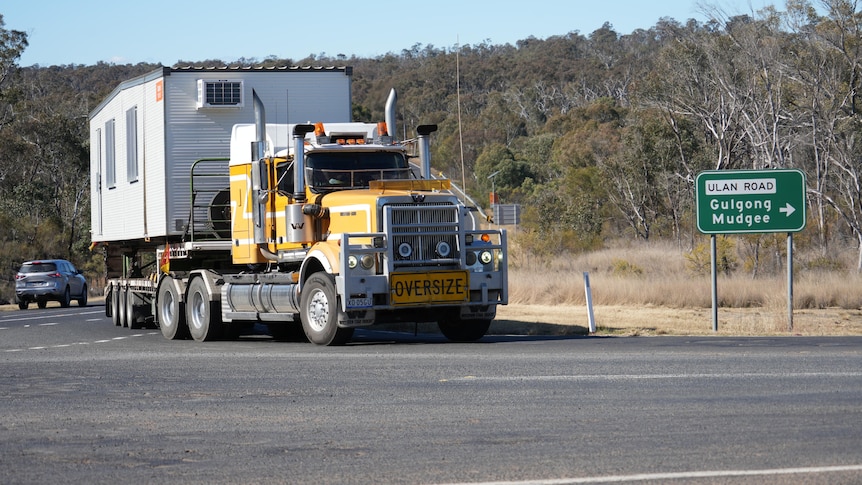
Communities situated near the Central West Orana Renewable Energy Zone have been advocating for enhanced safety measures due to heavy vehicles traversing the Golden Highway. The Rural Intersection Speed Zone (RISZ) system, a new smart highway technology, is currently being tested on the Golden Highway in Cassilis, a town with a population of around 300 in New South Wales' Upper Hunter.
Cassilis' chair of the development group, Jane Hegarty, expressed concern over the increasing number of oversized and over-mass vehicles, which have made travel hazardous. The Golden Highway primarily carries heavy vehicles to and from the Central West Orana Renewable Energy Zone, with about 30% of the traffic comprising heavy vehicles.
The RISZ system utilizes vehicle detection and variable speed limit signs to slow down vehicles on the highway, enabling those on the side road to enter safely. Installed on the Golden Highway at Cassilis, the system employs radar detectors to identify vehicles approaching the highway from Ulan Road, triggering warning signs before the speed limit returns to normal.
Designed for rural intersections, the RISZ aims to facilitate the safe merging of larger, slower-moving vehicles. While similar technology exists in Victoria, it has been tailored for Cassilis, considering the heavy vehicles from the renewable energy zone, freight, and mining. The NSW Roads Minister, Jenny Aitchison, highlighted that the RISZ system would maintain traffic flow by restricting the speed limit only when necessary, avoiding blanket speed zone restrictions.
The Golden Highway has received over $128.5 million in funding for upgrades, with more to come, making it a "generational investment" in the state's road network. The RISZ system will be evaluated for 12 months to determine its effectiveness in preventing accidents and improving safety.
Written by urgent.news from ABC News AU's reporting — not their text. Machine-written — may contain errors; check the original before relying on it.