Jan Vishwas Motor Law Changes To Ease Minor Offences From August 15, Lawyers Flag Road Safety And Due Process Concerns
Mumbai, August 8, 2026: From August 15, several minor and technical violations under the Motor Vehicles Act are set to be dealt with through a simplified compounding mechanism instead of criminal proceedings. While the Jan Vishwas (Amendment of Provisions) Act, 2026 is expected to reduce the burden on motorists, transporters, and courts, lawyers have raised concerns over road safety, victims’…
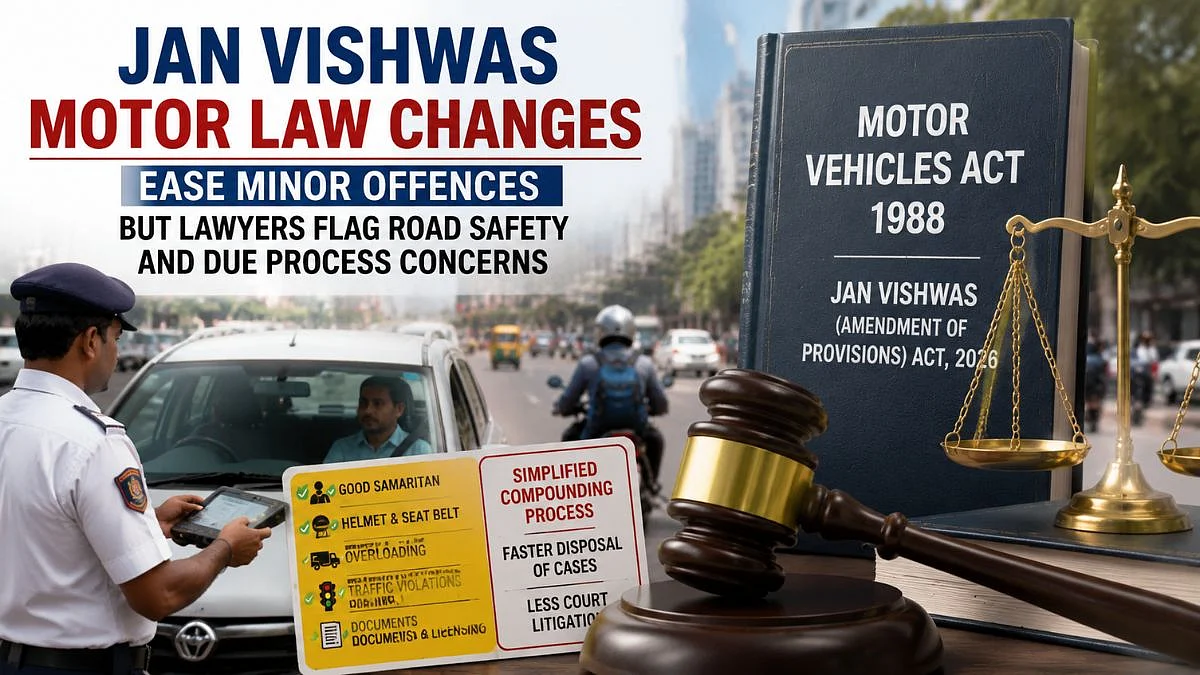
From August 15, 2026, India will implement a new scheme under the Jan Vishwas (Amendment of Provisions) Act, 2026 to deal with minor motor vehicle violations differently. Instead of proceeding through criminal courts, these violations will be managed via a compounding mechanism, allowing quicker resolution. The Motor Vehicles Act, 1988 has been amended, and the Ministry of Road Transport and Highways has notified the new provisions.
The changes cover a wide range of minor offenses, such as traffic rule violations, lane discipline, traffic-sign violations, overloading, excess passengers, seat-belt violations, certain safety violations for two-wheelers, and insurance and licensing-related violations. These changes are expected to ease the burden on motorists, transporters, and courts by providing a simpler and more efficient process for addressing these offenses.
However, the reform has raised concerns among legal experts. While proponents argue that decriminalizing minor offenses will promote a reformative approach to punishment and reduce court burden, critics warn that certain violations may pose serious threats to road safety. They argue that executive authorities should not be granted the power to levy penalties without proper safeguards to protect due process rights.
Advocates practicing before the Motor Accident Claims Tribunal (MACT) emphasized that their cases involve different procedures and are not affected by the current changes. Despite these concerns, the transport sector has welcomed the reform, hoping it will lead to a more practical, transparent, and business-friendly enforcement system. However, its implementation will require careful monitoring to ensure accountability and prevent misuse.
Written by urgent.news from Free Press Journal's reporting — not their text. Machine-written — may contain errors; check the original before relying on it.