India’s Kusha missile test signals step closer to self-reliance for air defence
India’s first test of its Kusha long-range surface-to-air missile system is seen as a milestone that could pave the way for New Delhi to bolster its home-grown air defence network and meet the challenges of future conflicts. Developed by the state-run Defence Research and Development Organisation, the system is expected to become a key part of the two-phase Mission Sudarshan Chakra, Prime…
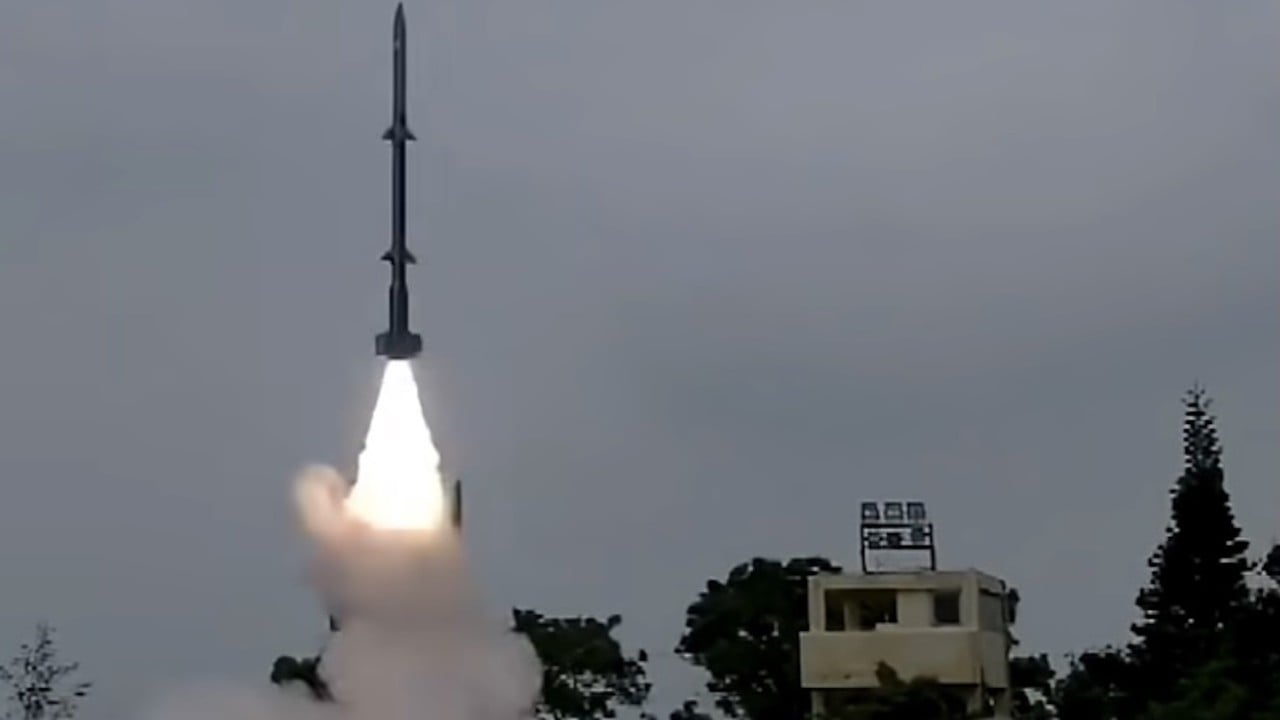
India conducted its maiden test of the Kusha long-range surface-to-air missile system, marking a significant step towards bolstering its domestic air defense capabilities and fulfilling Prime Minister Narendra Modi's vision of a multilayered national defense network by 2035. The state-run Defence Research and Development Organisation developed the system.
The test on July 23 has drawn attention to the threats posed by adversaries and India's dependency on imported weaponry, such as Russia's S-400 Triumf, whose delivery has been delayed due to the ongoing conflict in Ukraine. Indian Air Force leadership praised the S-400's performance during last year's conflict with Pakistan, noting it had downed five enemy fighter jets and an early warning aircraft.
However, the system's delivery has been affected by Russia's military needs. Ravi Gopal Krishna Kapoor, a retired air marshal, said the Kusha could seamlessly integrate into India's air defense architecture due to its domestic development. He emphasized the increasing number of threats from drones and missiles, along with fifth-generation fighter aircraft, and stressed the importance of a robust, multilayered air defense system.
The Indian air force has received four operational S-400 squadrons and is set to receive a fifth by late 2024, but this may not suffice to defend the entire nation adequately. The Kusha could complement the S-400 systems as part of the outermost layer of air defense, with short-to-medium range surface-to-air missiles, such as the Akash, forming the inner layer.
The Indian air force also sees potential in the Kusha's limited offensive role to deter enemies from launching their weapons, as demonstrated during Operation Sindoor. The indigenous missile system would give India tighter control over the supply chain, reducing vulnerability to foreign dependencies. Kusha's relatively lower cost compared to comparable imported systems could provide deterrence against a variety of threats, including fighter jets, cruise missiles, and drones.
Srinivasan Balakrishnan, director of strategic engagements and partnerships at the Indic Researchers Forum, stated that the Kusha is crucial for complete Mission Sudarshan Chakra, ensuring nationwide coverage of strategic and civilian assets.
Written by urgent.news from South China Morning Post's reporting — not their text. Machine-written — may contain errors; check the original before relying on it.