Immobilien: Solarförderung: So viel ist für Eigentümer noch drin
Erst sollte komplett Schluss sein. Doch nun gibt es doch keinen sofortigen Förderstopp für kleine Solaranlagen. Welche Summen für die Einspeisevergütung noch möglich sind.
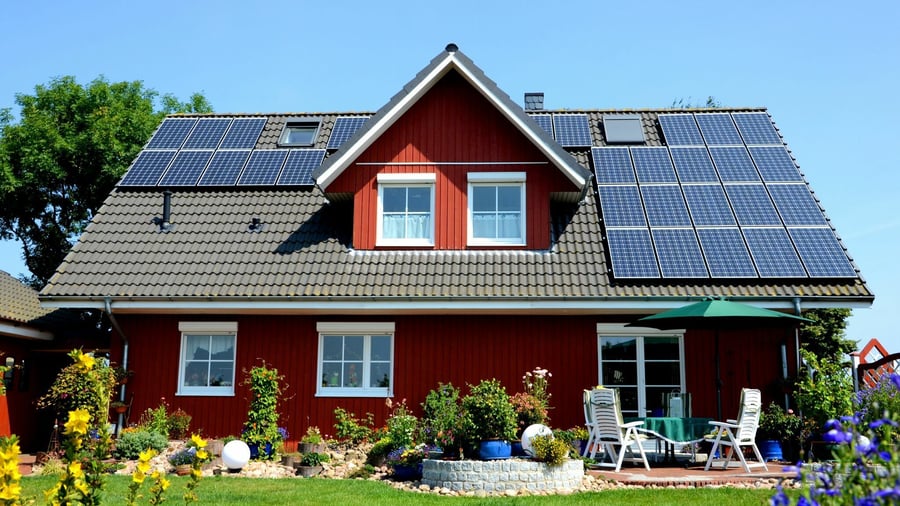
Solar energy owners in Germany are urged to act soon as the government has softened its initial plans for reducing renewable energy subsidies. As of July, Federal Economics Minister Katherina Reiche (CDU) has revised her plans, keeping a fixed feed-in tariff for up to 20 years for installations commissioned by the end of the year.
The exact rates, size of systems, and timeline for reduced subsidies have been published by the Federal Network Agency. As of August 1st, new tariffs for feeding solar power into the public grid depend on the installation date and the system's installed capacity. For example, a new ten-kilowatt system can now only expect between 7.7 and 12.2 cents per kilowatt-hour, depending on whether the owner consumes some or all of the generated power.
Larger systems have lower rates, with no subsidies for installations over 100 kW under the Renewable Energy Sources Act (EEG). The general subsidy for new installations ends next year, but a temporary transition payment will replace it, starting in 2027 for systems under 50 kW, 25 kW for systems under 25 kW, and seven kW for systems installed in 2029 and 2030.
The transition payment will decrease every six months, with no payment after 2031. Initially, the transition payment is set at 5.2 cents per kilowatt-hour, decreasing every six months. The goal is to make feeding solar power less attractive, encouraging homeowners to use the generated power themselves. Direct sales through the power exchange are also expected to increase, with a direct sales bonus of 1.5 cents per kilowatt-hour for 48 months.
However, the law is not yet in effect, as it needs approval from the Bundestag, Bundesrat, and EU Commission. The KfW loan program is also available for financing batteries, and homeowners can benefit from tax-free purchases and installation for small systems (up to 30 kW) and batteries. Regional subsidies from states and municipalities are also available, such as Berlin's "Solar Plus" program for solar systems and storage, Hamburg's "Hamburger Dachbegrünung" for solar panels and green roofs, and Baden-Württemberg's "Wohnen mit Zukunft" program for zinsslender loans.
Many cities, including Stuttgart and Hanover, also offer financial incentives for solar installations.
Written by urgent.news from Handelsblatt's reporting — not their text. Machine-written — may contain errors; check the original before relying on it.