How I Built Browser-Based Tools Without Sending User Data to a Server
When building small online utilities, one question comes up surprisingly often: Does the user's data really need to leave their browser? For many types of tools, the answer is no. That's one of the principles behind Giga Useful Tools : whenever possible, tools should perform their processing directly in the browser instead of uploading user data to a backend server. Why process data in the…
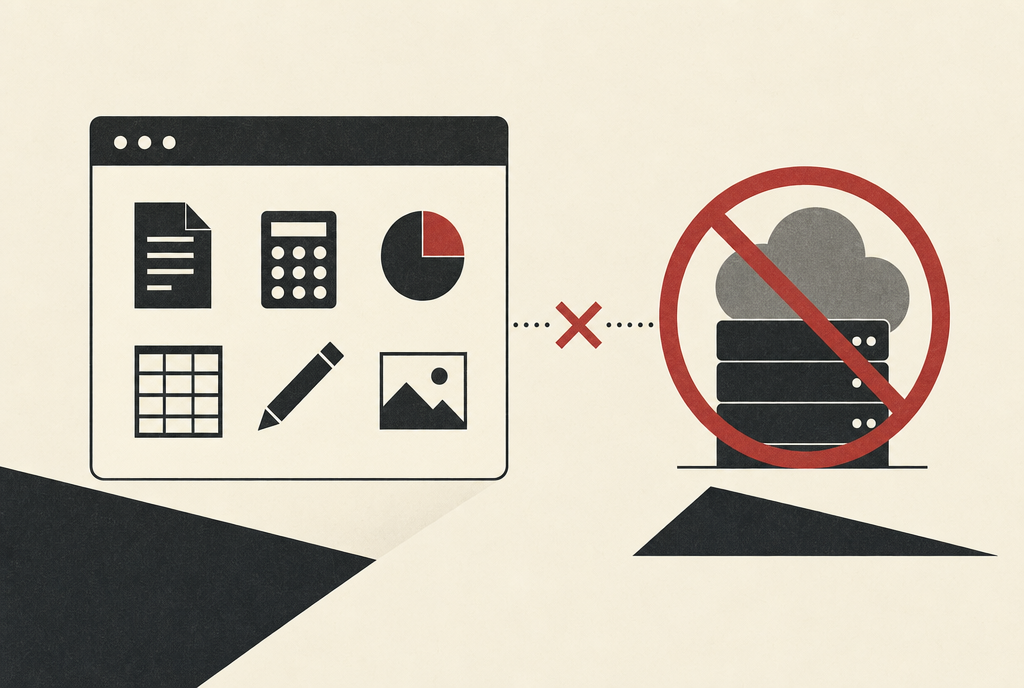
Processing user data on a server can often be unnecessary for small online tools. The data may never need to leave the user's browser. Traditional web applications involve a user uploading data to a server, which then processes the data and sends the result back to the user. However, this architecture may not be required for simple utilities.
A browser-based approach involves the user interacting directly with the browser, which processes the data locally and then displays the result. The server only needs to deliver the application itself. For example, an image conversion tool can be implemented without requiring the user to upload the image to a server. Instead, the browser can convert the image locally using APIs like File, Blob, Canvas, and Web APIs.
This approach has several benefits, including privacy, speed, and simplicity. Processing data locally can be faster than server-side processing, as it eliminates unnecessary network overhead. It also simplifies the application, as there is no need for file upload APIs, temporary storage, or server-side processing queues. Privacy is also improved, as no user data is sent to a server.
However, browser-based processing may not be suitable for all cases, such as extremely CPU-intensive computations, operations requiring large amounts of memory, or collaboration between multiple users. In those cases, server-side processing may be more appropriate. Building small online utilities with a browser-first approach can result in better privacy, lower latency, lower infrastructure costs, and a simpler application.
As more people realize the capabilities of modern browsers, they can use JavaScript and browser APIs to build powerful tools without relying on complex backend infrastructure.
Written by urgent.news from Dev.to's reporting — not their text. Machine-written — may contain errors; check the original before relying on it.