Ho Chi Minh City's main water sources continue to deteriorate
The quality of water in the Saigon and Dong Nai rivers, Ho Chi Minh City's two main sources of water, has declined for a second consecutive year, with monitoring agencies detecting excessive levels of ammonia and organic pollutants at numerous locations.
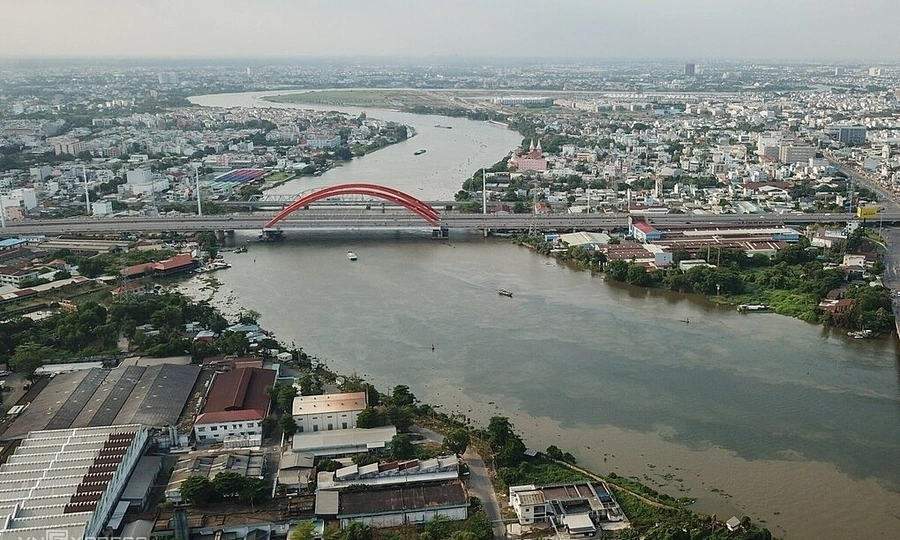
Ho Chi Minh City's main water sources are experiencing a decline in quality, with the city's 2026-2030 Surface Water Quality Management Plan outlining the worsening conditions. The Saigon River, a primary source of water for both domestic and industrial use, saw its water quality index (WQI) decrease from 57 to 93 between 2021 and 2025, slipping from moderate to very good status.
Ammonia levels in the river surged by 1.2 to 5.2 times above national standards, while the chemical oxygen demand (COD) exceeded permitted limits by 1.2 to 3.6 times, indicating elevated organic pollution.
The Dong Nai River, another crucial source of water for HCMC, also faced deteriorating conditions. Its WQI ranged from 74 to 98, although it too saw a decline from 2023 onwards. Ammonia concentrations in the river exceeded standards by 1.2 to 1.7 times, and COD levels at specific monitoring sites surpassed permitted limits by 1.5 to 2.2 times.
Notably, tributaries feeding the Dong Nai River, such as Nhum Stream and Xuan Truong Stream, recorded ammonia levels 35.6 times and COD levels over 12 times higher than permitted limits.
To address the issue, HCMC aims to tighten control over wastewater discharges and manage water quality on a river basin basis. By 2030, the city plans to collect and centrally treat 80% of urban wastewater, ensuring that 85-90% of monitoring sites across the Dong Nai River basin achieve at least moderate water quality.
Written by urgent.news from VnExpress International's reporting — not their text. Machine-written — may contain errors; check the original before relying on it.