What Happens When the World is on Fire
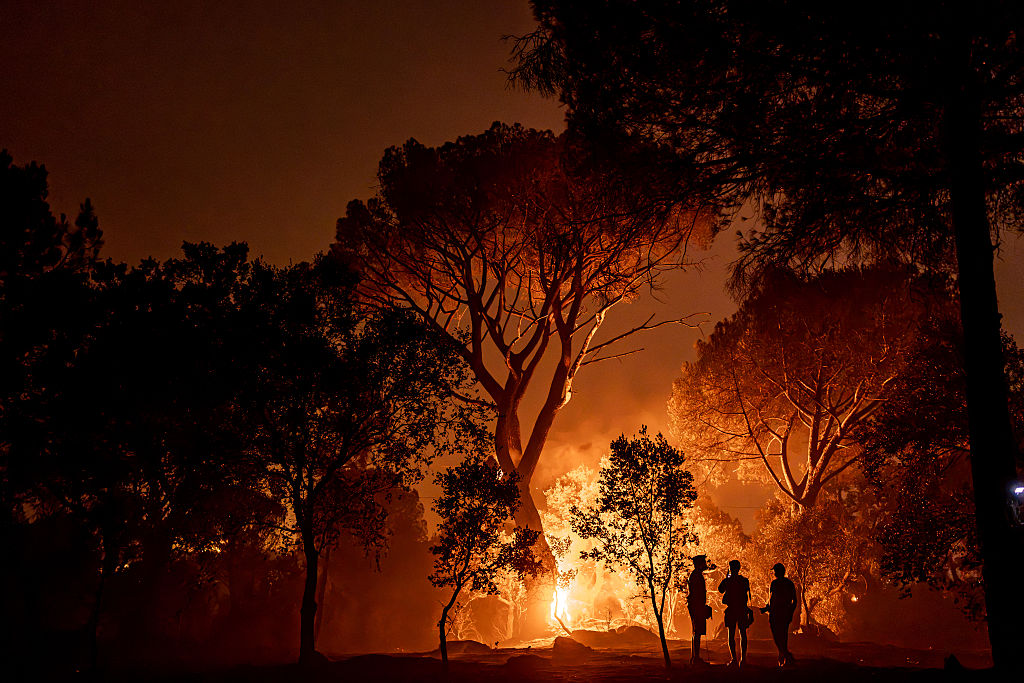
As wildfires rage across Spain, France, and other parts of Europe, the devastating impact of these infernos becomes increasingly apparent. Despite the deployment of water bombers, the aircraft serving as the "air cavalry" of wildfire fighting, some drops prove ineffective due to the extreme heat. Commander Mathieu Jomain, a 26-year veteran in Gironde’s fire service overseeing the Gironde Fire, described the environment above the blaze as "so hot that my payload of 10,000 liters of water evaporates in the air."
This new reality of wildfires in the 21st Century highlights a disturbing trend: traditional firefighting methods are no longer reliable. From America to Algeria, dangerous blazes are occurring with alarming frequency, offering a glimpse into an age ablaze. The question arises: what will this age entail?
In Spain, Interior Minister Fernando Grande-Marlaska declared that the country is facing the most significant and aggressive fire in its history. Over 500 years old, Spain has seen a displacement of approximately one-third of a million people, making it the largest evacuations since World War II. Similar evacuations are underway across Europe, from Portugal to Turkey, as much of the world experiences record-breaking heat, drought, and wildfire conditions.
The U.K., with its once-green landscape now parched to desert brown, is suffering one of its worst droughts in recorded history. In Spokane, Washington, the city grapples with the most destructive wildfire in its history, with mayor Lisa Brown warning of a years-long recovery. British Columbia is bracing itself for the worst fire season yet, while Utah officials echo these sentiments.
Temperatures have soared to unprecedented levels across the Northern Hemisphere, with Russia experiencing temperatures of 90°F near the Arctic Circle, a region not typically known for such heat. The convergence of prolonged drought and record-breaking temperatures has created conditions where unfightable fires are racing across tinder-dry landscapes, fueled by high winds generated by the fires themselves.
The ultimate manifestation of such fires is the pyrocumulonimbus fire cloud, or pyroCb—a colossal fireborne weather system that rotates like a hurricane, can shroud cities in choking smoke, and pierce the stratosphere. Once an anomaly seen only over volcanoes, these systems have become regular occurrences since the late 1990s, when atmospheric CO2 levels reached 370 parts per million (ppm), about 30% higher than pre-industrial levels. Today, CO2 has surpassed 430 ppm, a 50% increase from pre-industrial levels.
As pyrocumulonimbus clouds generate their own fiery weather, including ember blizzards and lightning strikes, they perpetuate themselves almost indefinitely, making firefighting efforts increasingly focused on lifesaving operations. Evacuations have become the only viable option for millions of people caught in the path of hyper-scaling flames. Across Europe, from Athens to Bordeaux, and even in the U.S. city of Spokane, residents face the grim reality of evacuation as their homes and lives become engulfed in flames.
This unprecedented convergence of climate breakdown and extreme weather conditions underscores the urgent need for action. From failed crops and buckling railways to the shutdown of nuclear plants, the impacts of this climate crisis are manifold and far-reaching. As temperatures exceed 110°F, even passenger planes must consider the weight of lighter fuel loads, a grim reminder of the escalating challenges we face in a world on fire.
Written by urgent.news from Time's reporting — not their text. Machine-written — may contain errors; check the original before relying on it.