From small cats to pangolins: Detection dogs help track elusive species
In the grassy dwarf shrublands of South Africa’s Karoo, Michelle Marie Schroeder is looking for a very specific kind of poo. Black-footed cats spend most of the day hidden in burrows and emerge mainly under the cover of darkness, making them notoriously difficult to study. That’s why the conservation biologist relies unconventional assistants: Lyka and […]
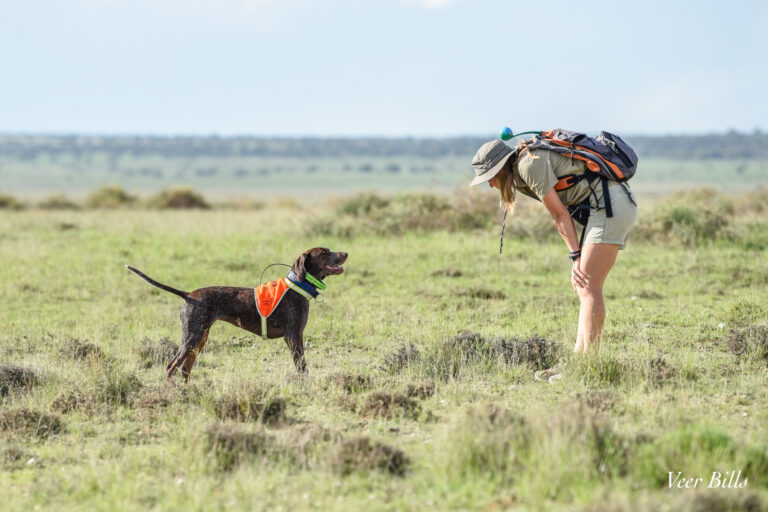
In South Africa's Karoo, conservation biologist Michelle Marie Schroeder is tracking elusive black-footed cats using unconventional means: detection dogs Lyka and Sebala. These German Shorthaired Pointers are trained to identify the cats' scat by scent, a difficult task as the nocturnal predators are hard to study. With the dogs, Schroeder discovered hundreds of samples in a few months, aiding non-invasive genetic monitoring of Felis nigripes.
Lyka's contributions were invaluable, with her finding far more scats than Schroeder alone could have. Hal Brindley, a researcher at the University of Cape Town, also relies on these dogs for studying the cryptic predator. He notes that traditional methods like camera traps and trapping are often ineffective or invasive. The dogs' ability to accurately detect the cats' scat has made non-invasive monitoring of the elusive species possible.
Written by urgent.news from Mongabay's reporting — not their text. Machine-written — may contain errors; check the original before relying on it.