Climate change made Spain, France wildfires far more likely: Scientists
AgenciesMADRID/PARISHuman-caused climate change has dramatically increased the likelihood of the extreme weather conditions behind devastating wildfires in Spain and France, accord...
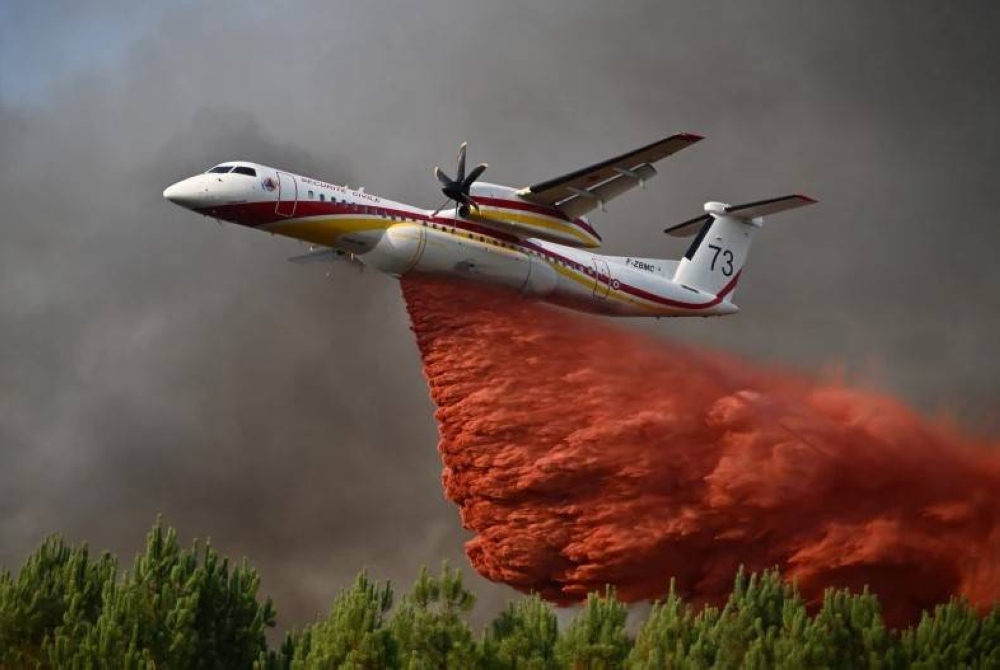
Recent studies reveal that human-caused climate change has significantly heightened the probability of extreme weather conditions fueling devastating wildfires in Spain and France. The World Weather Attribution, a global coalition of climate scientists, discovered that global warming rendered the extraordinary heat and dryness responsible for Spain's record-breaking wildfire 20 times more probable. In France, the likelihood of extreme fire weather conditions linked to the recent blazes doubled.
Beyond merely elevating average temperatures, climate change is crafting weather circumstances that facilitate wildfire ignition, rapid propagation, and heightened difficulty in extinguishing. The analysis evaluated a myriad of meteorological factors impacting fire danger, such as temperature, drought, humidity, and wind. Spain is presently grappling with an exceptionally grave amalgamation of these factors.
The country is enduring its hottest summer on record, while pre-current fire season months fostered excessive vegetation growth and subsequent desiccation, transforming it into highly combustible fuel.
The situation has also been exacerbated by alterations in land usage. As rural populations migrate away from agricultural areas, vast tracts of land remain unmanaged, permitting vegetation and trees to dry out and serve as additional fuel during extended heat and drought periods. In France, extensive pine forests harbor copious combustible vegetation, amplifying the potential for rapid fire growth when extreme weather conditions align with an ignition source.
The research findings align with a separate study published in the scientific journal Scientific Reports, which examined long-term trends in extreme fire weather across Southern Europe. This study revealed that the frequency of days exhibiting highly conducive fire weather has more than doubled. While previous decades experienced around 10 extreme fire-weather days per year, the count has surged to approximately 25 days annually.
Moreover, these extreme fire-weather days are now around 50% more intense than during the 1981-2010 benchmark period. This implies that firefighters and emergency responders confront not only a greater number of days with rapid fire spread potential but also confront more perilous individual fire events. Climate change is reversing earlier advancements, as Southern Europe once achieved substantial progress in controlling wildfires, with a notable decline in fire numbers and burned land from the 1980s to around 2018, primarily due to improved fire suppression, land management, and prevention efforts.
However, scientists contend that these gains are swiftly being undermined by climate change. Raúl Cordero, a climate scientist at the University of Groningen, explained that increasingly extreme weather conditions can surpass the capacity of even well-equipped firefighting systems. Concurrent factors, including prolonged drought, extreme temperatures, low humidity, and strong winds, can swiftly escalate fire expansion, rendering rapid deployment of firefighting resources insufficient to prevent fires from rapidly spreading.
Jacob Bendix, a fire scientist at Syracuse University, emphasized that the findings echo decades-long understanding among wildfire researchers. Extreme heat and drought render vegetation more flammable, heighten the likelihood of rapid fire spread, and complicate firefighting efforts. Simultaneously, anthropogenic climate change augments the frequency and intensity of extreme heat and drought.
The new research quantifies the extent to which climate change has altered these risks in Spain and France, demonstrating that increasingly dangerous fire-weather conditions are already being observed in vulnerable regions of Southern Europe.
Written by urgent.news from Qatar Tribune's reporting — not their text. Machine-written — may contain errors; check the original before relying on it.
This story
This is one outlet's version. Read the fullest account.
- Hantavirus detected in France tourist now isolated in Spain medicalxpress.com
- Hantavirus detected in France tourist now isolated in Spain channelnewsasia.com