Vulnerable community members push for Census recognition
The Australian Bureau of Statistics has sent field officers to services helping people without permanent homes to ensure everyone can be counted in Tuesday's Census.
The Australian Census is currently interviewing vulnerable populations, including homeless individuals, to accurately capture the number and profile of those experiencing homelessness across the nation. Despite five Christian denominations being listed among the 10 religion tick boxes, Judaism is not included due to its smaller population size.
Those living rough face numerous challenges, and completing a Census form is often not a priority for them. However, the information gathered is crucial for government planners and advocates.
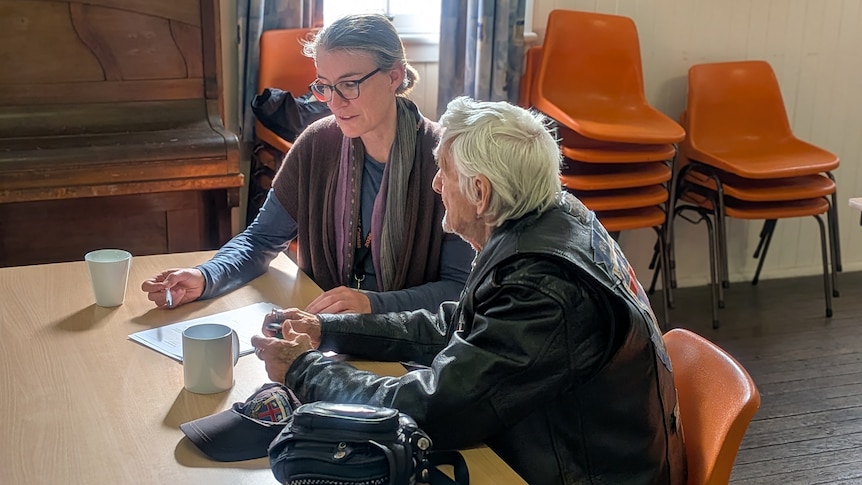
Timothy Coles, who has been sleeping rough in Coffs Harbour for years, plans to complete the Census next week to provide insight into the hardships faced by Australian citizens. Pete's Place, a homeless crisis support service in Coffs Harbour, has been visited by Census field officers for questioning. With high demand for support services in the area, team leader Anna Millett explains that some clients face difficulties filling out forms, particularly those with mental health issues, drug and alcohol use, domestic violence experiences, or young individuals.
Starting tomorrow, field officers will conduct interviews with willing participants and record responses on a custom two-page homeless Census form. The Australian Bureau of Statistics (ABS) has been working closely with homeless services to identify the best locations for gathering Census data. Emily Walter, a spokesperson for the ABS, mentioned that they are strategically placed at support services and streetside medical facilities where people sleeping rough seek assistance.
Australian National University demographer Liz Allen previously experienced the Census failure to recognize her situation when she was "couch surfing" as a teenager. However, the ABS has since developed a more holistic definition of homelessness, enabling them to collect vital data from individuals living in improvised dwellings and facing challenging circumstances. The estimated 122,494 people experiencing homelessness in Australia during the 2021 Census night marked a 5.2% increase compared to the 2016 survey.
Dr. Allen emphasizes that Census data collection is now sensitive and deliberate, allowing the ABS to build a workforce that can sensitively ask about living conditions and gather essential data from those living in improvised dwellings. In the 2021 Census, 5.2% more people were estimated to be homeless compared to the previous survey, and Dr. Allen predicts an increase in the proportion of people facing difficulties.
Refugee households, such as the Al-Hassan family, often rely on children to answer the Census questions. Bahin Al-Hassan, a 16-year-old Yazidi youth, is among local multicultural volunteers creating community language videos about the Census in the Ezidi language. The Census recognizes the Yazidi faith as a religion, but the community continues to push for recognition as its own check box. Coffs Harbour community leader Sami Sheebo has been campaigning for Yazidi community recognition.
With the Jewish community also advocating for a specific tick box, Executive Council of Australian Jewry co-chief executive Peter Wertheim estimates the Jewish population at 117,000, despite the Census reporting 99,956. Wertheim highlights the rising antisemitism and the potential impact on Jewish people's willingness to record their faith on the Census.
Written by urgent.news from ABC News AU's reporting — not their text. Machine-written — may contain errors; check the original before relying on it.