There will be a lack of port and good ore: the theses of Cedro's new chairman
Um veterano da mineração que fez carreira na Vale e CSN, José Carlos Martins acaba de assumir como o novo chairman da Cedro para conduzir um plano de investimentos de R$ 10 bilhões que passará não só pelo minério de ferro, mas também por infraestrutura própria. Conselheiro da companhia do empresário Lucas Kallas desde sua […] The post Vai faltar porto e minério bom: as teses do novo chairman da…
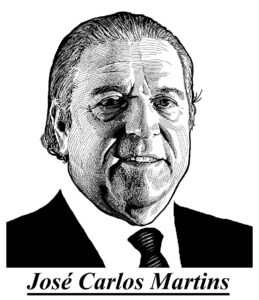
A mining veteran who made his career at Vale and CSN, José Carlos Martins has just taken over as the new chairman of Cedro to lead a R$ 10 billion investment plan that will not only focus on iron ore, but also on its own infrastructure. A member of the company's board of directors since its foundation, led by entrepreneur Lucas Kallas, he wants to execute half of this capex by 2030, and to do so, he will seek partners.
An IPO is not in the plans now, given his assessment that the market has a "negative and distorted" view of the sector's prospects. "I don't lose sleep over iron ore," Martins said in a conversation with the Brazil Journal in which he outlined the theses that will guide Cedro's strategy in the coming years. "You can see that companies like Vale are buying back their shares.
When they do that, it's because they think the stock is cheap. The market is not seeing the multiple in the mining industry that would be ideal for us to list. So listing now would be diluting the shareholder, it doesn't make much sense." Instead of the stock exchange, Cedro is considering alternatives including private equity funds to support its capex.
"What we are really looking for are sources of financing, whether local or international, and also partners who want to participate in the capital with us," Martins said. To ensure returns - and attract investors - Cedro is betting on extracting high-iron-content ore, up to 68% (above the global benchmark of 62%), and on a pellet feed production project in Mariana, Minas Gerais.
This product, known as "green ore," is used for steel production through the "direct reduction" technique, which uses natural gas instead of coal, reducing carbon emissions in the process. The pellet feed project is budgeted at around R$ 3 billion and is advancing to the licensing phase. "It's a more recent technology and it's growing in the world," the chairman said.
"We believe in a continuity of demand for iron ore, but it has to be of better quality. Good ore will expel bad ore from the market." At the same time, Martins sees a trend of reducing iron concentration in world ore, caused by the over-exploitation of old mines due to the difficulty in investing in new units - either due to environmental issues or the negative view of the sector that predominates in the market.
"If no new mines are opened, what happens? They try to exhaust the ones that already exist. Then costs go up and quality goes down. For example: if you had ore with 62% iron content and start producing with 61%, you need 20 to 30 million tons more to get the same volume of iron. That's why I say there's no reason for concern." Despite this confidence in the future of mining, Cedro is concerned about infrastructure bottlenecks in the country.
That's why the company decided to invest in its own port and railroad, with capex of R$ 3.5 billion and R$ 3 billion, respectively. "We believe that in the coming years there will be a shortage of ports in Brazil. With the resumption of Vale's production and other investments in mining in Minas Gerais, there will be a lack of capacity.
So we're getting ahead," Martins said. Two years ago, Cedro won a 35-year concession for its terminal in Itaguaí (RJ), and will install a project with a capacity to move up to 15 million tons per year. It will be the "Porto do Meio", between the terminals of Vale and CSN. "We're preparing for a port scarcity scenario ahead. The port will give us the possibility of participating directly in the external market and also serving other miners who are interested," Martins said.
The railroad is a short line connecting a mining region in Minas to a line of MRS that will then take the cargo to the Sepetiba port. The project will serve other mining companies that currently carry their production by trucks. Cedro itself does not plan to use the branch, as it will move its ore with electric conveyor belts to the terminal.
The projects are all in the licensing phase, with the port in a more advanced stage. "Brazilian environmental legislation is quite demanding, as it should be. But it could be a bit faster," Martins said.
Translated by urgent.news. Machine-written — may contain errors; check the original before relying on it.