Trump’s Déjà-Vu Moment on Birthright Citizenship
The president’s latest attempt to limit who is an American by birth is plagued by weak legal arguments and nonsensical claims.
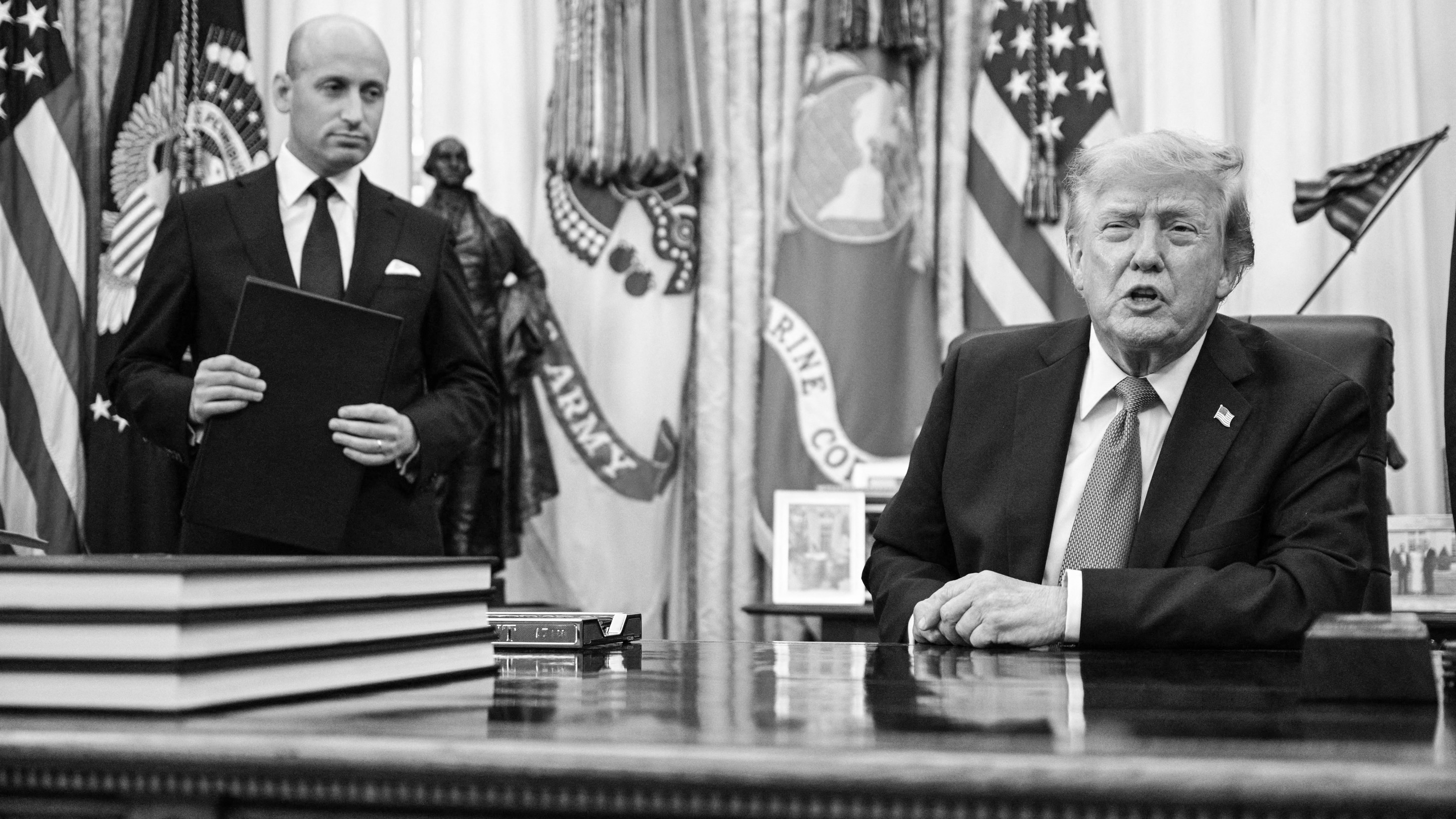
President Trump is attempting to limit birthright citizenship, a practice established in the U.S. since the late 19th century. In his previous attempt, an executive order to end the automatic granting of citizenship to babies born in the U.S. was struck down by the Supreme Court this June. Yesterday, Trump issued new executive orders aimed at denying automatic citizenship to children born to people living in the U.S. while working for a foreign government, children of people deemed terrorists or adversaries, and those born in U.S. territories if a proposed law is passed.
Additionally, the orders aim to prevent "birth tourism." Legal experts and advocates assert that these orders would be unconstitutional and face court challenges. Trump’s claims, such as birth tourism being a widespread practice, appear to be greatly exaggerated, as estimates suggest only between 20,000 and 26,000 births annually out of roughly 3.6 million births in the U.S. The orders also reference "alien enemies," a concept that could be disputed due to the administration's exaggerated claims about illegal immigration posing an "invasion."
The president's announcement of the orders was full of fabrications and exaggerations, including an incorrect claim that the Fourteenth Amendment was aimed solely at the children of slaves. If these claims had been obvious since 1868, the U.S. wouldn't have implemented birthright citizenship for more than a century. Trump's approach to ending or restricting birthright citizenship risks undermining one of the fundamental bases of modern American society.
Justice Brett Kavanaugh suggested that Congress could alter birthright citizenship through a law, but this seems unlikely, and pushing for it would require sustained attention from Trump. Instead, Trump is relying on executive orders, which are easily reversed by a future president and have already failed.
Written by urgent.news from The Atlantic's reporting — not their text. Machine-written — may contain errors; check the original before relying on it.