The last wave? How Singapore's only surf break grew a community of more than 100
The spot remained a closely guarded secret for years before a surge in numbers during the COVID-19 pandemic. Now, the impending "Long Island" project clouds the community's future with uncertainty.
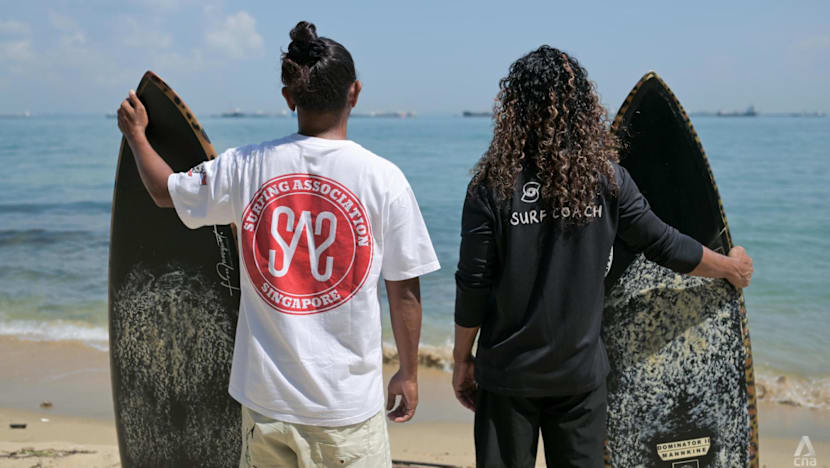
In Singapore's coastal waters, the unique surf break at Longkang Point has attracted a tight-knit community of more than 100 surf enthusiasts. First discovered by a group of lifeguards and seasoned surfers in the late 1990s, the spot remains hidden from the public eye, nestled behind a concrete storm drain just off Changi Coast Walk. Dubbed "Longkang Point" by locals, the name translates to "drain" or "canal" in Malay.
Unlike popular surf destinations in neighboring countries, Longkang Point's waves are modest, but their scarcity makes them special to the surfers who frequent the spot. To see waves break on Singapore's shores, as Mr Haridzal Arshat, a 47-year-old avid surfer, explained, "We were ecstatic. We are in Singapore, and we get to surf!"
The community at Longkang Point grew significantly during the COVID-19 pandemic when international travel was restricted. With a current membership of roughly 100 people, ranging from beginners to experienced surfers, the spot offers a unique experience where anyone can enjoy the ocean. As Mr Nazir Salleh, president of Surfing Association Singapore, put it, "It's the perfect surf spot for families and friends, and kids. Even the older folk can enjoy it there."
However, the future of Longkang Point is uncertain due to Singapore's long-term land reclamation project, known as the Long Island project. Scheduled to begin preparatory works in late 2026, the project will cover about 570 hectares of water west of Bedok Jetty, disrupting the seabed mechanics required to generate Singapore's only natural surf waves. This development threatens to erase the beloved surf break, leaving the community's future in doubt.
Written by urgent.news from Channel News Asia's reporting — not their text. Machine-written — may contain errors; check the original before relying on it.