SpaceX Junk Hits the Moon. Not a Good Sign
The spent upper stage from a SpaceX Falcon 9 rocket has struck the Moon, illustrating the hazard posed by debris in cislunar space. This problem will increase as launches to orbit and to the Moon become more common in the coming years.
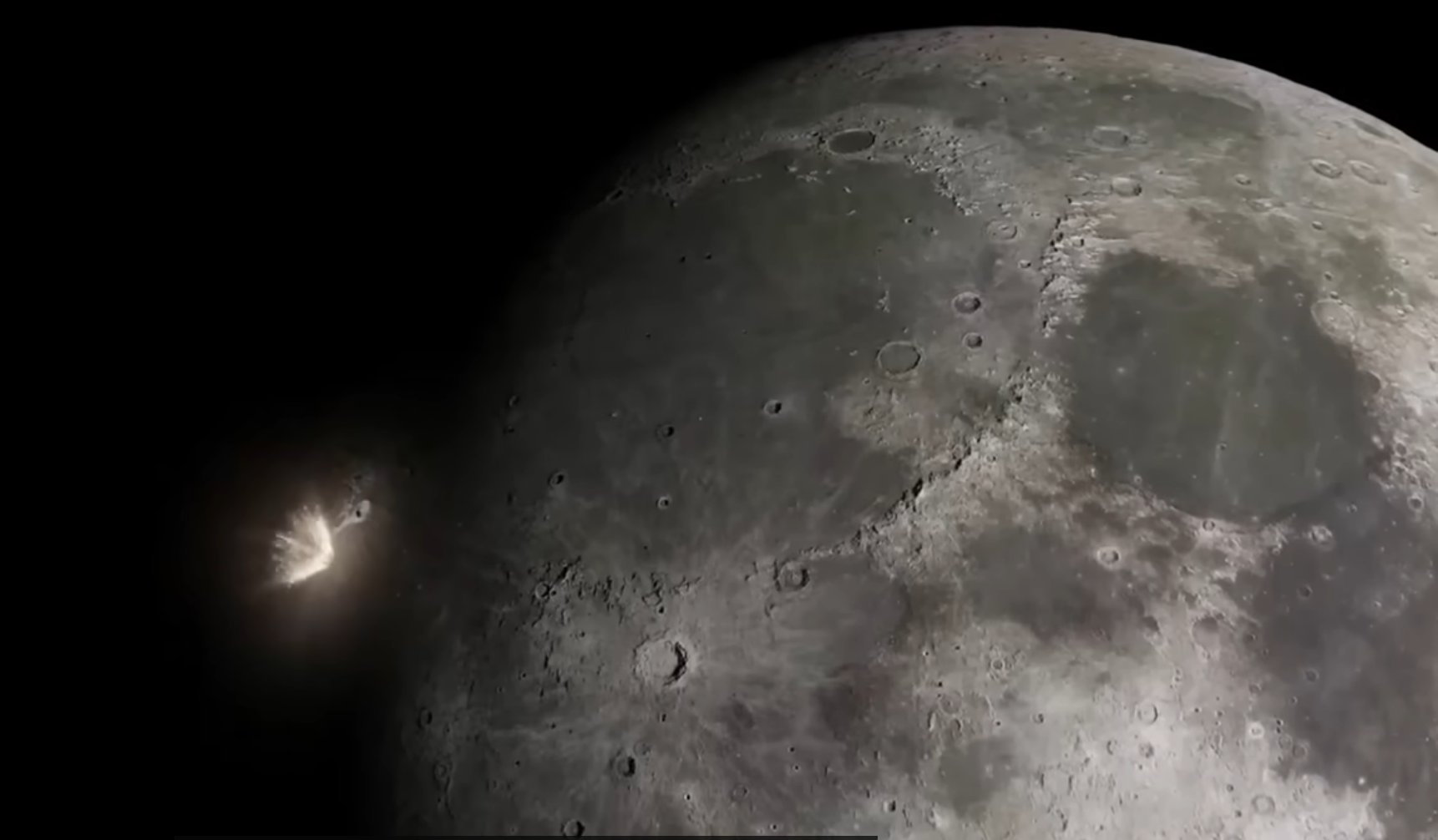
On August 5th, a 13.8-meter long, 4,000 kg spent upper stage from a SpaceX Falcon 9 rocket struck the Moon, marking a concerning sign for lunar space. The upper stage, leftover from missions launching Firefly's Blue Ghost Mission 1 and ispace's HAKUTO-R M2 "Resilience", crashed into the western lunar limb near Einstein Crater during a collision at around 8,700 km/h.
Although no images of the impact were captured, scientists estimated a crater of 20-27 meters in diameter and 4 meters in depth would form. The plume created by the impact was visible to viewers with appropriate equipment, and while dust from the impact dissipated quickly, spectroscopic data from the ESO's Very Large Telescope in Chile noted the presence of lithium and sodium.
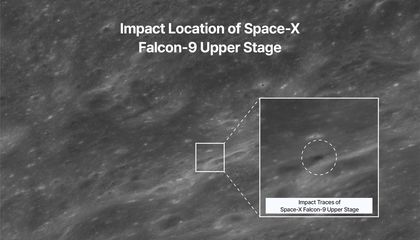
The Korean Pathfinder Lunar Orbiter (Danuri) captured images post-impact, confirming changes in the terrain and traces of ejecta. NASA plans to conduct follow-up observations with the Lunar Reconnaissance Orbiter and KARI. This incident, while posing no immediate threat, signals a growing concern as more rockets are launched and human activity expands in cislunar space, as demonstrated by a recent study on debris propagation risks.
Written by urgent.news from Universe Today's reporting — not their text. Machine-written — may contain errors; check the original before relying on it.