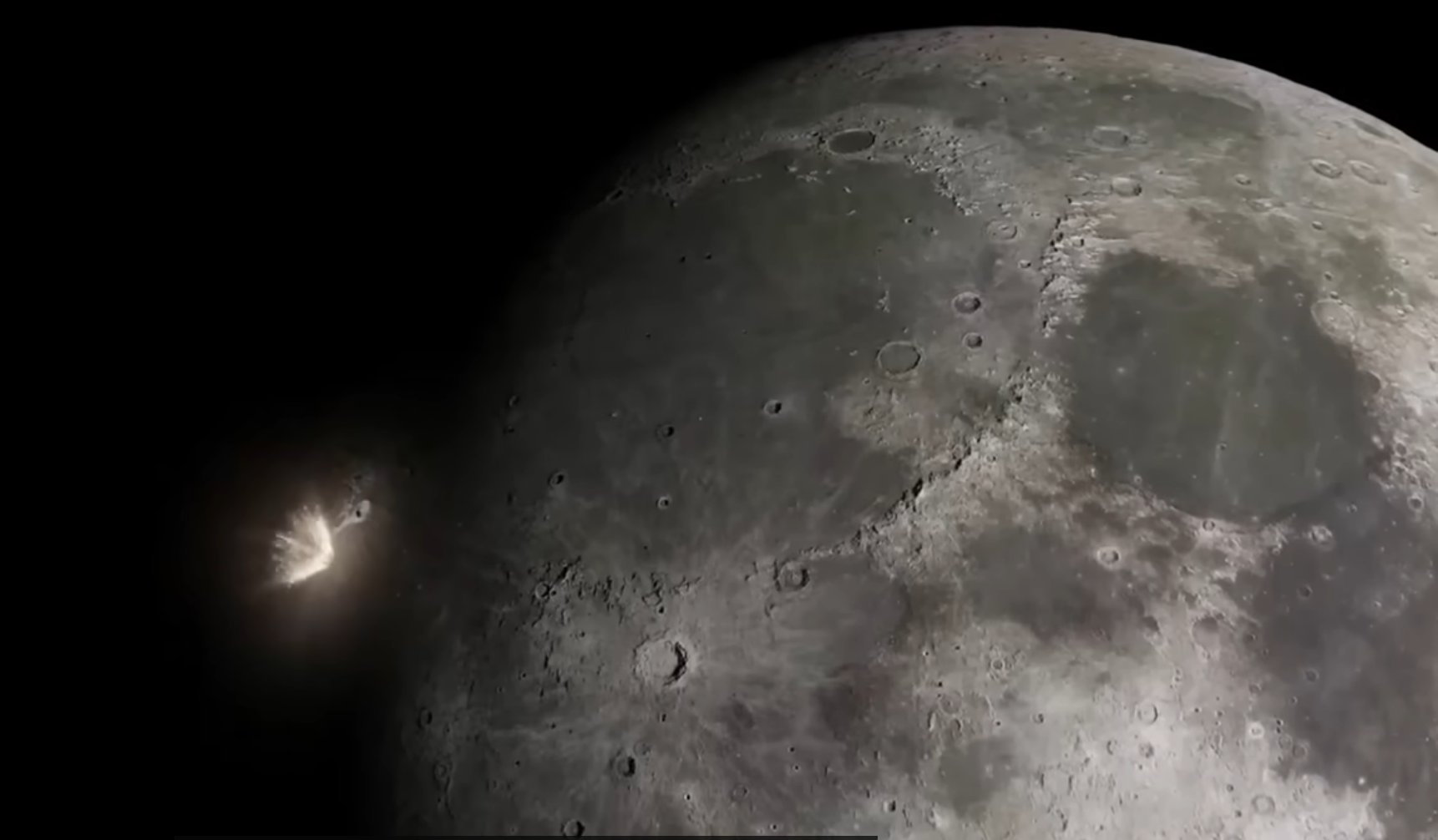
A SpaceX Rocket Part Just Slammed Into the Moon, Creating a Dust Plume and Crater. Here's What Some Scientific Instruments Saw
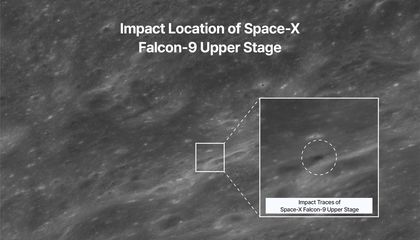
The Korea Aerospace Research Institute captured before-and-after images of the impact site, and a telescope in Chile detected signs of the plume. However, no one was able to watch the collision live
On August 5, a portion of a SpaceX Falcon 9 rocket unwittingly struck the lunar surface around 2:35 a.m. Eastern Time, as anticipated. Scientific instruments detected the event, though it was not witnessed in real-time, according to Marcia Dunn of the Associated Press. Previous estimates suggested the object would impact the moon at approximately 5,400 miles per hour, creating a crater roughly 60 feet wide and 12 feet deep.
However, a query arises: if no one saw it, did it truly happen? The answer appears to be affirmative, as asserted by astrophysicist Jonathan McDowell, who stated that Newton's personal insights confirm the event. Observations from the Korea Aerospace Research Institute's lunar orbiter Danuri revealed a dark spot on the lunar surface, indicating changes resulting from the collision.
The European Southern Observatory's Very Large Telescope in Chile observed chemical "fingerprints" of sodium and lithium gas within the ejected material plume, which persisted for five to ten minutes. Spain's Instituto de Astrofísica de Andalucía shared a video of the impact, showcasing a subtle cloud of ejected material. The destroyed rocket part was an upper stage, roughly the height of a five-story building and weighing around 8,800 pounds.
This smaller stage was part of a January 2025 launch carrying lunar landers from Firefly Aerospace and ispace. The larger rocket stage returned to Earth as planned, but the smaller stage drifted, likely influenced by solar activity and gravitational forces, putting it on a collision course with the moon. The incident underscores the increasing accumulation of space debris in Earth's orbit, with the moon becoming a target for such collisions.
The rising lunar activity raises concerns among planetary scientists like Hannah Sargeant, who caution against the potential harm to historical lunar sites and the disruption of valuable scientific data.
Written by urgent.news from Smithsonian's reporting — not their text. Machine-written — may contain errors; check the original before relying on it.
This story
This is one outlet's version. Read the fullest account.