Commodities: The Iran war curbs oil demand – with long-term consequences for the energy market
The bottlenecks in the oil market have led to a decline in demand. This brings back memories of the 1979 oil price shock, which depressed demand for ten years. Is history repeating itself?
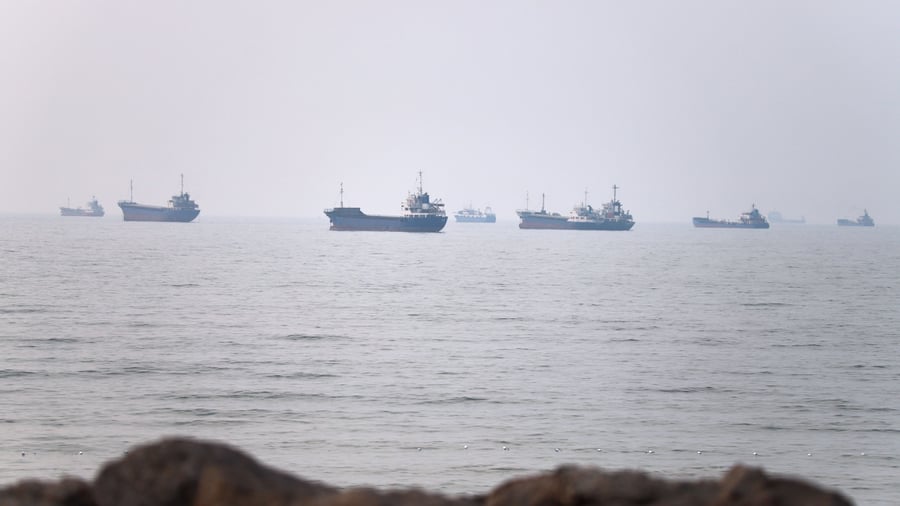
The blockade of the Strait of Hormuz has led to a massive supply shock. On average, ten million barrels (each 159 liters) of oil supply were lost per day. Prices rose massively - and consumers reacted accordingly: demand also fell. In some emerging countries, energy-saving measures were introduced, as the "Energy Crisis Policy Response Tracker" of the International Energy Agency (IEA) shows.
For example, universities have closed in Bangladesh and fuel allocation for motorists is limited. In Mauritania, cars are not allowed to drive between midnight and 5 am. In Sri Lanka, offices are no longer allowed to be cooled below 26 degrees Celsius. These are measures that recall the corona pandemic or the energy crisis in Europe after the outbreak of the Ukraine war.
In both cases, consumers largely returned to their previous behavior. Will this also be the case with oil demand? The current turmoil in the oil market reminds many observers of the oil crisis at the end of the 1970s. According to data from the Energy Institute, the price shock triggered by the revolution in Iran in 1979 left deep scars: global energy consumption fell by 3.3 percent in 1980 - the largest decline since the start of data collection in 1965.
And it took a decade for global oil demand to return to its previous level. "The conflict shows how important energy security is" Many experts do not believe that a similar break could occur this time. UBS oil analyst Giovanni Staunovo warns against premature forecasts. "During the pandemic, the end of business travel by air was also predicted, but it was resumed afterwards," he says.
And so far, no massive changes in consumer behavior have been recognizable. This is also suggested by the data. Because already now, oil demand has recovered somewhat from its low point. According to the IEA, it reached 97.9 million barrels per day in May, as Mobeen Tahir, director at asset manager Wisdomtree, says. That is 5.3 million barrels per day less than a year ago.
In the second quarter as a whole, oil demand was 4.8 million barrels per day below the previous year's level, according to Tahir. But the IEA expects this decline to decrease to 1.7 million barrels per day in the third quarter. In the short term, oil consumption is likely to increase again. But in the medium term, Wisdomtree analyst Tahir sees a change in the energy market.
"The conflict shows how important energy security is," he says. Because anyone who is dependent on fossil energies is also indirectly always dependent on the geopolitical situation. "Therefore, countries are likely to increase their investments in renewable energies and nuclear power in the medium term." Seven new nuclear power plants in China China is a prominent example, according to Tahir.
Currently, 39 of the 78 nuclear power plants under construction worldwide are located in the People's Republic. At the beginning of the year, there were 32. "This means that within six months, China has started building seven more nuclear power plants." China plays a central role in the energy crisis. Because the world's largest oil importer has reduced its imports from normally ten to eleven million barrels per day to only six to seven million barrels per day in May and June, according to UBS.
China acted as a kind of buffer for the oil market. The import reductions were possible because China had built up large oil reserves last year and can now draw on them. Asia is heavily dependent on energy imports from the Gulf region: over 80 percent of energy exports from the Middle East go there. India imported up to 90 percent of its crude oil needs last year, with almost half of these imports coming from the Middle East.
India compensated for part of the lost deliveries with imports from Russia - these accounted for more than half of India's crude oil imports in July, according to the Bloomberg news agency. But this could not fully compensate for the bottleneck: satellite images show that the light intensity in rural areas has visibly decreased.
A sign of energy shortages: less lighting at night The evaluation of NASA satellite images by Bloomberg shows that the nocturnal light intensity has decreased on almost 60 percent of Asia's land area since the beginning of the conflict. The effect is particularly pronounced in countries such as Bangladesh, where less light was recorded on more than 70 percent of the area.
Matteo Lanzafame, economist at the Asian Development Bank, warned according to Bloomberg that parts of the Asian economy could suffer similar permanent damage as after the corona pandemic. Households become indebted, and companies lay off staff. "This reduces the long-term production potential of the economy." The majority of the global decline in demand, therefore, falls on Asian emerging countries.
In Western industrialized countries, however, the shock is primarily noticeable in the form of high prices at the gas stations. "There is also a psychological component here, especially with fuel prices," says Staunovo. In the US, the threshold is around four dollars per gallon, in Germany around two euros per liter. "If these marks are exceeded, it can trigger an emotional reaction among consumers and also lead to savings behavior."
Demand risks with fuel higher Francisco Blanch, head of global commodities at Bank of America (Bofa), sees higher risks for gasoline and diesel.
Translated by urgent.news. Machine-written — may contain errors; check the original before relying on it.