India saved handloom. Now it must save weaving as a livelihood
India makes 95% of the world’s handloom, yet its weavers work barely 200 days a year and exports are just ₹1,359 crore. Making weaving a viable livelihood means filling the order gap and measuring how much value actually reaches the loom.
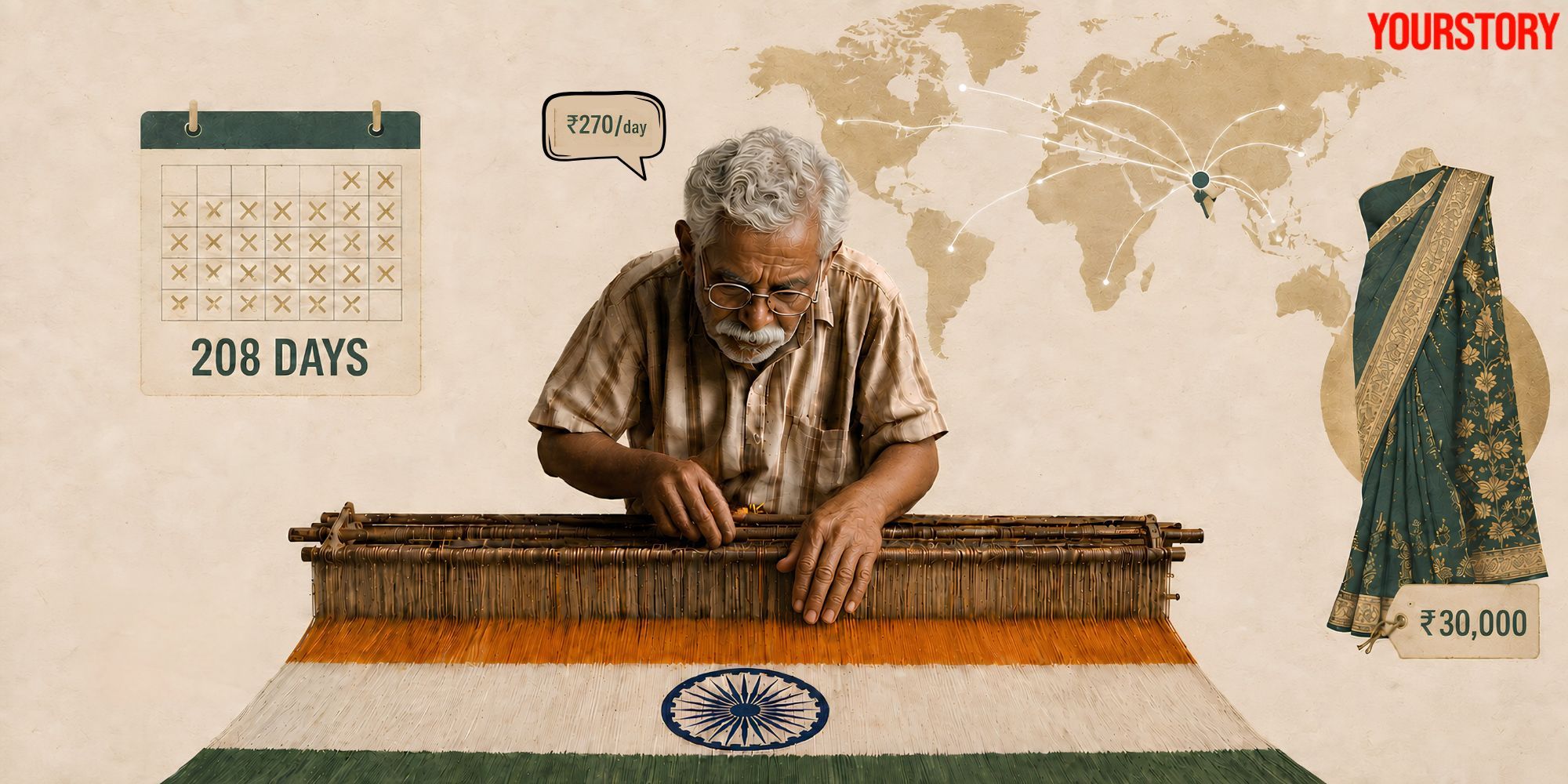
India has successfully preserved its handloom industry, which continues to be a significant part of its economy and cultural heritage. As of 2026, over 35.22 lakh weavers and allied workers employed nearly 28 lakh looms, accounting for more than 95% of the world's handloom products. However, despite this success, the economic well-being of the weavers remains a concern. The number of active weavers has declined from 43.32 lakh in 2010-11 to 35.2 lakh in 2019-20, indicating a shrinking workforce.
While handcrafted items like Kanjeevaram saris can fetch high prices, the average value added to a worker's income is relatively low at roughly ₹7,000 per month. This figure does not reflect the actual take-home pay of a specific weaver, as the value accrues to multiple stakeholders involved in the production process. India's handloom exports accounted for only 0.42% of the total value of its textile, apparel, and handicrafts sector in FY2025-26, highlighting the limited economic impact of the industry.
A key issue is the limited number of days weavers work at their looms. The Fourth Handloom Census recorded an average of 208 weaving activity days per person per year, with rural weavers working an average of 201 days, leaving them idle for about two days in five. This idle time reflects the lack of sufficient demand to keep weavers fully occupied, leading to low income.
Addressing this problem requires interventions that increase the number of paid days at the loom and ensure a fair share of the value generated reaches the artisans.
Written by urgent.news from YourStory's reporting — not their text. Machine-written — may contain errors; check the original before relying on it.