Harvard rejected him; he found a grammar error and rejected the rejection
In 1981, high school student Paul Devlin responded to Harvard University's rejection letter by rejecting its rejection instead. Inspired by a grammatical error in Harvard's letter, his witty reply was published byThe New York Times. More than four decades later, the letter has resurfaced online and continues to entertain readers.
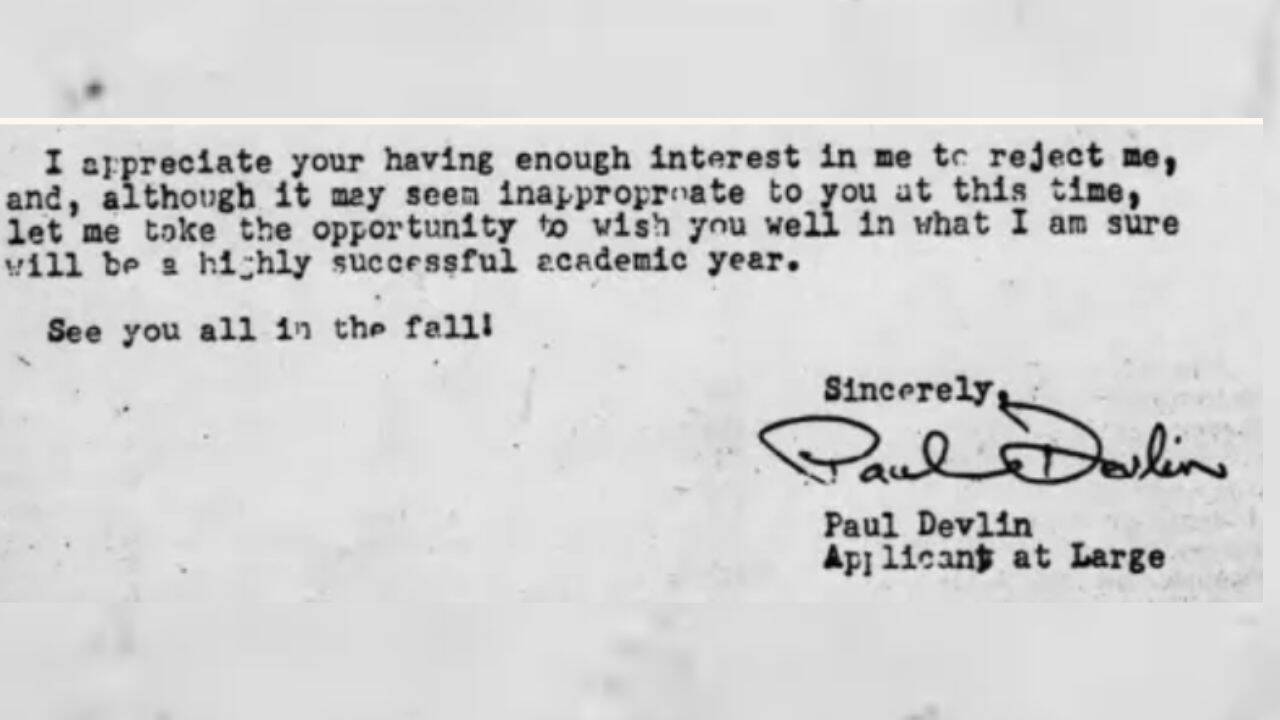
In 1981, a student named Paul Devlin was rejected by Harvard University. Rather than accepting defeat, Devlin decided to take matters into his own hands and wrote back to Harvard University in response to his rejection letter. Devlin noticed a grammatical error in the rejection letter, which inspired him to write a humorous reply to the university.
He wrote a formal letter, treating Harvard's rejection as an application he had carefully reviewed before deciding not to accept it. In his letter, Devlin acknowledged receiving many rejection letters from various colleges but mentioned that he could only accept a limited number of them. He then proceeded to critique the colleges, considering factors such as size, student-faculty ratio, location, reputation, costs, and social atmosphere, before carefully rejecting their rejections.
Devlin also acknowledged Harvard's disappointment in his decision and expressed gratitude for their interest in him. The letter ended with a humorous line, wishing Harvard a successful academic year and signing off as "Paul Devlin, Applicant at Large." The incident went viral, with the letter being shared online and even performed at a public reading.
Devlin later became an Emmy-winning documentary filmmaker and sports editor, reflecting on the incident as an example of standing up against rejection and using creativity to make a statement.
Written by urgent.news from Times of India's reporting — not their text. Machine-written — may contain errors; check the original before relying on it.