Fortinet targets network security platform convergence to address AI-era complexity
In the rush to adopt AI, enterprise security architectures are diminishing, and the only appropriate response is a network security platform that incorporates networking and security into a single, consistently governed fabric. That’s the vision Anthony James (pictured), executive vice president of marketing at Fortinet, pitched at Black Hat 2026. James, who first joined the […] The post Fortinet…
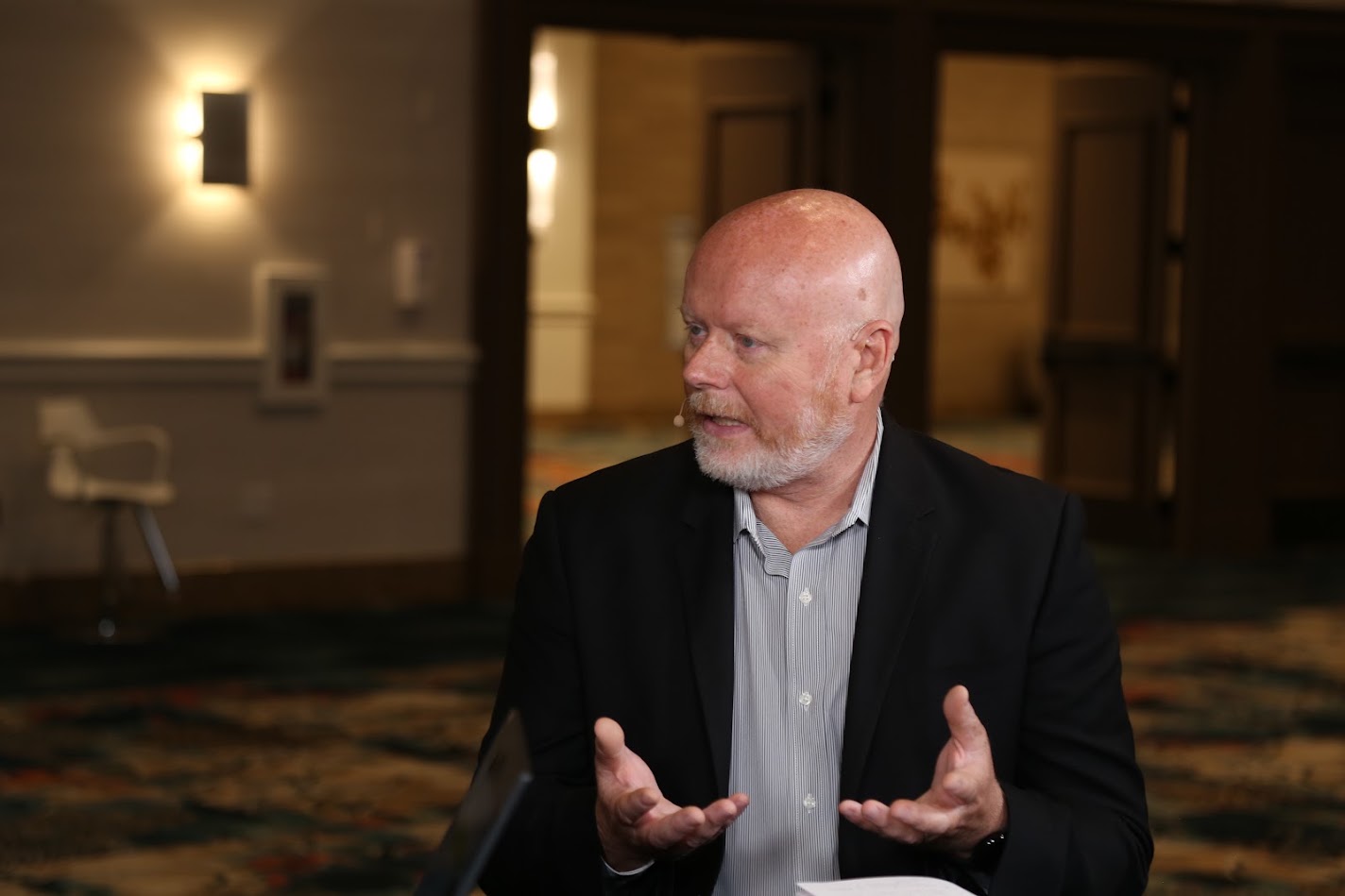
Fortinet's Anthony James, executive vice president of marketing, emphasized the importance of converging networking and security into a single platform during Black Hat 2026 to address the complexities arising from the rapid adoption of AI in enterprise security architectures. James, who joined Fortinet in 2004, highlighted that the vision established over two decades ago by Ken Xie remains more relevant than ever.
He stated that platforms are becoming increasingly advanced, and Chief Information Security Officers (CISOs) are striving to balance productivity for end-users while minimizing risks.
James further explained Fortinet's Security Fabric, a platform that integrates networking and security components into a unified system with consistent data and simplified user experience. This differs from "bolted-on" platform approaches and provides a single source of truth throughout the security stack, eliminating the need for practitioners to reconcile different data models manually.
The next step in this strategy is the SASE Firewall, a convergence of Secure Access Service Edge and next-generation firewall, built on a unified policy for both on-premises and cloud deployments. James noted that cloud-first SASE vendors often over-rotate, and the rise of sovereign AI and agentic workloads has reaffirmed the network's need for such integration.
As AI transitions from experimentation to production, Fortinet is also developing governance capabilities around internally deployed AI factories, managing sanctioned agents and MCP servers, monitoring token usage, and ensuring the legitimacy of machine-to-machine communications. Fortinet has also developed tools to address potential misuse of AI infrastructure by employees, such as unauthorized agents, MCP servers, and data downloads to train other models.
Written by urgent.news from SiliconANGLE's reporting — not their text. Machine-written — may contain errors; check the original before relying on it.