Five quick questions about Trump's birthright orders answered
US President Donald Trump is taking another swing at limiting birthright citizenship. Here are five simple questions to break down what's happened.
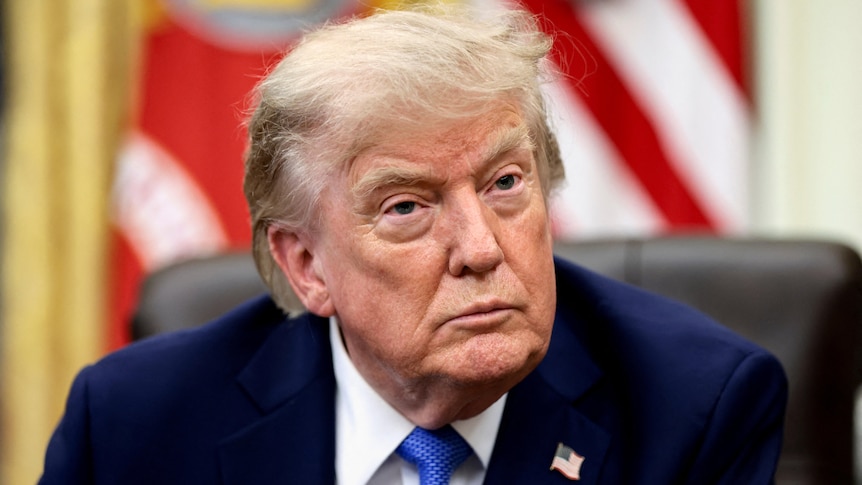
President Donald Trump issued two executive orders on Thursday aimed at limiting birthright citizenship. The Supreme Court overturned his previous attempt just weeks ago. Here are five straightforward questions to explain what has transpired. He resorted to signing two executive orders to restrict birthright citizenship. Enshrined in the 14th Amendment of the US Constitution, it confers automatic citizenship on nearly everyone born on US soil.
Trump has persistently argued that birthright citizenship is costly and unfair to the nation and should be abolished. One order seeks to prevent foreign women from traveling to the US to give birth, thereby granting their children citizenship. This is known as "birth tourism". The other order aims to restrict automatic citizenship for particular groups.
These include children born to foreign government staff; children whose parents falsified information to acquire citizenship; and children of individuals classified as "alien enemies". Indeed, Trump has attempted to curb birthright citizenship once before during his tenure, but this move was halted by multiple courts before being dismissed by the Supreme Court in June.
However, the orders signed on Thursday differ slightly. Trump aims to narrow the scope, which the administration contends falls beyond the jurisdiction of the Supreme Court ruling by reinterpreting historical exceptions to birthright citizenship. The specifics of each order vary. The order to end birth tourism might appear somewhat arbitrary.
According to the Migration Policy Institute, misrepresenting the purpose of travel to give birth in the USA is already considered fraud, and the government can revoke someone's visa if they seek to enter the US to secure citizenship for an unborn child. Previous administrations have also sought to prosecute birth tourism schemes that facilitated women concealing their pregnancies while visiting the United States to give birth.
White House Deputy Chief of Staff for Policy Stephen Miller stated that Trump had the authority to ban birth tourism under a section of the Immigration and Nationality Act, which empowers the president to set limits on who can enter the country. Nevertheless, any endeavor to limit eligibility for US citizenship will most likely be left to the courts to decide.
While it would be challenging to predict with certainty, several advocacy groups and legal experts anticipate this attempt will fail. They argue that the US Constitution is explicit about who qualifies as a citizen, and the Supreme Court's ruling on Trump's initial effort last June affirmed this. "The Supreme Court has already decided this issue: Birthright citizenship is guaranteed by the Constitution," said American Civil Liberties Union deputy director Cody Wofsy in a statement.
"No subsequent executive order can alter the meaning of the Constitution. Any executive order attempting to redefine birthright citizenship will face the same outcome as the previous one." The Trump administration has portrayed birth tourism as a significant issue. However, there is no official figure on how many births in the US can be classified as birth tourism, nor an estimate of the financial burden on taxpayers.
Estimates suggest that around 26,000 out of the approximately 3.5 million annual births in the US might fall under this category, according to the Migration Policy Institute. The Center for Immigration Studies, which advocates for lower immigration levels, estimated in a 2020 analysis that between 20,000 and 25,000 mothers traveled to the US for birth tourism in a year between 2016 and 2017.
It remains unclear how these orders could be practically enforced. Women's Refugee Commission director Zain Lakhani argued that the executive orders could infringe on the rights of pregnant women seeking legal entry, particularly during one of the most vulnerable periods of their lives. She urged the government to establish guidelines that respect the Supreme Court ruling.
Written by urgent.news from ABC News AU's reporting — not their text. Machine-written — may contain errors; check the original before relying on it.
This story
This is one outlet's version. Read the fullest account.
- Trump signs new orders targeting birthright citizenship and ‘birth tourism’ scmp.com
- Are Trump's new executive orders targeting birthright citizenship constitutional? cbsnews.com
- Donald Trump signs fresh executive orders to limit birthright citizenship in US after Supreme Court pushback livemint.com