New reform planned: Millions of cars with home plates on the road
ZIG for Hesse's Ziegenhain or TP for Templin in Brandenburg: Revived car registration plates are a piece of home for many people on their cars. Now it is supposed to get even more detailed.
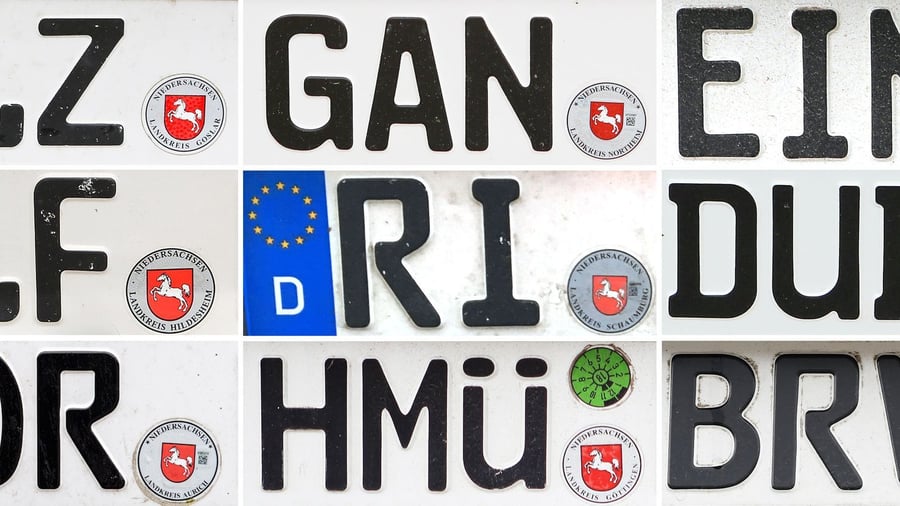
The idea of small-scale car license plates has gained many supporters in recent years. Since 2012, districts and independent cities have been allowed to permit additional letter combinations on license plates and have made extensive use of this option.
Since then, according to a current count presented by the Heilbronn University, almost 7 million cars, motorcycles and trailers have been registered with the 336 reactivated "regional license plates". The most common license plate was the one with the initials MO for Moers, with over 128,000 cases.
There are a total of around 59 million registered vehicles in Germany with around 800 different license plates.
Regional pride on the car - ZIG for Ziegenhain in Hesse, TP for Templin in Brandenburg or SLG for Saulgau in Baden-Württemberg - the revived license plates evoke a sense of regional pride in many citizens, according to study author Ralf Bochert.
He says: "The car license plate and the associated individuality provide a reference to identity that is important to many people."
According to the Bundesrat's wishes, even smaller license plates could be introduced if further municipalities with at least 20,000 inhabitants issue their own license plates.
This was decided by the Federal Council at the request of Hesse and Lower Saxony and passed on to the Federal Government for implementation.
It is not yet known whether and when the proposal will be implemented.
No longer necessary to be an independent registration district
So far, mainly old license plates that were abolished due to territorial reforms have been reintroduced.
There were restrictions, such as the requirement to establish a new, independent vehicle registration district.
This is to be abolished in the future, according to the states' plans.
The study is based on data from the Federal Motor Transport Authority.
The reintroduction of former local registrations has been met with sustained great interest in many regions since 2012.
Translated by urgent.news. Machine-written — may contain errors; check the original before relying on it.