China’s Military Is Now Using AI to Plan Strike Operations
What does that mean for the future of human control in war – including a war over Taiwan?
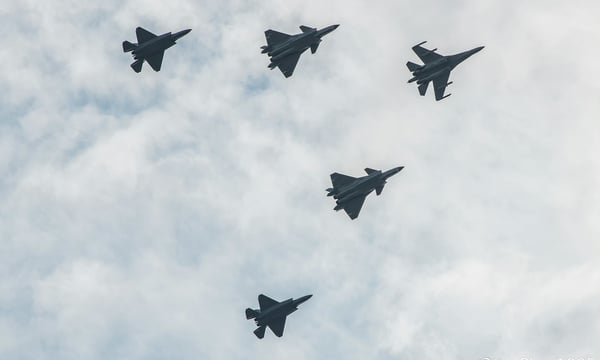
China's military has embraced artificial intelligence to streamline the planning of large-scale strike operations, as detailed in a CCTV documentary marking the People's Liberation Army's 99th anniversary. The AI system prioritizes targets from a vast pool, coordinates multiple formations, and assigns responsibilities to numerous tactical units.
It has reportedly been deployed in several missions to coincide with Xi Jinping's directive for the PLA to integrate unmanned intelligent technologies and develop an intelligent military system. Beijing's focus on this development aligns with its 2027 modernization goals.
The AI system processes vast amounts of data that would overwhelm human planners, recommending how various assets, such as aircraft and electronic warfare systems, should be combined before commanders authorize execution. However, it does not directly select and engage targets; its purpose is to assist commanders and pilots. Despite Beijing's stance that AI should support, not replace, human decision-makers, the system's potential to compress complex campaign planning into minutes raises concerns about the erosion of human authority and the potential for reduced independent assessment under high-tempo operations.
While China claims to maintain human control over critical decisions, the speed of AI-driven planning may diminish the time available for human assessment, especially in scenarios requiring quick judgment, such as executing coordinated air offensives. This raises questions about accountability, particularly when AI-generated plans lead to unlawful effects. The risk of automation bias and the challenge of attributing responsibility in such cases are significant concerns.
The strategic implications of China's AI-driven military planning extend beyond its borders, particularly in the Indo-Pacific and other regions. Countries like those in AUKUS and the Quad must adapt their defense strategies to counter potential algorithmic shocks, as the system's capabilities could allow China to generate and execute complex strike packages much faster than traditional human-led processes.
This shift in capabilities underscores the need for defense strategies that can absorb and counter such algorithmic advancements, emphasizing the evolving nature of military power in the age of AI.
Written by urgent.news from The Diplomat's reporting — not their text. Machine-written — may contain errors; check the original before relying on it.