Why was a US Yale graduate hounded out of his job promoting Chinese culture?
In just two months, Yale graduate Edward Kuperman went from being praised by Chinese state media to being bombarded with accusations that he was a spy. It began with a June 18 article from state news agency Xinhua, in which he was described as an eager 24-year-old sinophile who made the unconventional choice of spurning China’s eastern metropolises and choosing to live in Dunhuang, in the…
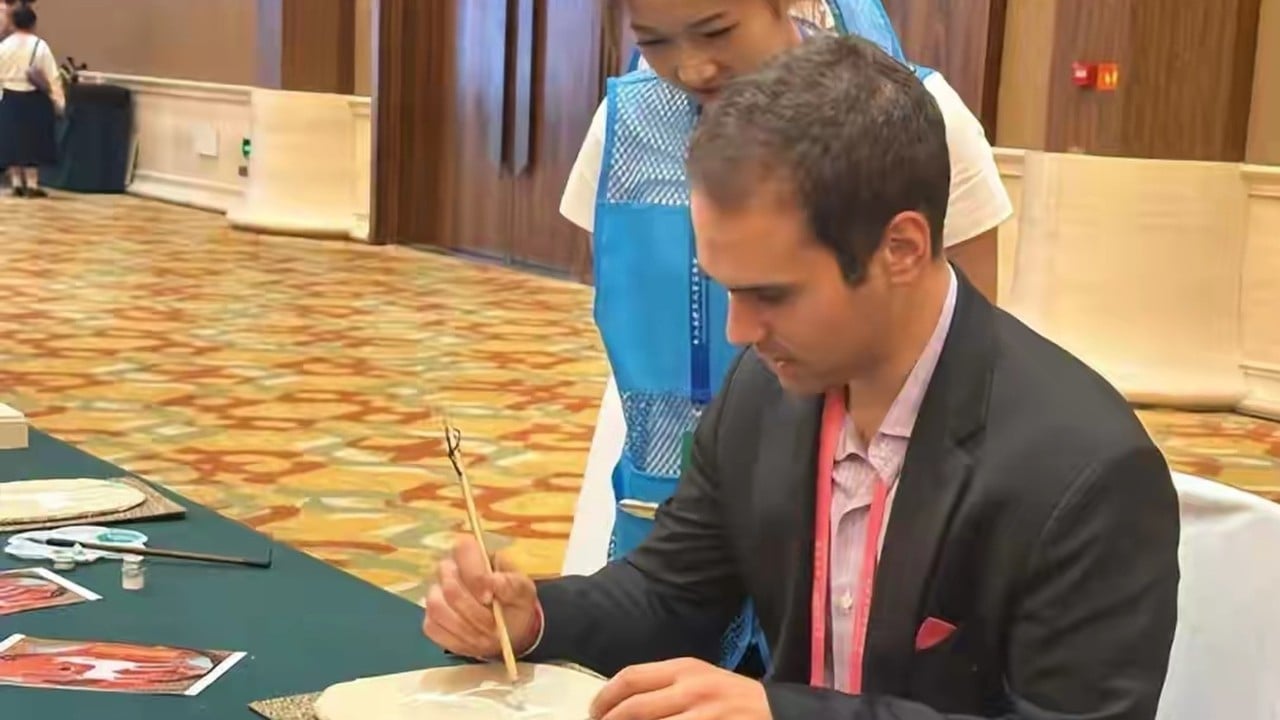
In the span of just two months, a Yale graduate named Edward Kuperman experienced a rapid downfall from being lauded by Chinese state media to facing public accusations of being a spy. This sudden turn of events began with an article from the state news agency Xinhua, published on June 18. The article described Kuperman as an enthusiastic 24-year-old sinophile who chose to reside in Dunhuang, a city in northwestern China's Gansu province, instead of the more famous eastern metropolises.
His interest in China originated from a Chinese language class during his junior high school years, as well as reading about China in books and watching films.
After graduating from Yale, Kuperman made his first employment as an intern live-streamer at the Dunhuang Culture International Communication Centre (DCICC) in April. He believed that Dunhuang, a city that has been a significant stop along the Silk Road for centuries, provided a unique perspective to observe, comprehend, and share China's stories.
The DCICC's Instagram featured Kuperman in videos in May and June, where he introduced the city's main attraction, Crescent Lake, as a place where people often go to celebrate love.
However, Kuperman's job troubles started in July when he was hired by the Dunhuang Convergence Media Centre, a local government-run outlet. The hiring announcement, which was picked up by Chinese media, revealed that Kuperman was the sole foreigner among three new hires. Other Chinese hires were both women, who had studied translation and communications at British universities.
Some Chinese social media posts questioned Kuperman's qualifications, claiming that his annual salary was as high as 900,000 yuan (US$133,000), which seemed excessive for a Western graduate. In reality, that salary was far higher than what a Chinese graduate would typically earn, with the average starting salary for a Chinese bachelor's degree holder being 77,220 yuan per year, according to the Hong Kong-based MyCOS Research Institute.
The situation escalated as the Chinese public grew increasingly suspicious and hostile towards Kuperman. Hu Xijin, the former editor-in-chief of the state-run tabloid Global Times, tweeted a now-deleted post suggesting that foreigners employed by Chinese organizations often have "complex experiences," including previous work in American media or think tanks where they may have written reports that were unfavorable to China.
Kuperman himself maintained that his interest in East Asia was purely cultural, not political, and had studied the region because of its blend of ancient tradition and dialog with the West.
The public backlash led Kuperman to decline the job offer, according to CCTV. Local authorities clarified that the initial salary offer was about 330,000 yuan, which was within the normal range for Western graduates working in China, not the 900,000 yuan as initially reported. An investigation was initiated to examine any issues with Kuperman's hiring.
However, the city of Dunhuang, with its 200,000 residents and over 20 million annual visitors, has been leveraging its rich heritage and cultural identity to attract global audiences through its "innovative Dunhuang model." The city's DCICC boasts 28 global social media accounts, 800,000 fans, 5,100 posts, and more than 65 million cumulative views.
Despite the positive efforts to promote Chinese civilization and modern technology, a political scientist noted that Chinese public opinion has become increasingly sensitive regarding any issue involving foreigners, and the resolution of such controversies depends on the manner in which decisions are made.
Written by urgent.news from South China Morning Post's reporting — not their text. Machine-written — may contain errors; check the original before relying on it.