The road ahead for the Asiatic lion
Six decades of conservation have increased the Asiatic lion population from about 100-150 to over 1,000, with nearly half now living outside the protected area; however, the species remains confined to single forested landscape, while habitat fragmentation, disease threats continue to pose major conservation challenges
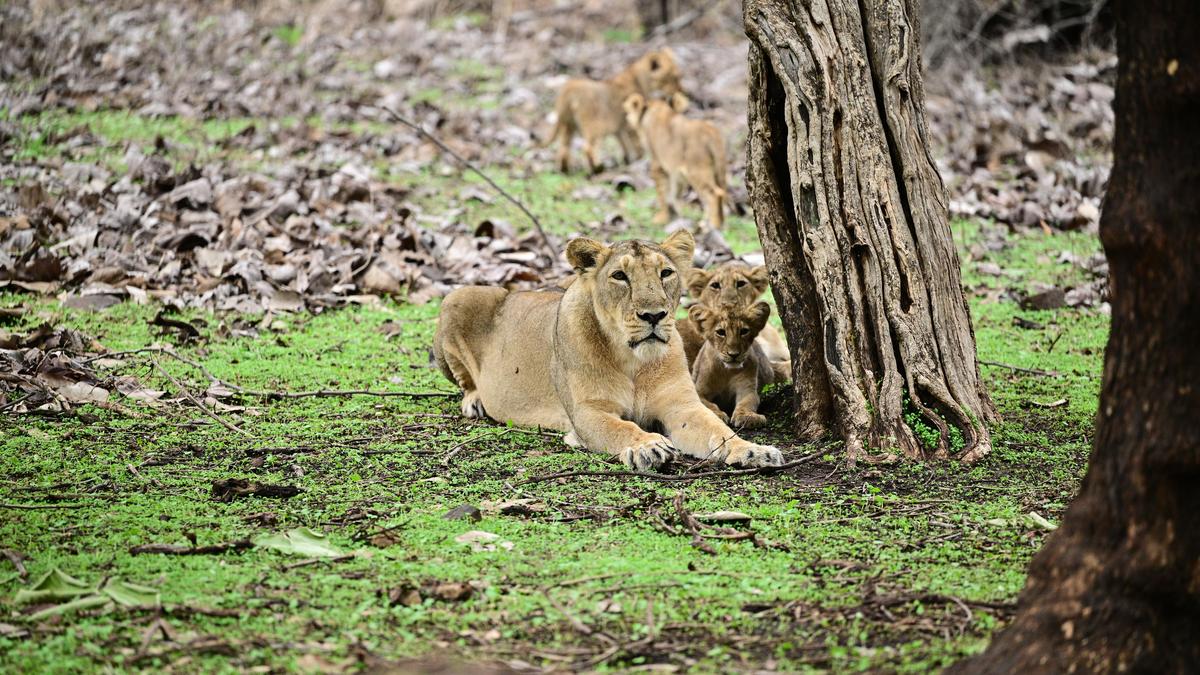
The Asiatic lion population today is confined to a single forested landscape in Gir National Park and Sanctuary, Gujarat. However, their conservation extends beyond Gir, as lions disperse through various habitats across the state, utilizing ecological distinct regions like Girnar hills, Mitiyala forests, and coastal tracts. The Gujarat Forest Department's 2025 lion population estimation identifies the coastal sector as Satellite IV, one of nine recognised satellite lion populations, with Babarkot designated as a crucial lion movement corridor.
Recently, a proposal to divert land for limestone mining has raised concerns, as it could potentially disrupt the coastal subpopulation's habitat, leading to functional disconnection from the larger source population and potential human-lion conflict. Despite the success of lion conservation over six decades, the population remains confined to a single landscape, and there is ongoing resistance to acknowledging the need for a second home for the lions.
The Asiatic lion, once Critically Endangered, is now considered Endangered, with the Green Status assessments indicating it remains far from fully restored across its historical range. The story of the Asiatic lion highlights the challenges faced and the responsibility to safeguard its gains for future generations.
Written by urgent.news from The Hindu's reporting — not their text. Machine-written — may contain errors; check the original before relying on it.