Reverse engineering neural circuits; success stories from computational neuroscience
Kevin Mitchell talks with Timothy Behrens about ring attractors, the role of innate structure, and an expanded view of cognitive maps.
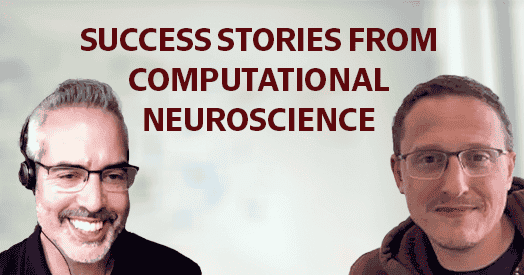
Computational neuroscience investigates how brains function and perform necessary operations. Timothy Behrens, a professor at the University of Oxford and leader at the Sainsbury Wellcome Centre, discusses the field's goals and progress. Behrens highlights systems where computational neuroscience has made real advancements, including a ring attractor in flies tracking heading, a grid cell circuit in rodents for path integration, and a song learning circuit in zebra finches.
He believes these systems operate in low-dimensional spaces and have evolved innate structures due to their basic and essential nature. Behrens also emphasizes the importance of innate representations and structured circuitry in brain evolution, as seen in cognitive maps like those proposed by Edward Tolman and developed by John O'Keeffe and Lynn Nadel.
These maps, often physically laid out in brain regions, facilitate navigation, goal prediction, and understanding abstract concepts. Behrens and the reporter discuss the role of temporal oscillations in hippocampus-cortex communication and the exciting technological advancements, such as optogenetic holography, that enable deeper insights into cognitive tasks.
Written by urgent.news from The Transmitter's reporting — not their text. Machine-written — may contain errors; check the original before relying on it.