Republicans sense advantage in ‘target-rich’ Michigan
Even with President Donald Trump’s plunging popularity, they view the progressive Senate candidate Abdul El-Sayed as an opponent they can pick apart.
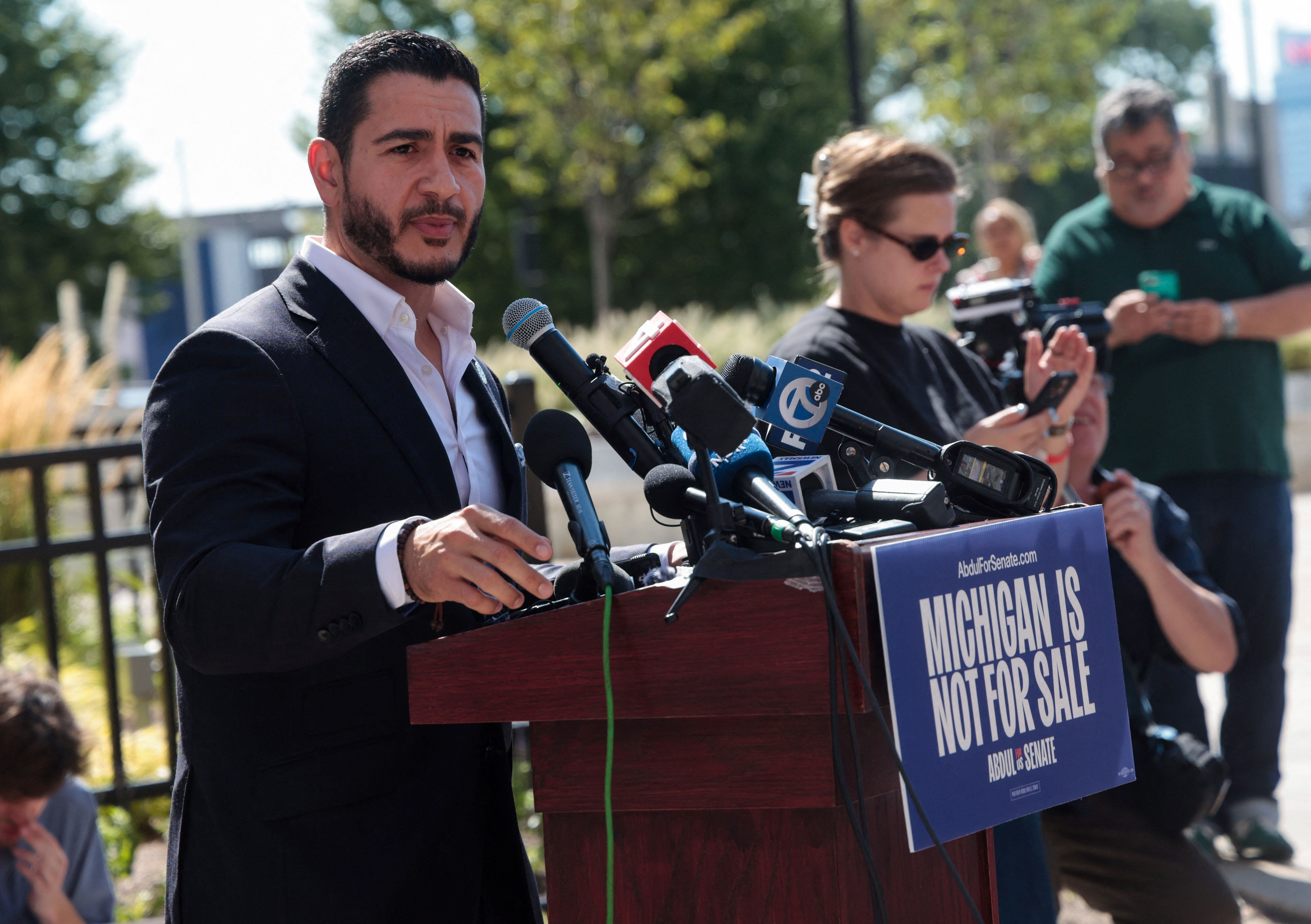
Senate Republicans have sensed a significant opportunity in Michigan's Senate race, where they believe they can secure a victory and potentially gain control of the majority. This belief stems from the Democratic nominee, Abdul El-Sayed, having won the Democratic nomination but facing a challenging path due to his primary battle against Rep. Haley Stevens. The wounds from this primary battle, which featured harsh exchanges, will likely take time to heal.
The Republicans argue that they have a substantial financial advantage in Michigan, with a significant reserve of $45 million set aside by the Senate Leadership Fund. This financial edge could be crucial for their efforts to defeat El-Sayed. Despite President Donald Trump's declining popularity, the Republican strategists viewing Michigan as a "target-rich" opportunity believe they can exploit El-Sayed's controversial comments on immigration, law enforcement, and "Medicare for All."
Senator Tim Scott, who chairs the National Republican Senatorial Committee, has been vocal in criticizing El-Sayed. He has condemned his partnership with Twitch streamer Hasan Piker and described El-Sayed as "dangerous." Scott and his team have crafted a strategy to use El-Sayed's own words against him as part of their attack plan.
The task confronting El-Sayed is immense, as he would become the first Muslim senator in U.S. history. To win, he must unite his party and address the concerns of rural and working-class voters. His campaign has asserted that there is no Republican playbook for defeating a candidate like El-Sayed, highlighting his unique vulnerability.
The Republican super PAC, Senate Leadership Fund, is already deeply invested in Michigan, with a budget of $45 million. In contrast, the Democratic side has allocated $20 million in television advertising and a strong digital presence. The GOP sees this investment as critical given the combination of a sinking economy, an unpopular president, and a nominee they view as particularly vulnerable.
While some potential pickup opportunities remain in states such as Minnesota, New Hampshire, and Georgia, Republicans are aware that Michigan remains their most promising target. They are not taking this race for granted, given the traditional difficulty for the party in power during midterm cycles. Even with the advantages in Michigan, Republicans remain cautious, acknowledging that history often does not favor the party currently in control.
Democrats are working diligently to move past the primary, launching ads aimed at attacking Rogers and rallying support for their nominee. Several key Democratic figures, including Sen. Jon Ossoff, have pledged their support for El-Sayed. However, the primary has taken a toll on El-Sayed, whose campaign resources have been stretched thin.
Despite these challenges, Senate Majority Leader John Thune played a crucial role in recruiting Rogers to run for Senate, emphasizing the lengths to which Republicans are going to capitalize on this perceived opportunity.
Written by urgent.news from Semafor's reporting — not their text. Machine-written — may contain errors; check the original before relying on it.