On this day in space! Aug. 6, 2012: NASA lands huge Curiosity rover on Mars with a rocket-powered sky crane
On Aug. 6, 2012, NASA's Curiosity rover successfully touched down on the Martian surface in a way never attempted before: a rocket-powered sky crane. Here's why it mattered.
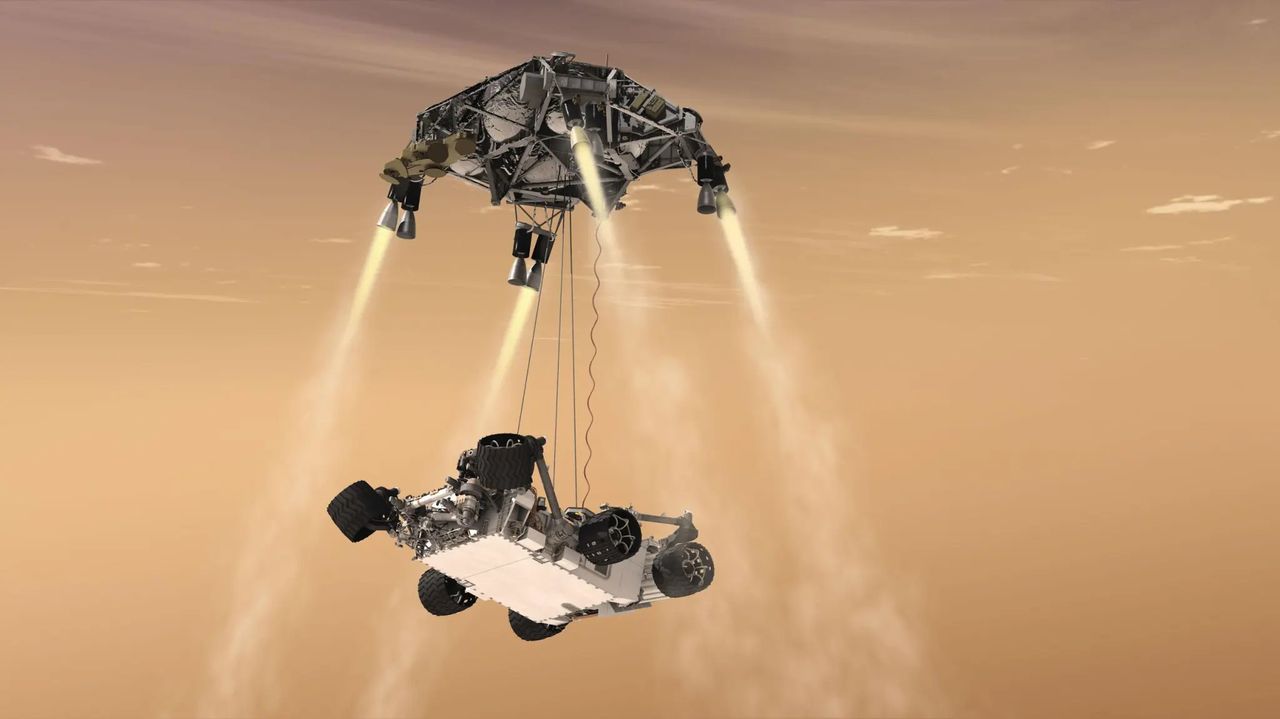
On this day in August 2012, NASA successfully landed its Curiosity rover on the surface of Mars, marking a monumental achievement in space exploration. The Curiosity rover, the largest and most ambitious Mars rover ever built by NASA, was an unprecedented endeavor that involved a groundbreaking landing technique known as the "sky crane."
Utilizing a parachute and rocket engines, the sky crane hovered over the Martian terrain and gently lowered the rover onto the surface using cables. The landing, which occurred at 1:31 a.m. EDT (0531 GMT), was preceded by a 7-minute period of uncertainty, colloquially referred to as the "7 minutes of terror," during which the rover had to autonomously execute its landing sequence.
The sky crane approach marked a significant departure from the traditional landing methods employed by previous Mars rovers, including the Viking landers and the Mars Pathfinder, Spirit, and Opportunity missions. This innovative technique enabled Curiosity to land in Gale Crater on Mars, a location that would go on to provide valuable insights into the planet's geological history and potential habitability.
Since its successful landing, Curiosity has spent 14 years exploring Mars, conducting extensive geological surveys and drilling into rocks to gather crucial data about the Red Planet's past water activity and its potential to support life in the ancient past. Despite a minor setback earlier this year when a rock became lodged on its drill, Curiosity has continued to operate successfully, setting a new benchmark for what is achievable in interplanetary exploration.
Written by urgent.news from Space.com's reporting — not their text. Machine-written — may contain errors; check the original before relying on it.