Wirikuta water festival spotlights a groundwater crisis felt across Mexico
The first-ever Wirikuta water festival begins today in San Luis Potosí to discuss the ongoing water crisis in Mexico as it affects local communities like the Indigenous Wixárika people. The post Wirikuta water festival spotlights a groundwater crisis felt across Mexico appeared first on Mexico News Daily
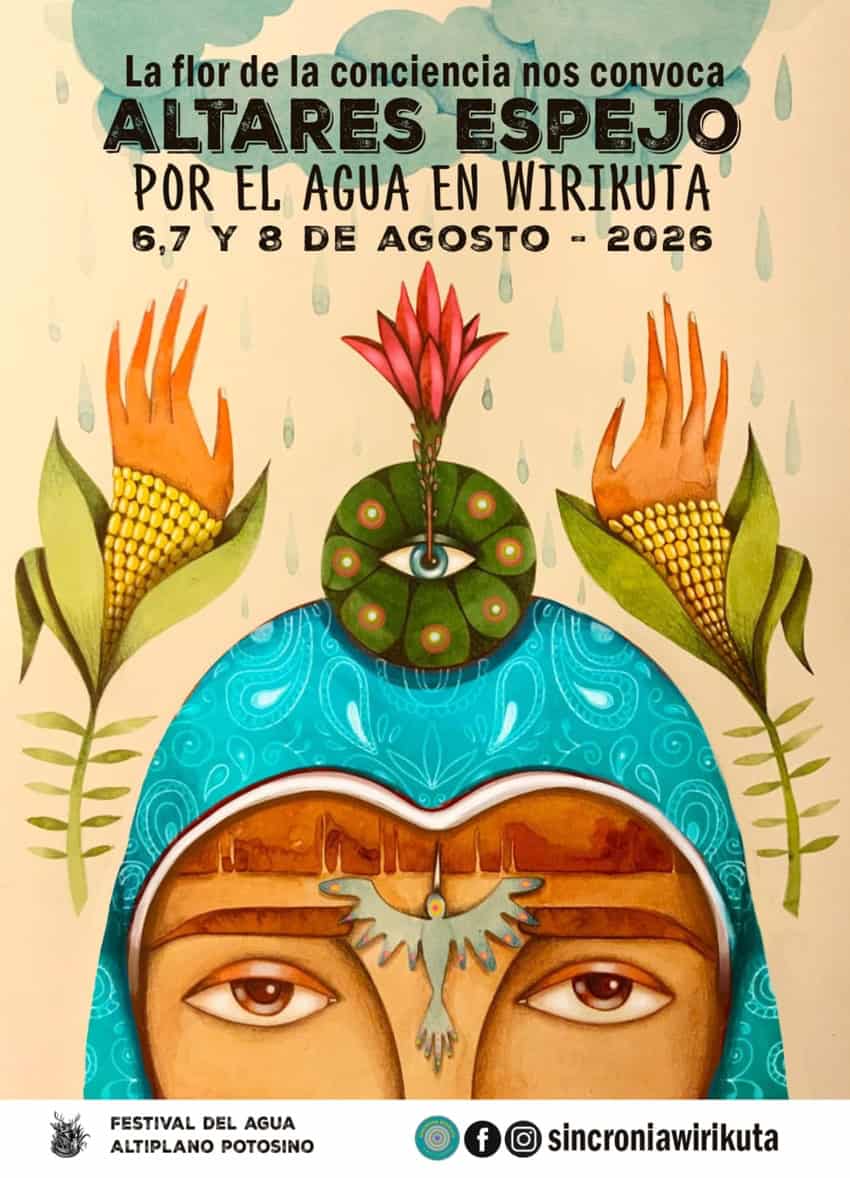
The Wirikuta Water Festival, beginning on August 6, 2023, aims to highlight a critical groundwater crisis affecting the Wixárika people and the broader region of Mexico. For the Wixárika, who have journeyed to this sacred desert for generations, water is more than a resource; it is a unifying force that links the Pacific Ocean, clouds, desert springs, and the prayers for rain and renewal of life.
However, beneath the seemingly untouched landscape, the water is vanishing at an alarming rate. The Festival del Agua del Altiplano-Potosino-Wirikuta, taking place from August 6 to 8 in the communities of Estación Catorce and San Antonio de Coronados, San Luis Potosí, will bring together farmers, Wixárika representatives, artists, environmental advocates, government officials, and water specialists to discuss the urgent issue.
The gathering seeks to expose a crisis largely hidden from view and to urge authorities to take action. Organizers, led by Alhelí Pérez of the support collective Sincronía Wirikuta, hope the event will foster dialogue, share information, and build long-term communication among communities to better care for life.
At the heart of the crisis lies the Vanegas-Catorce aquifer, which underlies approximately 4,382 square kilometers of the arid Altiplano Potosino. According to a 2024 report by Mexico's National Water Commission (Conagua), the aquifer receives an average annual recharge of 28.4 million cubic meters. However, the Public Registry of Water Rights (REPDA) records 36.3 million cubic meters of annual groundwater extraction rights, resulting in an official deficit of 7.94 million cubic meters per year.
This deficit means no water remains available for new concessions. Agriculture, the principal groundwater user in the aquifer, relies on the region's meager average annual rainfall of just 316 millimeters. The crisis reflects a larger national issue, where prolonged drought, rising temperatures, and overallocation of water are placing pressure on rural communities and ecosystems across the arid north of Mexico.
Juan Manuel Ledón, executive director of the environmental consulting organization EcoSite, points to a system that has historically favored users with the financial means to secure extensive, long-term water rights. Over the years, large users have held concessions lasting from 50 to over 100 years, leading to water hoarding. Conagua, the agency managing these rights, operates through a highly centralized system with weak transparency and limited public participation, making it difficult to detect or prevent irregular concessions and excessive extraction.
Environmental geographer Tunuari Chávez González describes groundwater as the desert's "invisible limit," connecting springs, vegetation, soils, wildlife, and human communities far beyond official boundaries. Deepening extraction is reaching warmer, more mineralized groundwater, bringing salts to the surface and causing declining soil moisture and stress on desert vegetation. The water tables are becoming progressively depleted, exacerbating the environmental situation.
Inequalities in water service and concessions often favor agro-industrial businesses at the expense of rural and Indigenous communities. In the region, agro-industrial businesses, including tomato and chile production as well as large poultry and hog operations, depend on groundwater. However, some local communities receive water only intermittently, with residents like those in Wadley, a railway community in the municipality of Catorce, receiving household water only two or three days a week.
This disparity highlights the danger of diminishing quantity and the increasing exposure to poor-quality water containing naturally occurring arsenic and fluoride in parts of arid and semiarid Mexico. Mexico's weakest institutions, municipal governments and water utilities, often struggle to maintain reliable systems in rural and Indigenous regions, where water and sanitation responsibilities fall heavily on local communities.
Written by urgent.news from Mexico News Daily's reporting — not their text. Machine-written — may contain errors; check the original before relying on it.