More Americans say extreme heat is affecting their lives
Reproduced from AP ; Chart: Axios Visuals Greater shares of Americans now say that extreme heat has affected various parts of day-to-day life compared to just two years ago. Why it matters: The findings , from the AP-NORC Center for Public Affairs Research, suggest that people are increasingly aware of extreme heat's impact on their health, budgets, travel plans and more. By the numbers: 90% of…
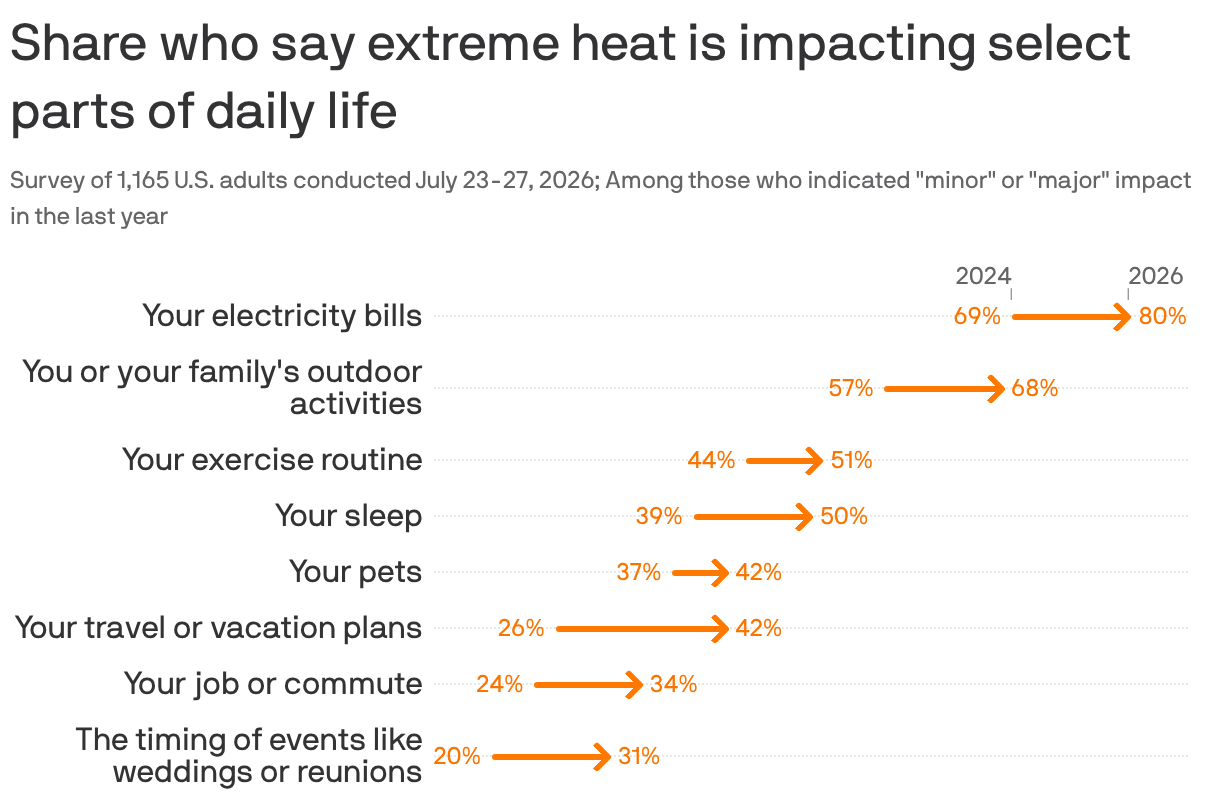
A majority of Americans now acknowledge that extreme heat is significantly impacting various aspects of their daily lives, according to a recent survey by the AP-NORC Center for Public Affairs Research. The findings indicate a growing awareness of the heat's effects on health, finances, travel, and leisure activities. Notably, 90% of respondents say extreme heat has caused at least minor disruptions, up from 83% two years ago.
This surge in recognition has translated into tangible consequences, with 80% reporting increased power bills, up from 69% in 2024, and 68% noting the impact on outdoor activities, up from 57%. Travel and vacation plans have also felt the heat, with 42% of respondents reporting that it affects their travel or vacation plans, a sharp rise from 26%.
The geographic distribution of the effects is evident, with heightened awareness in the Western and Midwestern states, regions that have recently experienced severe and potentially deadly heat waves. Additionally, a noticeable partisan divide exists, with Democrats more likely than Republicans to perceive a major impact from extreme heat across the surveyed aspects of life.
While extreme heat events are becoming more common and intense due to climate change, the survey shows a concerning trend in public awareness of climate change itself. Only 66% of Americans believe in climate change, a decline from 73% in the previous year, potentially indicating a disconnect between the observed environmental changes and public perception.
The survey, which included 1,165 adults and had a margin of error of ±3.7 percentage points, underscores the urgent need to bridge this gap and strengthen public understanding of climate change's role in the increasing frequency and severity of extreme heat events.
Written by urgent.news from Axios's reporting — not their text. Machine-written — may contain errors; check the original before relying on it.