Kioxia's new PCIe 6.0 SSDs want to feed GPUs data at a fraction of HBM's price
Japanese memory manufacturer Kioxia is bringing a new class of super-fast SSDs to the enterprise market. The Kioxia GP1 Series is based on the PCIe 6.0 interface and can leverage the NVMe 2.2 protocol to serve as a middle ground between "pure" NVMe storage solutions and high-bandwidth memory VRAM soldered... Read Entire Article
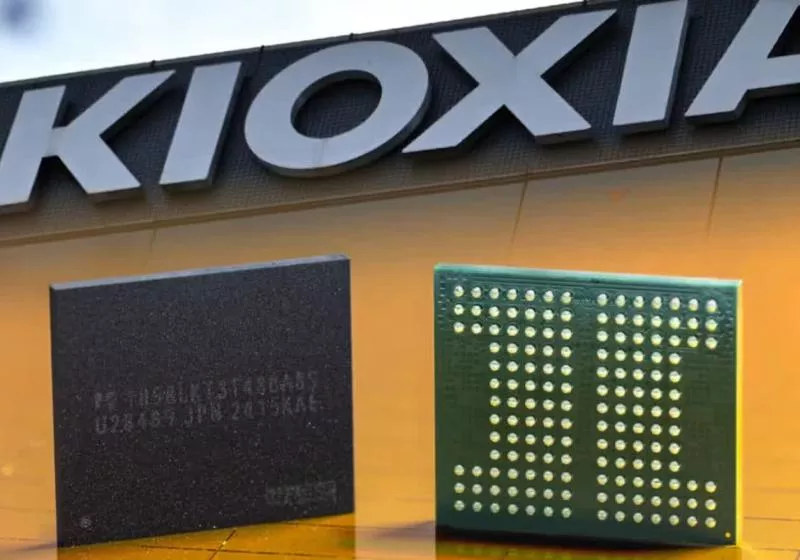
Kioxia, a Japanese memory manufacturer, has unveiled a new line of PCIe 6.0 SSDs called the GP1 Series. These SSDs aim to provide GPUs with data at a fraction of the cost of high-bandwidth memory (HBM). AI-based tools and generative AI models are struggling with data bandwidth limitations as computational power grows exponentially.
The GP1 Series SSDs utilize the NVMe 2.2 protocol and the company's second-generation XL-FLASH memory to offer high IOPS (input/output operations per second) performance. These SSDs can reach up to 10 million IOPS and Kioxia is developing future generations that could reach 100 million IOPS. Unlike traditional TLC memory chips, XL-FLASH is designed to handle higher IOPS with 512-byte block sizes.
The GP1 SSDs are optimized for direct GPU access, improving computational efficiency by allowing AI accelerators to quickly access larger datasets stored on flash memory. The new SSDs come in E3.S and E1.S form factors, supporting air-cooling or cold-plate liquid cooling. With up to 50 drive writes per day, Kioxia claims the cost per gigabyte is significantly lower than HBM or DRAM-based memory expansions.
While chipmakers like SanDisk and SK Hynix are working on High Bandwidth Flash memory solutions, Kioxia continues to invest in traditional storage formats, such as its 245TB LC9 enterprise SSDs. The company is also developing a more affordable consumer SSD solution with its recent EG7 Series, which utilizes QLC NAND technology.
Written by urgent.news from TechSpot's reporting — not their text. Machine-written — may contain errors; check the original before relying on it.