Escalating tensions tilt Mena sovereign credit outlook to negative: Moody’s
Credit fundamentals across Middle East and North Africa (MENA) sovereigns have shifted to negative from stable as open military conflict and maritime trade disruptions weaken regional economic conditi...
The outlook for Middle East and North Africa (MENA) sovereign credit ratings has deteriorated, shifting from stable to negative, according to Moody’s Ratings. Ongoing military conflict and maritime trade disruptions have weakened regional economic conditions, particularly impacting key economic sectors such as shipping, hydrocarbon production, and tourism.
The escalation of long-standing geopolitical tensions into direct military conflict since late February has had a significant impact on Gulf hydrocarbon exporters, with shipping restrictions through the Strait of Hormuz being the primary pressure point. Many hydrocarbon-exporting countries in the region have been forced to cut production due to disrupted shipping, and Qatar’s liquefied natural gas (LNG) facilities have been directly damaged by Iranian strikes.
While some countries, such as Saudi Arabia and Abu Dhabi, have been less affected due to their reliance on pipelines and higher crude prices, the non-oil economy across the Gulf is facing broad-based pressure, including reduced visitor numbers and delayed capital commitments in sectors like aviation, hospitality, logistics, retail, and real estate.
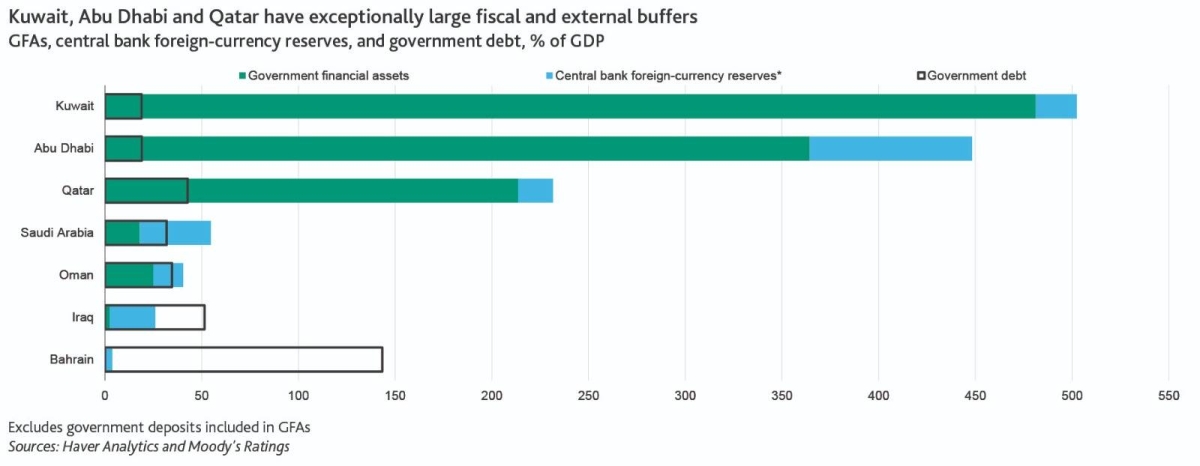
The region’s fiscal exposure varies significantly, with Bahrain, Qatar, Kuwait, and Iraq facing the highest direct fiscal strain due to their heavy reliance on hydrocarbon revenues and the lack of alternative maritime routes. However, large sovereign buffers provide substantial stability for key Gulf balance sheets, with Qatar and Kuwait retaining a stable outlook for now.
Regional financial support, such as the $5.4bn currency swap agreement provided to Bahrain by the UAE, is helping to bolster vulnerable balance sheets. A durable de-escalation and reopening of shipping lanes could return the regional outlook to stable, while prolonged disruptions or structural hits to non-oil expansion would heighten credit risks.
Written by urgent.news from Gulf Times Business's reporting — not their text. Machine-written — may contain errors; check the original before relying on it.