Engineers build world's first portable diamond-powered quantum computer — it works at room temperature and can be plugged into an outlet
The world's first portable, room-temperature quantum computer with more than 10 qubits utilizes flawed lab-made diamonds. The quantum system fits into a standard server rack and connects to a typical power grid.
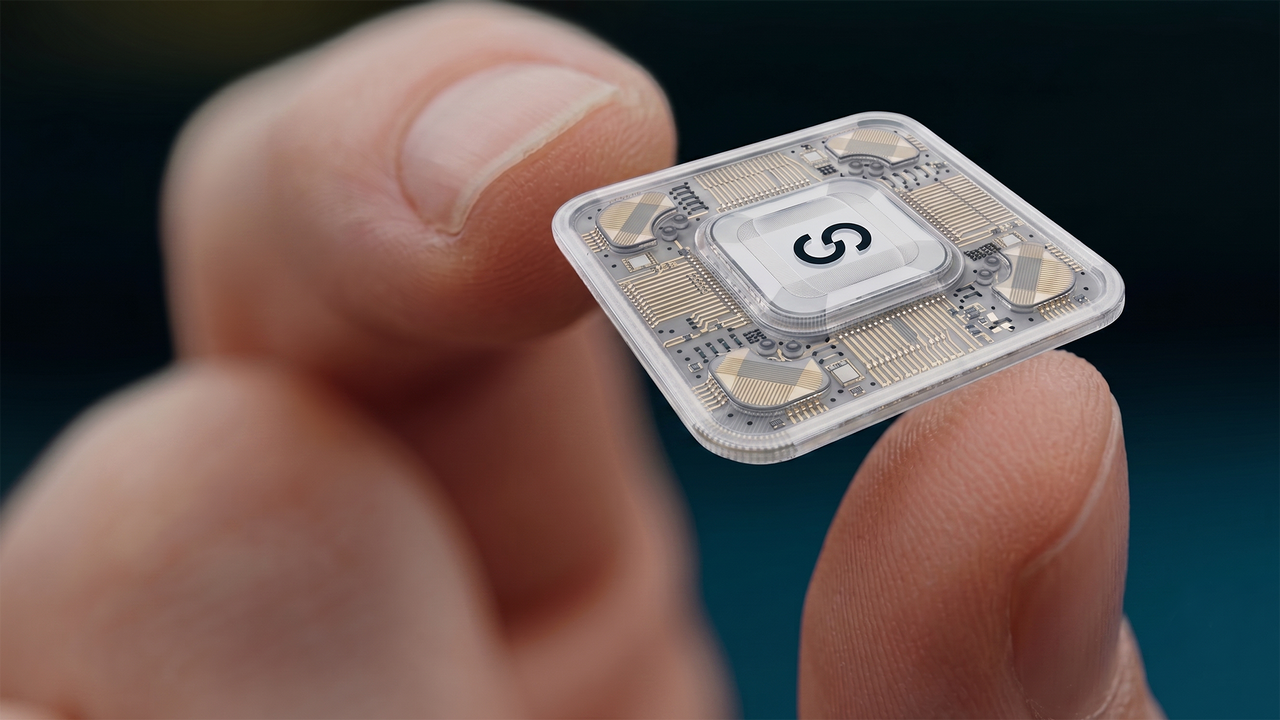
A German startup, Saxon Q, has unveiled the world's first portable quantum computer that operates at room temperature and can be plugged into a standard electrical outlet. The device, constructed using nitrogen-vacancy (NV) quantum computer technology, features up to 128 quantum bits (qubits) in its current rack-mounted systems, with 512-qubit configurations on the horizon for delivery next year. The ultimate goal, according to the company's roadmap, is to scale to 10,000 qubits and beyond by 2030.
The NV quantum computer utilizes defects in synthetic diamonds as quantum bits, which can represent 0s and 1s of data, as well as quantum states that are superpositions of both 0s and 1s. Unlike traditional binary bits, qubits can exist in multiple states simultaneously, enabling quantum computers to process vast amounts of information more efficiently.
Saxon Q's breakthrough in overcoming the 10-qubit barrier was enabled by a materials discovery. During the creation of vacancies inside lab-grown diamonds, the team co-implants sulfur atoms, which helps maintain the chemical potential and negatively charged state, resulting in higher yields of qubits. This innovation allows for better control over individual qubits, enabling error correction and improved performance.
Room-temperature operation is a significant advantage of Saxon Q's quantum computer, as it eliminates the need for cryogenics and on-site monitoring. The company's devices can be seamlessly integrated into a standard computer rack and connected to the power grid using alternating current. This setup offers clients a convenient and efficient way to run quantum algorithms without relying on cloud-based solutions, which could be particularly beneficial in edge computing scenarios like autonomous driving or robotics.
Marius Grundmann, a professor of experimental physics at Leipzig University and co-founder of Saxon Q, highlighted that the company's quantum computers perform as well as those utilizing other modalities, such as superconducting qubits. Although it's unclear how the Saxon Q systems compare to existing solid-state quantum computing platforms in terms of speed and efficiency, the ease of setup and room-temperature operation could provide a competitive edge for near-term applications.
Written by urgent.news from Live Science's reporting — not their text. Machine-written — may contain errors; check the original before relying on it.