Empowering grassroots women for clean energy and Ghana’s sustainable future
Ghana’s transition to clean energy is often discussed in terms of renewable electricity, solar power, energy infrastructure, electric mobility and national energy policy. However, one of the most important aspects of the transition happens at the household and community level, where women make daily decisions about cooking, energy use, livelihoods, waste, agriculture and community well-being. […]
Ghana's shift towards clean energy involves far more than merely generating renewable electricity; it encompasses renewable energy infrastructure, electric mobility, and national energy policy, with the crucial role of women at the household and community level. Women play a pivotal role in daily decisions concerning cooking, energy consumption, livelihoods, waste management, and community well-being, particularly in matters of clean cooking.
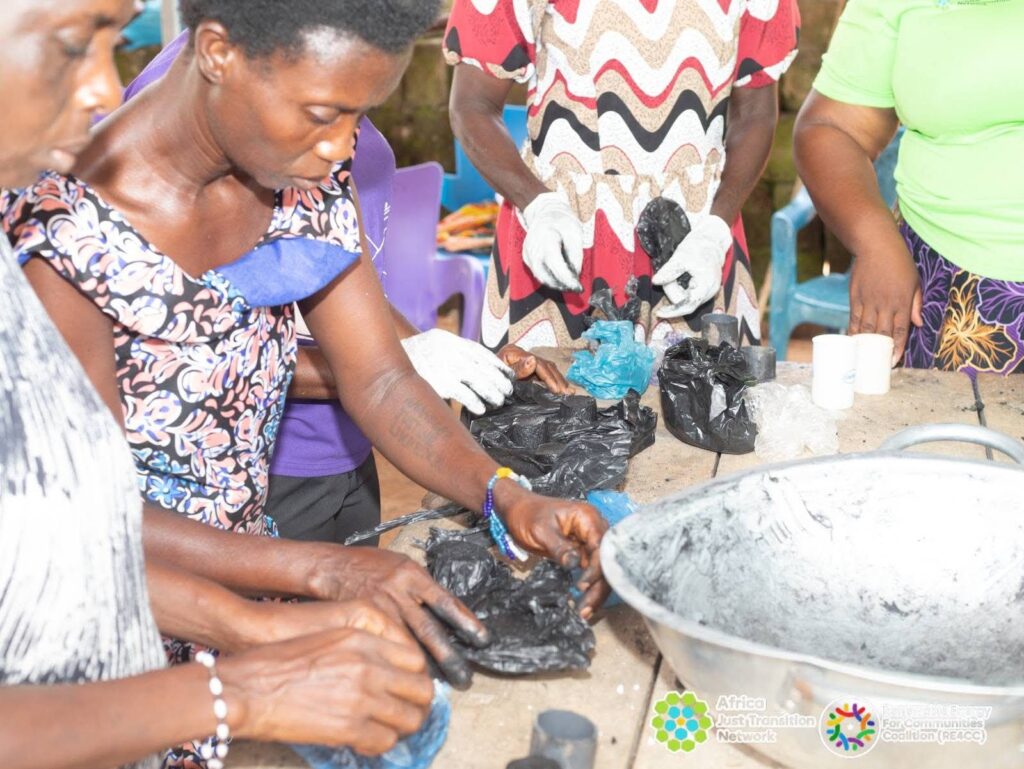
Traditional reliance on firewood or charcoal leads to women and girls spending significant time sourcing fuel and experiencing heightened exposure to household air pollution. The consequences extend beyond health implications to encompass time poverty, educational opportunities, income generation, and community involvement. A noteworthy development is taking place in the North Dayi District of the Volta Region, where women in Wusuta are converting coconut husks, traditionally viewed as waste, into affordable and clean briquettes, presenting a sustainable energy solution while simultaneously fostering economic empowerment.
This initiative is a collaborative effort supported by the Africa Just Transition Network (AJTN), the Renewable Energy for Communities Coalition (RE4CC), and EcoClub 360, with its Founder and Executive Director Ms. Patience Ahiabor representing the organization. Globally, development organizations and energy entities, such as Sustainable Energy for All (SEforALL) and the International Renewable Energy Agency (IRENA), acknowledge the indispensable contribution of women to energy transitions.
In Ghana, women's involvement in the clean energy transition extends beyond briquette production; it signifies their role in climate and environmental protection, integration with climate adaptation, forest conservation, circular economy, biodiversity preservation, and women's economic empowerment. These facets align with Ghana's Nationally Determined Contributions (NDCs) under the Paris Agreement, which explicitly recognize women's essential contributions to climate action.
Moreover, women's traditional knowledge can aid researchers, government agencies, development partners, NGOs, and private companies in devising technologies that promote sustainable energy, generate sustainable incomes, reduce dependence on conventional fuels, and enhance the resilience of families and communities.
In summary, Ghana's clean energy transition can only be truly transformative when women, who form the backbone of our communities, are empowered to actively participate, lead, and benefit. From converting agricultural waste into clean energy briquettes to advocating for sustainable livelihoods and safeguarding local ecosystems, the contributions of grassroots women underscore that climate action can originate from community-driven solutions.
It is our collective responsibility to provide these women with access to skills, finance, technology, markets, and decision-making platforms to scale their initiatives. The path for Ghana's clean energy transition should not be constructed without communities but rather built in collaboration with women who are pioneering change from the grassroots level.
To ensure a sustainable energy future for Ghana, it is imperative to empower more grassroots women as influential leaders in the clean energy sector.
Written by urgent.news from MyJoyOnline Ghana's reporting — not their text. Machine-written — may contain errors; check the original before relying on it.