Australian lithium miners want more value from Chinese-dominated battery supply chain
Until recently, Australian lithium miners were digging up their ore and selling to China for processing into battery materials. Now, a handful of them are trying to get a bit more value out of that supply chain.
Australia possesses some of the world's largest lithium reserves, and its citizens are increasingly incorporating lithium-ion batteries into their vehicles and residences. Australian governments aim to increase processing of battery components locally, though commercial success has been limited due to competition from China. The US Geological Survey estimated Australia had 7 million tonnes of lithium reserves in 2024, ranking second globally behind China with 9.3 million tonnes.
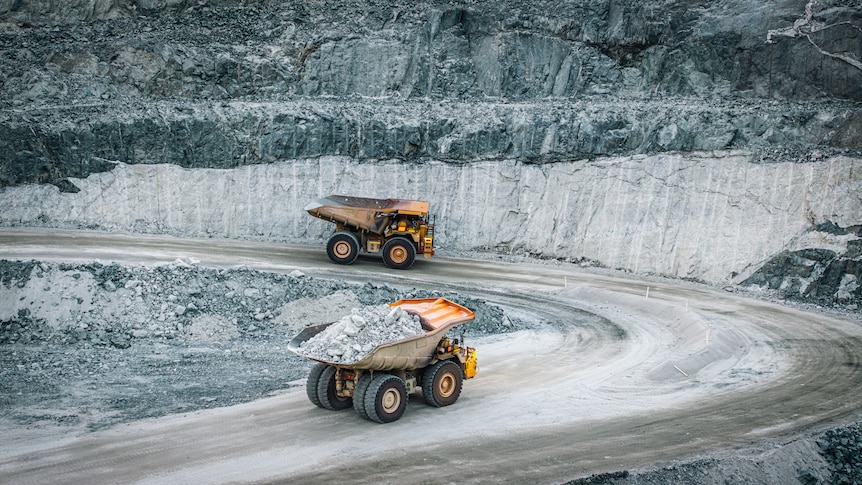
Australian lithium miners traditionally extracted a mineral form of lithium called spodumene and shipped it overseas, predominantly to China, for processing into battery chemicals. Prices for spodumene have rebounded strongly over the past year after experiencing a significant and prolonged price decline, leading to the shutdown of several Australian lithium mines from 2022 to 2025.
Some Western Australian (WA) lithium miners have begun additional onshore processing, converting spodumene into a battery-grade ingredient. However, commercial outcomes have been inconsistent despite onshore mineral processing being a declared objective in strategic and industrial critical minerals strategies at the state, federal, and international levels. These strategies aim to develop such capacity outside of China.
Liontown, another lithium miner, has also established a downstream collaboration to explore the creation of an IRA-compliant lithium refinery to produce refined lithium from spodumene concentrate mined at its Kathleen Valley project. EVs currently dominate lithium-ion battery usage globally, according to the International Energy Agency. However, analysts, such as those at CRU Group, anticipate Battery Energy Storage (BESS) to become the primary catalyst for new lithium battery demand in the future.
Liontown's CEO highlighted in July's quarterly activities report that AI infrastructure expansion and broader energy security concerns are fueling a long-term growth in lithium battery storage capacity worldwide. Similarly, Albemarle stated in May that the company sees lithium demand diversifying across applications and geographies as stationary storage gains market share.
Lithium-ion batteries in EVs consist of two primary types: nickel-based cathodes (commonly nickel-cobalt-manganese or NCM) and lithium-iron-phosphate (LFP) cathodes. NCM cathodes, which house the positive electrode, are more energy-dense, enhancing EV driving range. Conversely, LFP batteries are less expensive, deemed safer, and favored in more affordable EVs. Recent advancements have improved LFP batteries' range and charge time.
As of 2025, the Tesla Model Y, Australia's best-selling EV, utilizes an LFP battery in its base model and an NCM battery in its all-wheel-drive and long-range versions. The BYD Sealion 7, the second-most popular EV, employs an LFP battery known as the BYD Blade, which is also found in all BYD's fully electric models in Australia. NCM cathodes previously dominated the EV market until LFP batteries surpassed them, a trend projected to persist by Benchmark Mineral Intelligence (BMI) analyst Dr. Cameron Perk.
BMI predicts the market will increasingly favor LFP cathodes due to their comparable performance to NCM batteries and improved safety. However, sodium-ion batteries, a relatively new contender, are emerging on the scene. Chinese battery manufacturer CATL unveiled a mass-produced sodium-ion battery for passenger EVs, the Naxtra Passenger EV Battery, with an energy density comparable to LFP batteries, offering a 500km range.
In 2019, the Western Australian government released its Future Battery Industry Strategy to capitalize on the state's mining prowess and become a key player in the global battery value chain. The strategy outlined the goal of expanding processing, manufacturing, and service activities across the battery value chain in Western Australia.
The state's updated Battery and Critical Minerals Strategy 2024-2030 underscored that battery mineral production and processing would remain the primary driver of investment in the region's critical minerals sector in the years to come.
Written by urgent.news from ABC News AU's reporting — not their text. Machine-written — may contain errors; check the original before relying on it.