Youth protests have weakened Modi, Indian activist who went on hunger strike tells BBC
The "cockroach" movement was one of the biggest public displays of dissent against India's prime minister in years.
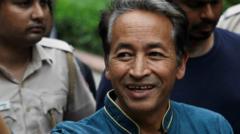
Leading Indian activist Sonam Wangchuk claims that recent youth-led protests have significantly weakened Prime Minister Narendra Modi's position. Wangchuk, who embarked on a hunger strike in June and July to protest against leaked exam papers, told the BBC that the country's atmosphere changed following the mass demonstrations. He believes young people now have the confidence to bring about change if they desire, and are no longer willing to accept everything passively.
Wangchuk's protests, named after a comparison by India's chief justice to some unemployed young people as "cockroaches," sparked one of the biggest public displays of dissent against Modi's government. The movement, which has been ongoing since 2014, gained momentum following the resignation of the education minister on July 25.
Wangchuk fasted for 26 days in Delhi, regaining six kilograms of the eleven he lost. The protests escalated from concerns over exam paper leaks to some of the largest anti-government demonstrations India had seen in recent years. After Wangchuk ended his fast, Education Minister Dharmendra Pradhan resigned, and Modi announced fast-track courts to prosecute those accused in the leak case, along with a tech billionaire to reform the examination system.
However, India's unemployment rate remains a pressing issue, with graduate unemployment hovering around 35-40% for the past 25 years. Wangchuk argues that fundamental reform in education is needed, suggesting that exams should place greater emphasis on hands-on experience and aptitude to better prepare students for the job market and address the country's jobs crisis.
Despite the government's defense against criticism, Wangchuk believes that the long delays in Pradhan's resignation gave young people the opportunity to become united in their actions. He remains hopeful that India's leaders will eventually listen to the people's demands, even if change is not immediate.
Written by urgent.news from BBC News's reporting — not their text. Machine-written — may contain errors; check the original before relying on it.