Year by year, Sydney's winter wonderland is becoming just a memory
New South Wales is in the middle of its 30th consecutive warmer than average winter — and a past staple of the season is rapidly vanishing.
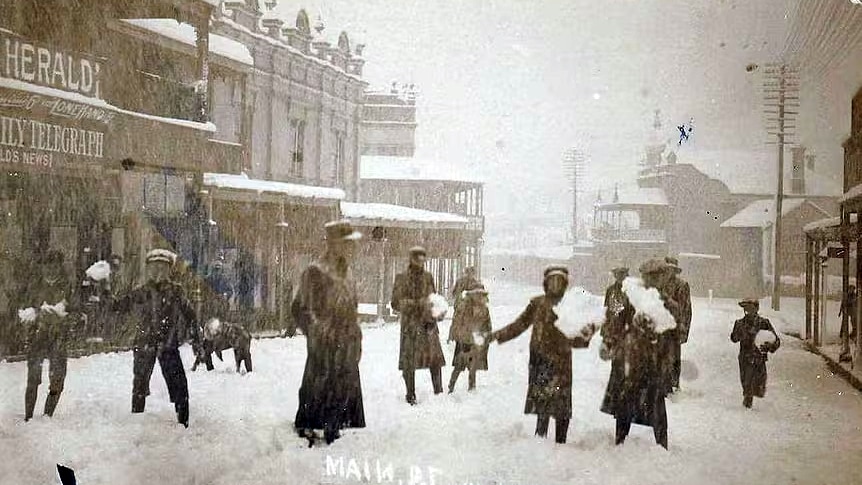
Sydney's annual winter wonderland is gradually fading away, as New South Wales experiences its 30th consecutive warmer-than-average winter season. Snow, once a common occurrence along the Great Dividing Range and occasionally even extending across the state's west and coast, has become increasingly scarce. Higher regions like the Blue Mountains, just 30 kilometers from Western Sydney, used to guarantee snowfalls, with some winters delivering more than 30 centimeters of snow from Katoomba to Mount Victoria.
The largest known snowstorm in 1900 dumped nearly a meter of snow on the Blue Mountains, 70 centimeters on Bathurst, 55 centimeters on Mudgee, and 23 centimeters on Forbes. Despite occasional snow showers in the late 20th century, such as a few melting snowflakes in July 1986 and snow on 13 consecutive days in Oberon in 1990, snow has become an increasingly rare sight in recent decades.
The last snowfall on the Blue Mountains was four years ago, marking the longest snow drought on record. As temperatures rise, the Blue Mountains' snowfall is becoming more difficult, with the average winter temperature across New South Wales increasing by around 1 degree Celsius in the past 50 years and 1.5 degrees Celsius since the early 20th century.
The changing position of winter weather systems across southern Australia, including the expansion of tropical wind circulations and the decline of east coast lows, has also contributed to the recent snowless winters.
Written by urgent.news from ABC News AU's reporting — not their text. Machine-written — may contain errors; check the original before relying on it.