We've never seen the Sun in this much detail before
The highest-resolution imagery of the Sun's surface ever taken reveals dizzying currents, and clues about our star's magnetic fields.
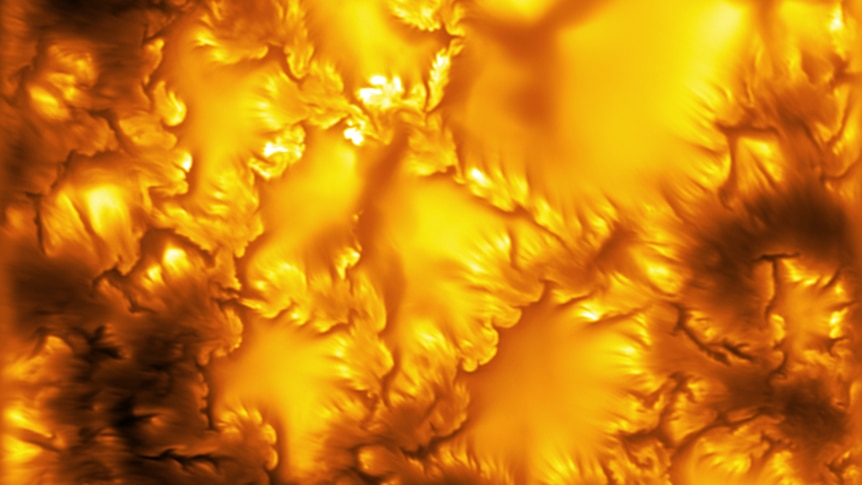
Astronomers have unveiled the most detailed view of the Sun's surface ever captured, thanks to the world's largest solar telescope. This groundbreaking imagery reveals the Sun's swirling plasma in unprecedented detail, allowing researchers to observe phenomena they had never seen before. The observations could help scientists better understand why the Sun's corona, its outer atmosphere, is so much hotter than its surface, which is about 5,500 degrees Celsius.
The high-resolution images show a section of the Sun's photosphere, which is about the size of mainland Australia, swirling and flowing with plasma. These movements suggest a physical process called Kelvin-Helmholtz instability, which occurs when different fluids mix, causing small fluctuations at their boundaries. This instability, often driven by temperature, density, or speed differences in fluids on Earth, is now unambiguously visible on the Sun, driven by changes in magnetism.
The Sun's surface is roughly 5,500 degrees Celsius, while the corona can reach 2 million degrees, a stark contrast that may be explained by the energy increase resulting from this plasma mixing. The Daniel K. Inouye Solar Telescope in Hawaii captured these images, a feat possible due to the telescope's specialized design to withstand the Sun's intense brightness and heat.
While the observations only cover a small section of the Sun's surface over a brief period, they represent a significant step forward in understanding the Sun's magnetic field, which drives space weather phenomena like solar flares. These flares can cause auroras on Earth and potentially disrupt technology through power outages and damage.
By studying the small-scale changes on the Sun's surface, researchers hope to improve predictions of these solar events, leading to better space weather forecasts and protection for technology.
Written by urgent.news from ABC News AU's reporting — not their text. Machine-written — may contain errors; check the original before relying on it.