SpaceX rocket stage crashes into the Moon after 18 months adrift
The upper stage of a SpaceX Falcon 9 rocket struck the lunar surface on Wednesday near the Einstein crater, in an unplanned impact that NASA described as safe and posing no risk to Earth or to missions operating on the Moon.
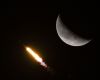
On Wednesday, an unplanned upper stage of a SpaceX Falcon 9 rocket crashed into the Moon near the Einstein crater, according to NASA. The object, weighing approximately 4,000 kilograms and identified as 2025-010D, struck the lunar surface at around 06:35 UTC with a velocity close to 2.4 kilometers per second. This impact occurred on the eastern limb of the Moon's near side.
NASA had anticipated a crater with a diameter of about 18 meters and a depth of four meters, though the exact dimensions will require further orbital imaging for confirmation.
The rocket stage originated from a January 15, 2025 launch that delivered the Blue Ghost 1 lander, built by Firefly Aerospace under NASA's CLPS commercial lunar payload initiative, and Japan's ispace Resilience lander. However, the Blue Ghost lander successfully touched down on March 2, 2025, while the Resilience lander crashed shortly before reaching the surface.
With no fuel left to deorbit, the rocket stage remained in a high Earth orbit intersecting the Moon's path. Over the past eighteen months, gravitational forces and solar activity altered the stage's trajectory, setting it on a collision course with the Moon.
NASA emphasized that the impact was not deliberately planned but acknowledged that deploying hardware onto the lunar surface is a recognized and safe method for end-of-life disposal. The impact was identified by independent astronomers using publicly available data, and later confirmed by NASA's Center for Near Earth Object Studies with a 100% probability of impact.
Scientists are eager to study this event, as it provides an opportunity to observe crater formation with precise knowledge of the object's mass and speed. The Moon's lack of atmosphere and stable surface over billions of years make it an ideal natural laboratory for studying solar system processes, with impacts from meteoroids equivalent to this stage occurring approximately every six days.
The Artemis II mission astronauts observed impact flashes during their lunar flyby in April, reigniting discussions about debris accumulation in the lunar environment and the regulatory gaps surrounding it. As private companies and public agencies increase traffic to the Moon, this incident highlights the need for clear guidelines in this growing sector.
Written by urgent.news from MercoPress's reporting — not their text. Machine-written — may contain errors; check the original before relying on it.