Scientists catch a “jumping gene” mid-leap between species
Scientists have uncovered a surprising way that “jumping genes” may move between species and speed up evolution. While these mobile genetic elements were thought to travel mainly inside viruses or plasmids, researchers found circular intron RNA from a tiny predatory bacterium inside the dead cells of another microorganism. Because the RNA forms a stable ring that resists breakdown, it may provide…
Jumping genes, genetic parasites found in bacteria, plants, animals, and humans, have the ability to insert themselves into new locations within an organism's genetic material. These gene movements can result in new traits, playing a significant role in evolutionary change. Some jumping genes can also remove themselves from RNA using an RNA enzyme.
While moving within a single cell is relatively easy, crossing into another cell or another species is far more challenging. Genetic family tree studies suggest such transfers have occurred, but scientists have generally assumed that jumping genes travel as passengers inside plasmids or viruses. Researchers led by Jens Harder have observed jumping genes transferring between species in an unexpected way.
They studied an unusual dominant bacterium in a community of methane-producing bacteria and archaea. The bacterium, Candidatus Velamenicoccus archaeovorus, feeds on microorganisms that convert limonene into methane and carbon dioxide. Within the Methanothrix soehngenii bacteria, the researchers found dead cells. They suspected that Candidatus Velamenicoccus archaeovorus might be responsible for the deaths.
To test this hypothesis, the researchers looked for molecules from the predator in the dead cells. They identified an intron, a jumping gene, in the genome of Candidatus Velamenicoccus archaeovorus. Introns are RNA molecules that have never been detected outside a cell, making their presence in the prey particularly interesting to the researchers.
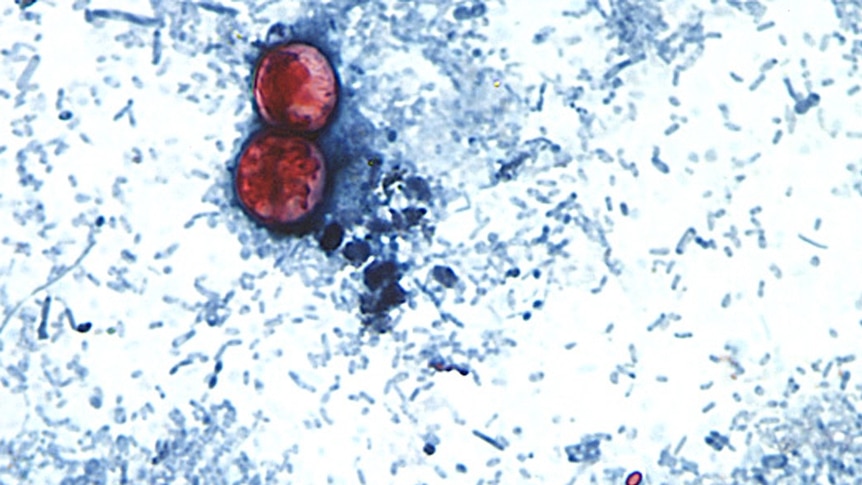
Using specially designed nucleic acid probes, the team produced microscopic images showing intron RNA in both living cells of Candidatus Velamenicoccus archaeovorus and dead cells of Methanothrix soehngenii. The intron RNA survived in dead cells because it forms a circular molecule with no open ends, protecting it from enzymes that would otherwise break it apart.
This ring-shaped structure is a distinctive feature of introns. In humans, circular RNA molecules influence many metabolic processes and have potential applications in RNA vaccines. The study shows that jumping genes can transfer to other species via their circular RNA, marking a new possible route for these genetic parasites.
Written by urgent.news from ScienceDaily's reporting — not their text. Machine-written — may contain errors; check the original before relying on it.